There is a specific, almost meditative joy in watching an eggplant transform over an open flame. The slick, purple skin begins to blister, crack, and char, releasing a wisp of smoke that smells less like burning and more like the promise of something deeply savory and complex. That primal act of fire meeting vegetable is the very first, non-negotiable step to a truly great Baba Ganoush.
This isn’t just another dip to push around a crudité platter. This is a bowl of pure, smoky, creamy indulgence that happens to be packed with clean, wholesome ingredients. We are ditching the heavy, mayonnaise-laden versions for a dip that lets the star of the show—the smoky eggplant—shine through. Get ready for a silky, luscious spread that is as perfect for a quiet weeknight dinner as it is for a lively gathering.
The Baba Ganoush Difference
- Unmatched Smoky Depth: Charring the whole eggplant directly over a gas flame or under the broiler is non-negotiable. This isn’t about cooking the vegetable; it’s about infusing the flesh with a campfire-like aroma that defines the entire dish.
- Luxuriously Creamy Texture: By letting the roasted eggplant drain of its bitter juices and blending it with top-quality tahini, we achieve a dip that is velvety smooth and light, never watery or heavy.
- A Clean Eating Powerhouse: This recipe is naturally vegan, gluten-free, and packed with fiber and antioxidants. It proves that eating well doesn’t mean sacrificing an ounce of flavor or satisfaction.
The Essential Components
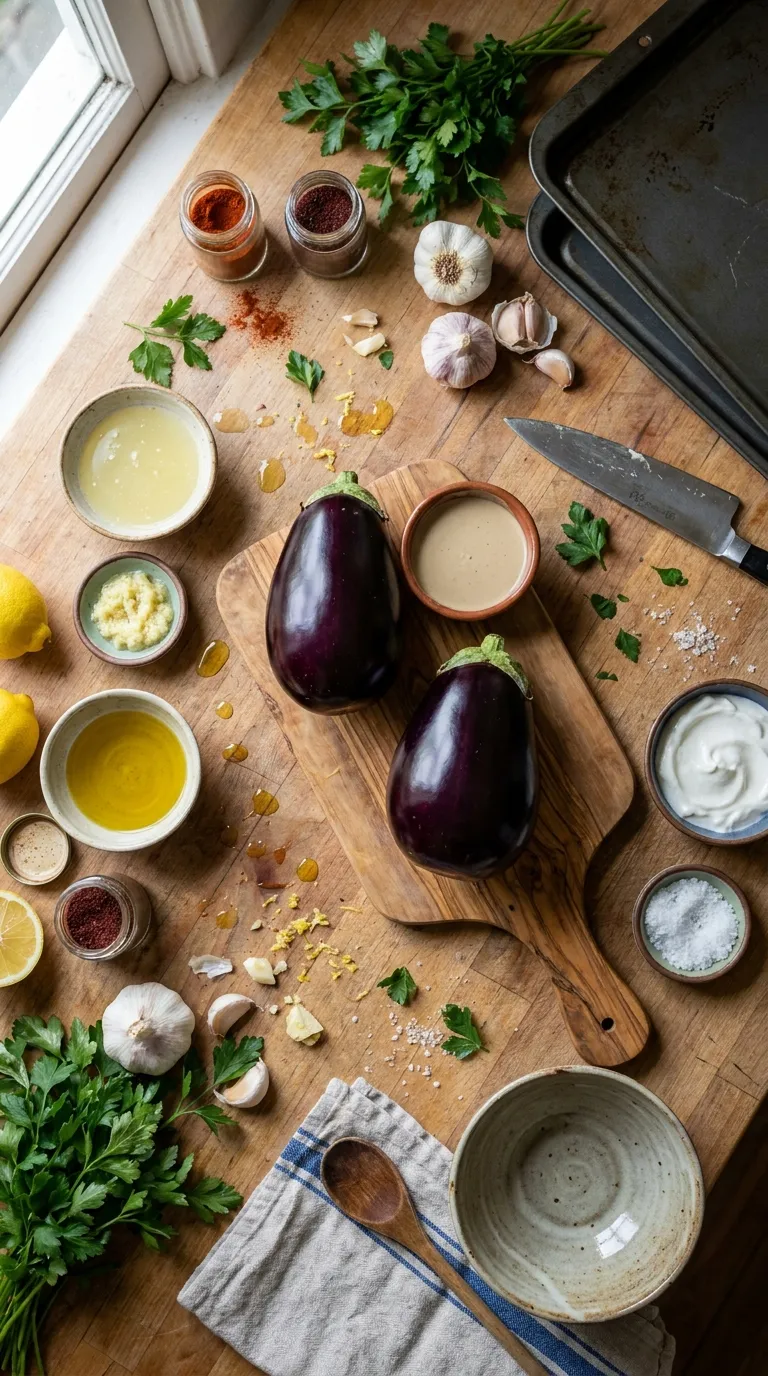
The beauty of Baba Ganoush lies in its simplicity. With just a handful of ingredients, the quality of each one is paramount. Using the best you can find will elevate this dish from good to unforgettable.
- 2 large globe eggplants (about 2 lbs total): Look for firm, glossy eggplants that feel heavy for their size. The larger surface area gives you more of that precious smoky flavor.
- 1/4 cup high-quality tahini (well-stirred): This is the backbone of the creaminess. A good tahini should be smooth, pourable, and taste of toasted, not bitter, sesame seeds.
- 3 tablespoons fresh lemon juice (from about 1 large lemon): The acidity is crucial for balancing the rich, smoky eggplant and the nutty tahini. Fresh is absolutely non-negotiable here.
- 2 cloves garlic, finely minced or grated: Raw garlic provides a sharp, pungent kick. For a milder flavor, you can roast the garlic cloves alongside the eggplant.
- 3 tablespoons extra virgin olive oil, plus more for drizzling: A fruity, peppery olive oil adds richness and a final layer of flavor.
- 1 teaspoon fine sea salt, plus more to taste: Salt is the great amplifier. It wakes up all the other flavors.
- 1/2 teaspoon smoked paprika (optional, but recommended): This reinforces the smoky notes from the charred eggplant for an even deeper flavor profile.
- Fresh parsley, chopped, for garnish: A pop of color and freshness to finish the dish.
Swaps & Alternatives
- No gas stove? You can char the eggplants under a high broiler or directly on a grill. The goal is the same: blackened, blistered skin.
- Allergic to sesame? You can substitute the tahini with a well-stirred sunflower seed butter or even a rich, plain full-fat Greek yogurt (though this will no longer be vegan).
- Need more tang? A tablespoon of plain, unsweetened yogurt (dairy or coconut-based) can be stirred in for extra creaminess and a slight tang.
- Garlic sensitive? Roast the garlic cloves in their skins with the eggplant. They will become sweet and mellow, perfect for a gentler flavor.
Level Up This Recipe
Once you have mastered the classic, these simple twists will make you feel like a true culinary artist.
- The Smoky Bomb: After blending, stir in a teaspoon of good quality chipotle pepper in adobo sauce (finely minced). This adds a fiery, smoky depth that is incredible.
- Herbaceous Lift: Swap the parsley garnish for a mix of fresh mint and dill. The cool, bright flavors are a stunning contrast to the smoky eggplant.
- Nutty Crunch: Toast a handful of pine nuts or walnuts in a dry pan until golden and fragrant. Sprinkle them over the finished Baba Ganoush with a final drizzle of olive oil.
- Pomegranate Pop: A generous scattering of fresh pomegranate arils adds a burst of sweet-tart juice and a beautiful jewel-like presentation.
How to Make Baba Ganoush
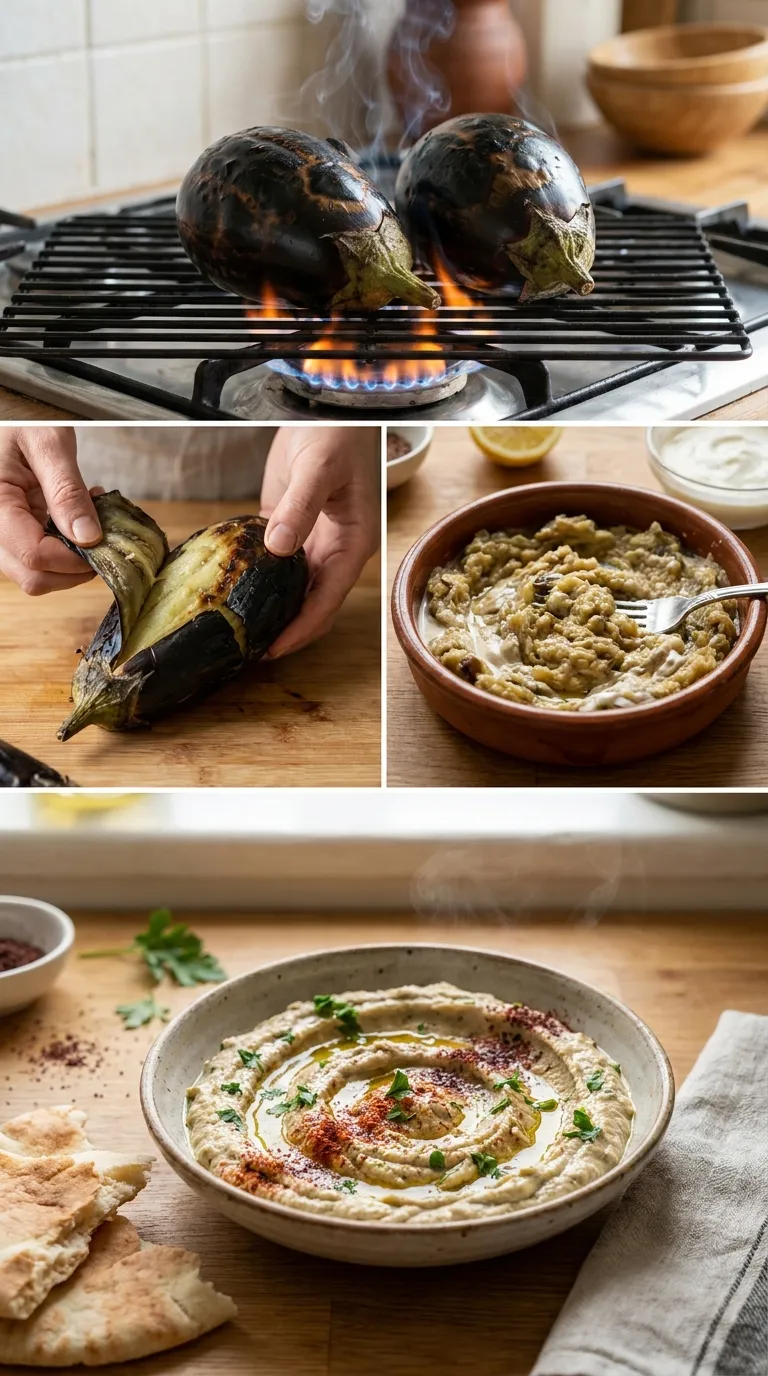
The process is more about patience and technique than active work. The hands-on time is short, but the reward is immense. Let’s walk through it together.
1. Char the Eggplants to Perfection
Prick the eggplants all over with a fork. This prevents them from exploding in the oven. Place them directly on a gas burner over medium-high heat, or on a baking sheet under a preheated broiler. Turn them every 3-4 minutes using tongs, until the skin is completely blackened and charred and the flesh feels soft and collapsed. This takes about 15-20 minutes. The smell is your guide—it should be smoky and sweet.
2. Steam and Drain the Bitter Juices
Transfer the hot, charred eggplants to a large bowl and cover it tightly with plastic wrap. Let them steam for 15 minutes. This step is crucial as it loosens the skin and helps the flesh separate easily. Once cool enough to handle, carefully peel off and discard the blackened skin. Place the soft flesh in a colander set over a bowl. Let it drain for another 10 minutes. This removes the bitter liquid, ensuring a pure, sweet flavor.
3. Blend the Creamy Base
In a medium bowl, combine the well-stirred tahini, fresh lemon juice, and minced garlic. Whisk them together until the mixture thickens and becomes pale. This is called “emulsifying” the tahini. Slowly drizzle in the 3 tablespoons of olive oil while whisking constantly. The mixture will become smooth and creamy.
4. Combine and Season with Love
Add the drained eggplant flesh to the tahini mixture. Using a fork or a potato masher, mash everything together until you reach your desired consistency. I prefer it slightly chunky, but you can blend it in a food processor for an ultra-smooth texture. Stir in the salt and smoked paprika (if using). Taste and adjust the seasoning—more lemon for brightness, more salt for depth, more tahini for nuttiness.
5. The Resting Ritual
This is the hardest step. Transfer the Baba Ganoush to a serving bowl, cover it, and refrigerate for at least 1 hour. This allows the flavors to meld and deepen. The dip will also thicken as it chills. This is a perfect make-ahead dish for your Mediterranean Yellow Rice dinner.
Common Mistakes to Avoid
- Skipping the Charring Step: Baking the eggplant in the oven without charring the skin first will result in a bland, watery dip. The smoke is the soul of this recipe. Do not skip it.
- Forgetting to Drain the Eggplant: Eggplants are sponges for water. If you don’t let the cooked flesh drain, your Baba Ganoush will be watery and bitter instead of creamy and sweet.
- Using Low-Quality Tahini: A bitter, dry, or separated tahini will ruin the dip. Always taste your tahini before using it. It should be nutty and smooth, not sharp or acrid.
Perfect Pairings
This creamy, smoky dip is incredibly versatile. It is a staple in my house for both quick meals and elaborate spreads.
Serve it as a classic appetizer with warm pita bread, crunchy cucumber slices, and bell pepper strips. It is also phenomenal slathered on a grain bowl or used as a spread for a veggie wrap.
For a complete, clean-eating feast, pair it with a side of Sheet Pan Greek Chicken And Potatoes for a meal that is both satisfying and low effort. The smoky dip is a fantastic counterpoint to the bright, lemony chicken.
It also works beautifully alongside a simple protein. Spoon it next to some Greek Lemon Chicken And Potatoes for a family-style dinner that feels special. A dollop of Greek Tzatziki Sauce on the side adds another layer of creamy, herby goodness.
For a lighter meal, use it as a dressing for a chopped salad. Drizzle a little Greek Salad Dressing over a Greek Cucumber Tomato Salad and add a generous scoop of this Baba Ganoush for a protein and flavor boost.
This dip is also a fantastic option for those following specific dietary plans. It is naturally low calorie and low carb, making it a perfect choice for keto recipes. The healthy fats from the tahini and olive oil, combined with the fiber from the eggplant, make it surprisingly satiating. It is an excellent high protein addition to a vegetarian meal, especially when paired with chickpeas or lentils.
Because it tastes even better the next day, it is the ultimate meal prep companion. Make a double batch on Sunday, and you have a ready-to-go snack, spread, or sauce for the entire week.
Why is it important to char the eggplant over an open flame instead of just baking it?
Charring the eggplant directly over a gas flame, under a broiler, or on a grill is non-negotiable because it infuses the flesh with a deep, smoky, campfire-like aroma that defines the dish. Simply baking the eggplant without charring results in a bland, watery dip.
What is the purpose of draining the cooked eggplant flesh?
Draining the cooked eggplant flesh for about 10 minutes after peeling is crucial because it removes the bitter liquid. This ensures the Baba Ganoush is creamy and sweet rather than watery and bitter.
Can I make Baba Ganoush if I have a sesame allergy?
Yes, you can substitute the tahini with a well-stirred sunflower seed butter or a rich, plain full-fat Greek yogurt (though this will no longer be vegan) to achieve a similar creamy texture.
What is the best way to serve Baba Ganoush for a complete meal?
Baba Ganoush is incredibly versatile. It can be served as a classic appetizer with warm pita and vegetables, used as a spread for wraps or grain bowls, or paired with dishes like Sheet Pan Greek Chicken and Potatoes for a satisfying clean-eating feast.

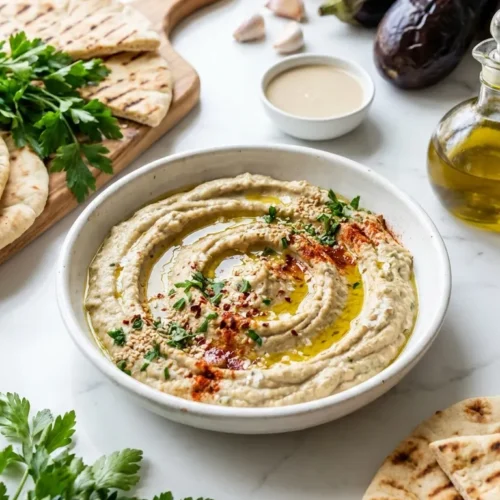
Creamy Baba Ganoush: A Clean Eating Delight

Equipment
- Gas stove or broiler
- Tongs
- Large bowl
- Plastic Wrap
- Colander
- Small bowl
- Whisk
- Fork or potato masher
- serving bowl
- Knife
- Cutting board
Ingredients
- 2 large globe eggplants about 2 lbs total
- ¼ cup high-quality tahini well-stirred
- 3 tablespoons fresh lemon juice from about 1 large lemon
- 2 cloves garlic, finely minced or grated
- 3 tablespoons extra virgin olive oil, plus more for drizzling
- 1 teaspoon fine sea salt, plus more to taste
- ½ teaspoon smoked paprika optional, but recommended
- Fresh parsley, chopped, for garnish
Instructions
- Prick the eggplants all over with a fork to prevent them from exploding.
- Char the eggplants directly on a gas burner over medium-high heat, or on a baking sheet under a preheated broiler. Turn them every 3-4 minutes using tongs, until the skin is completely blackened and charred and the flesh feels soft and collapsed, about 15-20 minutes.
- Transfer the hot, charred eggplants to a large bowl and cover tightly with plastic wrap. Let them steam for 15 minutes.
- Once cool enough to handle, carefully peel off and discard the blackened skin. Place the soft flesh in a colander set over a bowl. Let it drain for 10 minutes to remove bitter liquid.
- In a medium bowl, combine the well-stirred tahini, fresh lemon juice, and minced garlic. Whisk together until the mixture thickens and becomes pale.
- Slowly drizzle in the 3 tablespoons of olive oil while whisking constantly until the mixture is smooth and creamy.
- Add the drained eggplant flesh to the tahini mixture. Using a fork or a potato masher, mash everything together until you reach your desired consistency (slightly chunky or smooth).
- Stir in the salt and smoked paprika (if using). Taste and adjust seasoning with more lemon, salt, or tahini as needed.
- Transfer the baba ganoush to a serving bowl, cover, and refrigerate for at least 1 hour to allow the flavors to meld and deepen.
- Before serving, drizzle with extra olive oil and garnish with fresh chopped parsley.