Every single time I make a batch of this Greek salad dressing, I’m transported back to a tiny, sun-drenched taverna on a hillside in Crete, where the owner’s wife simply grabbed a jam jar, threw in a few ingredients, and shook it like she was conducting a symphony. There was no whisk, no measuring spoons, no fuss—just the most incredible, herb-flecked, tangy emulsion I had ever tasted, and I knew right then that the bottled stuff would never, ever cut it again.
This recipe is my love letter to that moment, and I promise you it will become the most-used, most-loved dressing in your fridge. In just five minutes, with a handful of pantry staples, you’ll create a vinaigrette so bright, so perfectly balanced, and so impossibly creamy that it will transform even the simplest bowl of greens into a restaurant-worthy experience. Forget everything you think you know about store-bought dressings; this is the real deal, and it’s ready before you can even chop a cucumber.
The Greek Salad Dressing Difference
- Emulsifies Like a Dream: A tiny splash of brine from the feta jar (or a dab of Dijon mustard) acts as a natural binder, creating a creamy, clingy texture that coats every leaf without separating.
- Fresh Herb Power: Dried oregano is the star here, but using a high-quality, fragrant variety (preferably Greek) makes all the difference between a flat dressing and one that sings with Mediterranean sunshine.
- Perfectly Balanced Acidity: The ratio of red wine vinegar to lemon juice is carefully calculated to give you a sharp, bright tang without making your mouth pucker, letting the fruity olive oil shine through.
The Building Blocks
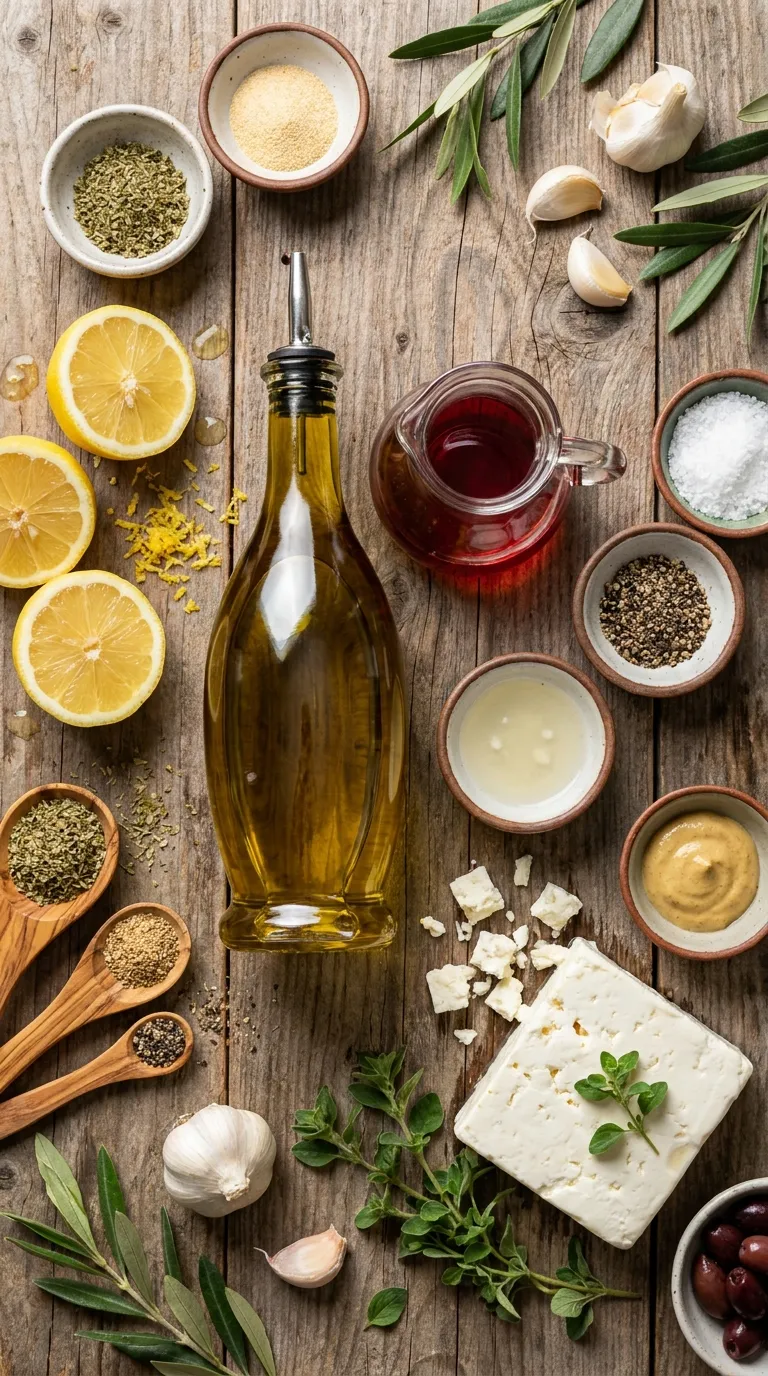
- 1/2 cup extra-virgin olive oil (The backbone: use a fruity, not overly bitter, oil for the best balance)
- 3 tablespoons red wine vinegar (The tang: provides that classic, sharp Greek acidity)
- 1 tablespoon fresh lemon juice (The brightness: adds a fresh lift that vinegar alone can’t match)
- 1 teaspoon dried oregano (The soul: rub it between your palms to release the oils before adding)
- 1/2 teaspoon garlic powder (The subtle warmth: don’t use fresh garlic here, as it can overpower and turn bitter overnight)
- 1/2 teaspoon salt (The amplifier: use flaky sea salt for the best texture)
- 1/4 teaspoon black pepper (The finish: freshly cracked is always best)
- 1 tablespoon feta brine or 1/2 teaspoon Dijon mustard (The emulsifier: the secret to a creamy, non-separating dressing)
Swaps & Alternatives
Life happens, and sometimes you’re out of a specific ingredient. Here are my go-to substitutions that still deliver a fantastic result.- No red wine vinegar? White wine vinegar or apple cider vinegar work beautifully, though the flavor will be slightly milder.
- No lemon juice? You can use all vinegar (4 tablespoons total), but the dressing will lose a bit of its fresh, citrusy lift.
- No dried oregano? Dried thyme or a blend of dried Italian herbs can step in, but the character will shift away from a true Greek profile.
- No feta brine? The Dijon mustard option is my favorite backup; it adds a tiny bit of heat and helps the emulsion hold for days.
- Need a vegan version? Simply use the Dijon mustard as your emulsifier, and you’re good to go.
Flavor Boosts
Once you’ve mastered the classic, it’s incredibly fun to play around. These twists will make your dressing feel brand new every time you make it.- Herb Garden Explosion: Add 1 tablespoon of finely chopped fresh dill and 1 tablespoon of fresh mint leaves to the jar before shaking. It’s incredible on a Vibrant Feta Mediterranean Pasta Salad Bowl.
- Spicy Kick: A pinch of red pepper flakes or a small, finely minced shallot gives the dressing a lovely, warming bite.
- Creamy Upgrade: Whisk in 2 tablespoons of plain Greek yogurt after the emulsion forms for a thick, ranch-style Greek dressing that clings to every forkful.
- Honeyed Touch: A 1/2 teaspoon of honey balances the acidity beautifully, especially if your olive oil is particularly grassy or bitter.
How to Make Greek Salad Dressing

1. Gather Your Jar and Ingredients
Find a clean, lidded jar—a mason jar or an old jam jar works perfectly. Measure out all your ingredients and have them ready. This mise en place makes the process feel effortless.2. Combine the Acid and Seasonings First
Pour the red wine vinegar, lemon juice, dried oregano, garlic powder, salt, and pepper into the jar. Give it a quick swirl with a fork to dissolve the salt and wake up the dried herbs. This step ensures the flavors meld before the oil is introduced.3. Add the Emulsifier and Oil
Drop in your feta brine or Dijon mustard, then pour in the extra-virgin olive oil. The order matters less here, but I like to see the oil float on top of the vinegar mixture—it’s a satisfying visual cue that you’re about to create something magical.4. Shake Vigorously for 30 Seconds
Screw the lid on tightly and shake the jar with enthusiasm. Shake it like you’re trying to win a prize. After about 20 to 30 seconds, you’ll see the mixture transform from separate layers into a single, creamy, slightly thickened dressing. This is the emulsion forming.5. Taste and Adjust
Dip a clean spoon or a piece of lettuce into the dressing and taste it. Does it need more salt? A pinch more oregano? Another squeeze of lemon? Trust your palate. This is your dressing, and you are the boss of it. Once it’s perfect, use it immediately or store it in the fridge.Common Mistakes to Avoid
- Using Low-Quality Olive Oil: A flat, rancid, or overly cheap olive oil will ruin the entire dressing. You don’t need the most expensive bottle, but it must taste good on its own.
- Skipping the Emulsifier: Without the feta brine or mustard, your dressing will separate almost instantly, leaving you with a sad, oily puddle on top of your salad.
- Adding Fresh Garlic: Fresh garlic can turn harsh and bitter after a few hours in the fridge. Stick with garlic powder for a mellow, consistent flavor that lasts.
Perfect Pairings
This dressing is incredibly versatile, and I find myself reaching for it constantly. It’s the star of any Zesty Italian Pasta Salad Picnic Sensation, adding a tangy, herbaceous note that ties all the ingredients together.It’s also a dream drizzled over a Balsamic Caprese Pasta Salad Gourmet Bowl for a double hit of acidity, or tossed with a simple Pasta Salad With Italian Dressing Perfection for a quick lunch. For a heartier meal, use it to dress an Olive Garden Pasta Salad Zesty Sensation or a Zesty Feta Mediterranean Pasta Salad Bowl.
Beyond pasta, it’s my go-to for simple green salads, roasted vegetables, grilled chicken, and even as a marinade for lamb chops. It’s a cornerstone of my healthy recipes rotation and a key part of my clean eating philosophy. I often make a double batch on Sunday as part of my meal prep routine, knowing I’ll have a perfect homemade sauces option ready for all my salad recipes throughout the week.
Thanks for stopping by! I hope this dish brings joy to your table.
What is the secret to making this Greek salad dressing creamy and well-emulsified?
The secret is using an emulsifier, specifically a tablespoon of feta brine or half a teaspoon of Dijon mustard. This natural binder helps the oil and vinegar combine into a creamy, clingy texture that won’t separate.
Why does the recipe recommend using garlic powder instead of fresh garlic?
Fresh garlic can turn harsh and bitter after a few hours in the fridge. Garlic powder provides a mellow, consistent flavor that lasts, making it the better choice for this dressing.
Can I make this dressing vegan, and if so, how?
Yes, simply use the Dijon mustard option as your emulsifier instead of the feta brine. All other ingredients are plant-based, making the dressing vegan-friendly.
What are some suggested ways to use this Greek salad dressing beyond a simple green salad?
This dressing is incredibly versatile. It works beautifully on pasta salads, roasted vegetables, grilled chicken, and even as a marinade for lamb chops. The article specifically recommends it for a Zesty Italian Pasta Salad Picnic Sensation or a Balsamic Caprese Pasta Salad Gourmet Bowl.
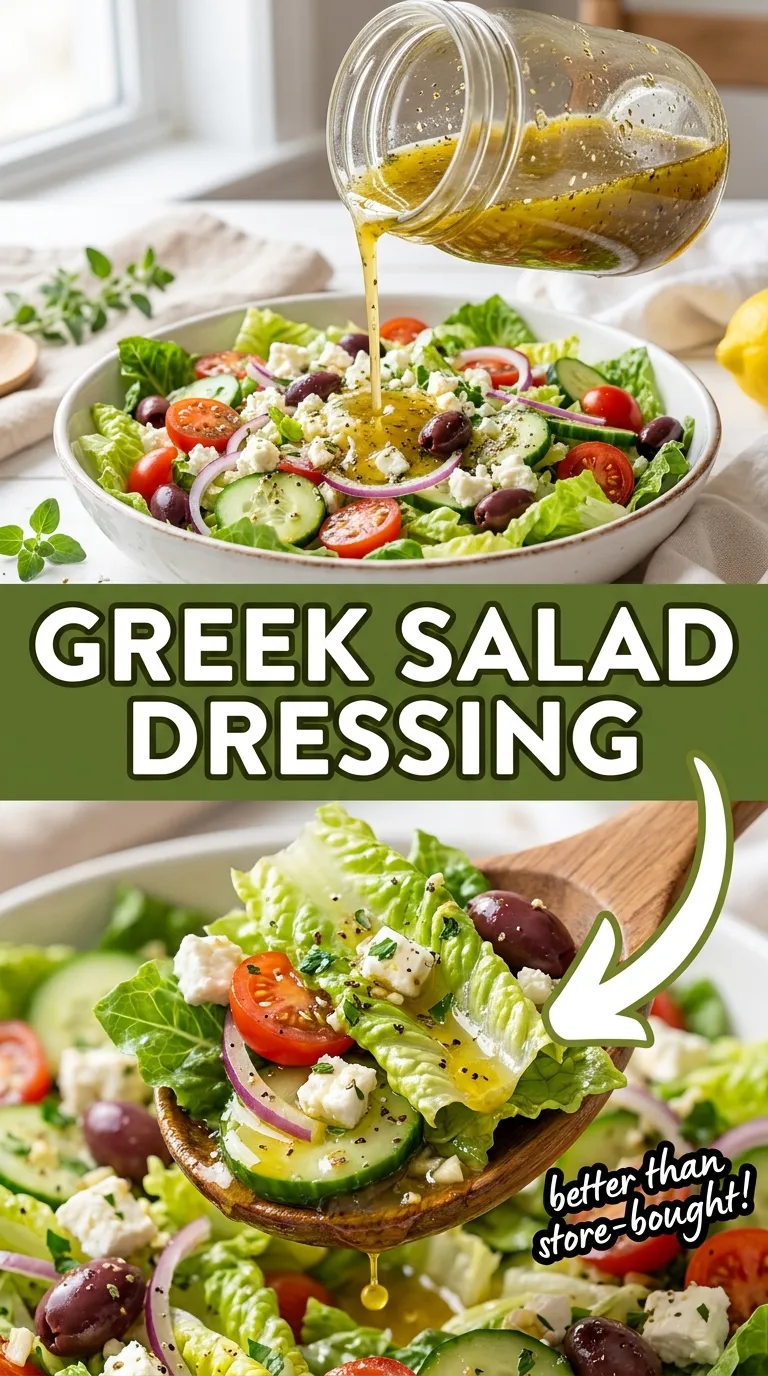

Greek Salad Dressing Ready in Five Minutes

Equipment
- Mason jar or clean lidded jar (pint-sized)
- Measuring cups and spoons
- Fork (for initial mixing)
- Cutting board (optional, for fresh herbs)
Ingredients
- ½ cup extra-virgin olive oil
- 3 tablespoons red wine vinegar
- 1 tablespoon fresh lemon juice
- 1 teaspoon dried oregano
- ½ teaspoon garlic powder
- ½ teaspoon sea salt
- ¼ teaspoon freshly cracked black pepper
- 1 tablespoon feta brine or 1/2 teaspoon Dijon mustard
Instructions
- Gather a clean, lidded jar (a mason jar or an old jam jar works perfectly) and all your ingredients.
- Pour the red wine vinegar, fresh lemon juice, dried oregano, garlic powder, salt, and pepper into the jar. Give it a quick swirl with a fork to dissolve the salt and wake up the dried herbs.
- Add the feta brine or Dijon mustard to the jar, then pour in the extra-virgin olive oil.
- Screw the lid on tightly and shake the jar vigorously for 20 to 30 seconds, until the mixture transforms from separate layers into a single, creamy, slightly thickened dressing.
- Taste the dressing and adjust seasoning if needed (more salt, oregano, or lemon juice). Use immediately or store in the refrigerator.