Sun-drenched afternoons practically beg for a bowl that captures the vibrant essence of the coast, and this feta Mediterranean pasta salad delivers exactly that with every forkful. It balances the briny punch of sheep’s milk cheese with the crunch of garden-fresh vegetables, creating a symphony of textures that feels both indulgent and incredibly light.
You are going to fall in love with how the tangy lemon-herb vinaigrette seeps into every nook and cranny of the pasta, ensuring a burst of flavor in every single bite. This dish isn’t just a simple side; it’s a refreshing centerpiece that transforms any backyard gathering or meal-prep session into a seaside celebration.
The Feta Mediterranean Pasta Salad Difference
- Briny Feta Balance: Using high-quality block feta provides a creamy, salty contrast to the crisp vegetables and tender pasta.
- Cold-Marination Technique: Allowing the salad to rest ensures the pasta absorbs the dressing without becoming mushy or bland.
- Textural Variety: The combination of soft pasta, crunchy cucumbers, and buttery olives creates a satisfying mouthfeel in every scoop.
The Building Blocks
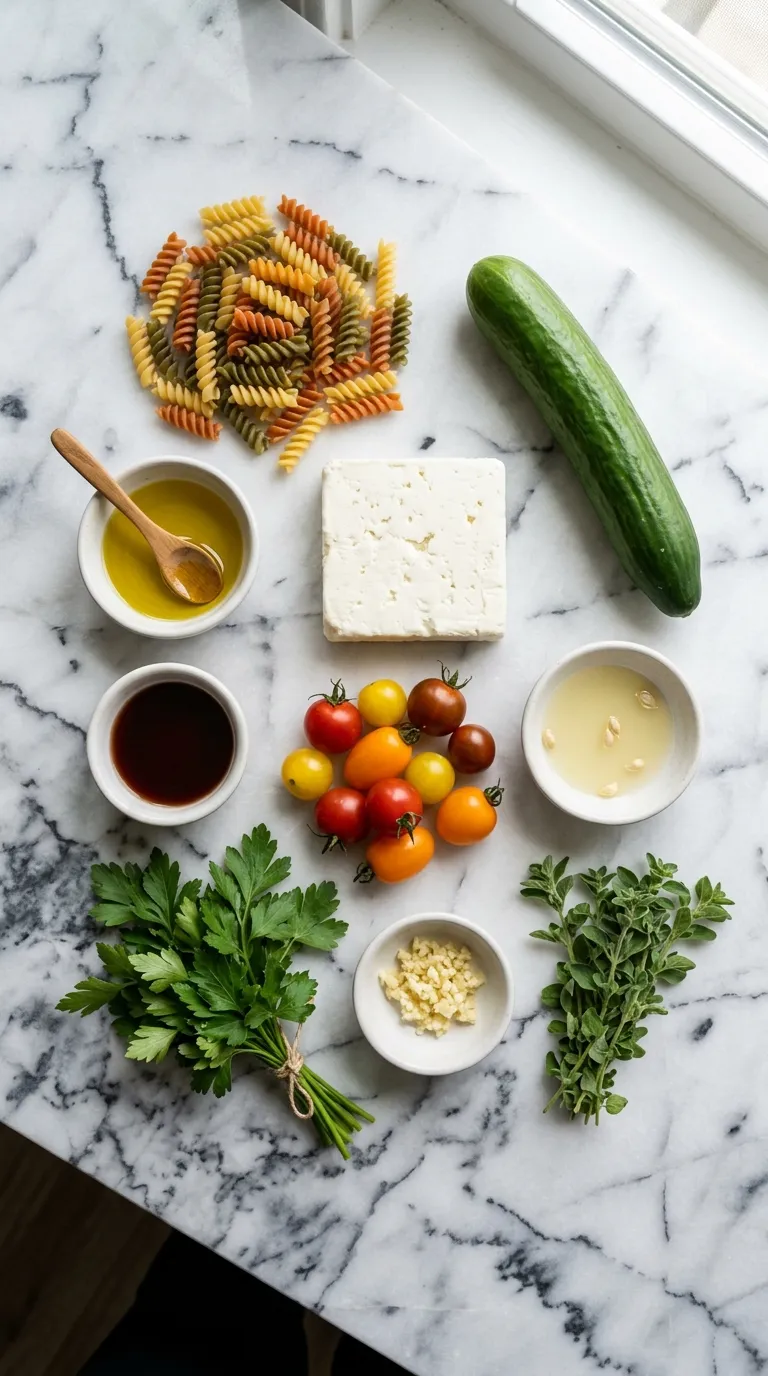
Creating a masterpiece in the kitchen always starts with the quality of your components, especially when the preparation is as straightforward as this. Since we aren’t masking flavors with heavy sauces, each vegetable and herb needs to be at its peak of freshness to truly shine.
Think of your pasta bowl as a canvas where colors and textures play equal roles in the final experience. You want a mix of earthy, salty, sweet, and acidic notes to keep your palate excited from the first bite to the very last.
- Rotini or Fusilli Pasta: These spiral shapes are essential because their twists and turns act like little “flavor traps” for the vinaigrette (Spiral Shape: For maximum dressing retention).
- Block Feta Cheese: Always opt for feta in brine and crumble it yourself to maintain a moisture-rich, creamy texture that pre-crumbled versions lack (Sheep’s Milk Feta: For authentic tang and creaminess).
- Kalamata Olives: These provide a deep, fruity saltiness that anchors the lighter vegetable notes (Pitted Olives: For ease of eating and safety).
- English Cucumber: These have thinner skins and fewer seeds, providing a consistent crunch without adding excess water to the bowl (English Variety: To prevent a soggy salad).
- Cherry Tomatoes: Slicing these in half releases just enough juice to mingle with the dressing while keeping their structural integrity (Cherry Tomatoes: For concentrated sweetness).
- Red Onion: A finely diced red onion offers a sharp, peppery bite that cuts through the richness of the cheese (Red Onion: For color and pungent contrast).
- Fresh Parsley and Oregano: Dried herbs have their place, but fresh greenery adds a floral lift that makes the salad taste like it was just picked from a garden (Fresh Herbs: For aromatic brightness).
- Extra Virgin Olive Oil: This is the base of your dressing, so use the good stuff—it should taste peppery and clean (EVOO: For a silky mouthfeel and healthy fats).
If you find yourself craving even more plant-based goodness, you might also enjoy a Chickpea Feta Avocado Salad as a protein-packed alternative. Both recipes celebrate the same Mediterranean spirit while offering different nutritional profiles.
Adapting the Recipe
Sometimes the pantry doesn’t have exactly what the recipe calls for, and that is perfectly okay in my kitchen. You can easily swap the traditional pasta for a gluten-free chickpea or lentil-based version to increase the fiber and protein content.
If you aren’t a fan of olives, try using capers for that salty hit, or even marinated artichoke hearts for a softer, more sophisticated tang. For those who prefer a milder onion flavor, soaking the sliced red onions in cold water for ten minutes before adding them can take away that sharp “sting.”
Chef’s Twists
While the classic version is a crowd-pleaser, I love adding a few gourmet touches to elevate the dish for special occasions. One of my favorite additions is a handful of toasted pine nuts or slivered almonds right before serving to add a buttery, nutty crunch.
You can also experiment with the cheese; while feta is the star here, a few pearls of fresh mozzarella or a dusting of shaved parmesan can add layers of dairy complexity. If you want a smokier profile, try grilling your bell peppers and onions before tossing them into the mix.
For a heartier meal, I often serve this alongside Greek Chicken Bowls to create a full Mediterranean feast. The flavors complement each other perfectly, making it feel like a professional catering spread in your own dining room.
Another fantastic way to level up this salad is by adding sun-dried tomatoes in oil. The concentrated, chewy sweetness of the sun-dried tomatoes provides a beautiful counterpoint to the fresh, juicy cherry tomatoes.
The Complete Method
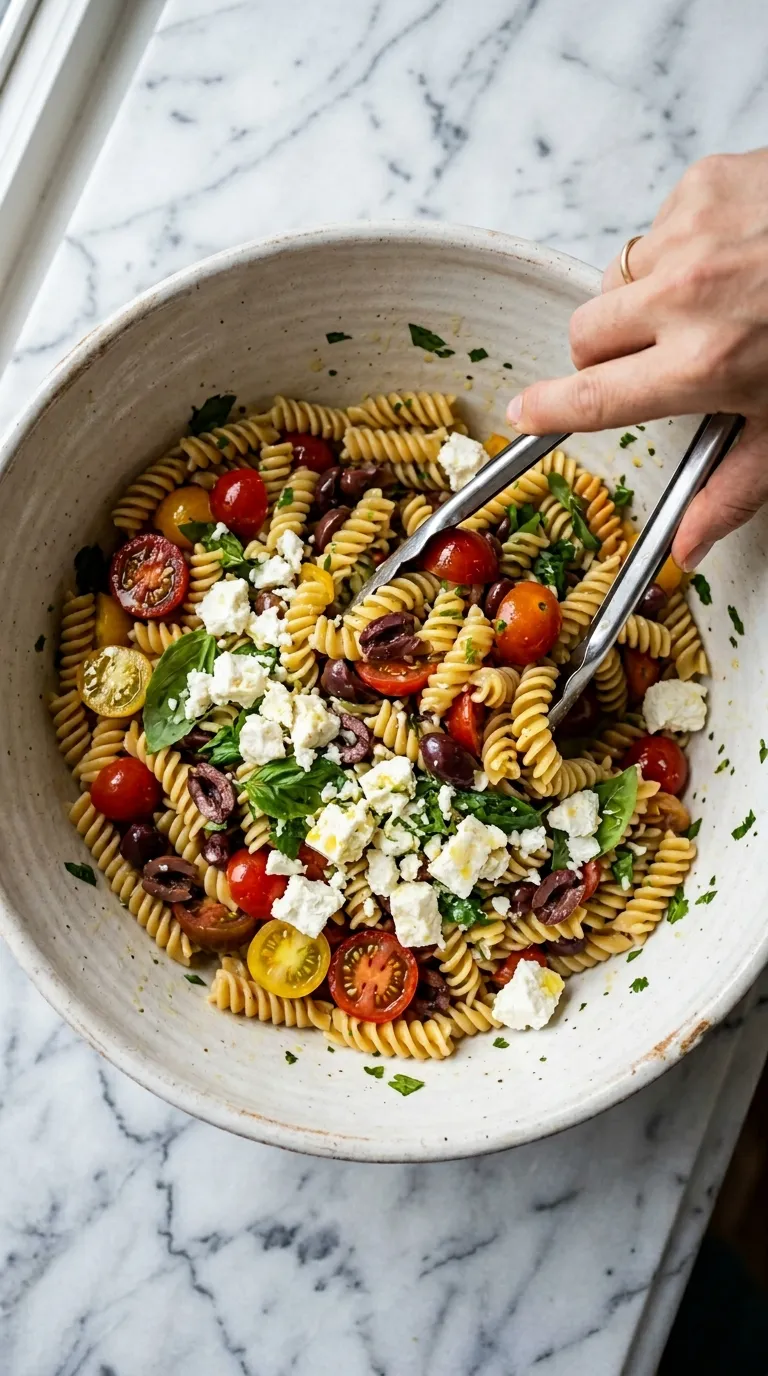
Getting this salad right is all about the order of operations and ensuring your pasta is treated with respect. It takes about twenty minutes of active work, but the result tastes like you spent all morning in the kitchen.
Keep in mind that pasta continues to absorb liquid as it sits. If you are making this ahead of time, you might want to reserve a little bit of the dressing to refresh the salad right before it hits the table.
1. Boil the Pasta to Al Dente
Start by bringing a large pot of heavily salted water to a rolling boil. You want the water to taste like the sea, as this is your only chance to season the pasta itself from the inside out.
Cook your chosen pasta shape for about one minute less than the package instructions suggest. It should have a firm “bite” to it, which prevents it from falling apart when you toss it with the heavy vegetables and dressing.
2. Prepare the Signature Vinaigrette
While the pasta cooks, whisk together your extra virgin olive oil, fresh lemon juice, red wine vinegar, minced garlic, and dried oregano in a small bowl. Season generously with cracked black pepper and a pinch of sea salt.
I like to let the dressing sit for a few minutes so the garlic can infuse into the oil. This creates a more cohesive flavor profile that coats every ingredient evenly rather than having “hot spots” of raw garlic.
3. Cool and Coat
Once the pasta is finished, drain it and rinse it briefly under cold water to stop the cooking process and remove excess starch. This prevents the pasta from sticking together in a giant clump.
Transfer the lukewarm pasta to a large mixing bowl and pour about half of your dressing over it immediately. Tossing the pasta while it is still slightly warm allows it to soak up the aromatics of the vinaigrette more effectively.
4. Chop and Combine
Now it is time to add your vibrant produce, including the halved cherry tomatoes, diced cucumbers, sliced olives, and red onion. Fold these in gently so you don’t bruise the vegetables or break the pasta spirals.
If you are looking for a similar vibe with a different grain, you might want to try an Orzo Elote Salad With Feta. It uses a smaller pasta shape but keeps that wonderful feta-forward personality.
5. The Final Crumble
Add your crumbled feta cheese and fresh herbs last. Folding the feta in at the very end ensures that some of it stays in distinct chunks, while some of it breaks down to create a slightly creamy coating on the pasta.
Taste the salad one last time and adjust the seasoning if necessary. Sometimes a final squeeze of lemon or an extra pinch of salt is all it takes to make the flavors truly “pop.”
Avoid These Pitfalls
- Overcooking the Pasta: Mushy pasta will ruin the texture of the salad; always aim for a firm al dente.
- Dressing a Hot Salad: If the pasta is steaming hot, it will cook the fresh vegetables and make the herbs wilt instantly.
- Using Pre-Crumbled Feta: These often contain anti-caking agents that prevent the cheese from melding beautifully with the dressing.
Toppings & Sides
This pasta salad is incredibly versatile and can stand alone as a light lunch or serve as the ultimate side dish for a summer barbecue. I personally love pairing it with grilled proteins that share similar flavor profiles.
It goes exceptionally well with Mediterranean Chicken Gyros, where the cool salad acts as a refreshing palate cleanser between bites of warm, spiced meat. The contrast between the warm pita and the cold pasta is truly addictive.
If you are hosting a larger party, you can create a “Pasta Salad Bar” by serving this alongside a high-protein Italian Pasta Salad. Offering two different styles of pasta salad allows guests to choose their favorite flavor profile, whether they prefer the briny Greek style or the zesty Italian version.
For a final touch of elegance, garnish the bowl with a few whole sprigs of mint or a sprinkle of sumac. Sumac adds a lovely deep red color and an extra layer of lemony tartness that is very traditional in Mediterranean cooking.
If you find yourself making this often, you might also want to check out this perfect Italian pasta salad recipe for those days when you want a more vinegar-forward, salami-packed alternative. Having a few reliable pasta salad recipes in your repertoire makes summer entertaining a total breeze.
If you tried this recipe and loved it, please leave a 5-star rating below. It helps us so much!
Why is it recommended to use block feta instead of pre-crumbled feta for this recipe?
Block feta, particularly when stored in brine, offers a creamier and more moisture-rich texture. Pre-crumbled versions often contain anti-caking agents that prevent the cheese from blending smoothly with the dressing.
How can I prevent my Mediterranean pasta salad from becoming soggy?
To maintain a crisp texture, cook the pasta to ‘al dente’ and use English cucumbers, which have thinner skins and fewer seeds, reducing the amount of excess water released into the bowl.
What is the secret to ensuring the pasta is flavorful in every bite?
The key is using spiral pasta like rotini or fusilli to trap the vinaigrette and tossing the pasta with half of the dressing while it is still lukewarm, which allows the flavors to be absorbed more effectively.
What should I do if I want to prepare this salad in advance?
If making the salad ahead of time, reserve a small portion of the dressing to add just before serving. This refreshes the dish, as the pasta will naturally absorb the liquid while sitting in the refrigerator.
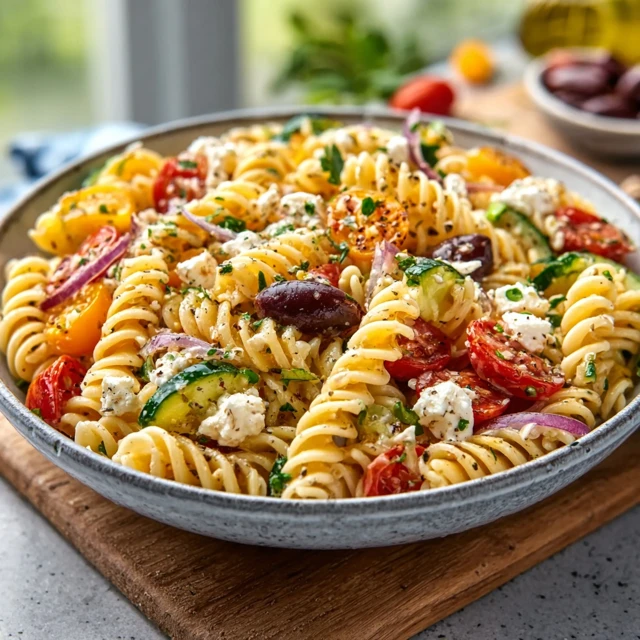

Zesty Feta Mediterranean Pasta Salad Bowl

Equipment
- Large pot
- Colander
- small mixing bowl
- Whisk
- Large salad bowl
- Chef’s knife
- Cutting board
- Measuring cups and spoons
Ingredients
- 1 lb Rotini or Fusilli pasta
- 8 oz Block feta cheese in brine, crumbled by hand
- 1 cup Kalamata olives, pitted and sliced
- 1 large English cucumber, diced
- 2 cups Cherry tomatoes, halved
- ½ medium Red onion, finely diced
- ¼ cup Fresh parsley, chopped
- 2 tbsp Fresh oregano, chopped
- ½ cup Extra virgin olive oil
- ¼ cup Fresh lemon juice
- 2 tbsp Red wine vinegar
- 2 cloves Garlic, minced
- 1 tsp Dried oregano
- ½ tsp Sea salt plus more for pasta water
- ½ tsp Cracked black pepper
Instructions
- Bring a large pot of heavily salted water to a rolling boil and cook the pasta for about one minute less than the package instructions to achieve a firm al dente texture.
- While the pasta cooks, whisk together the extra virgin olive oil, lemon juice, red wine vinegar, minced garlic, and dried oregano in a small bowl; season with salt and pepper and let it sit to infuse.
- Drain the cooked pasta and rinse it briefly under cold water to stop the cooking process and remove excess starch.
- Transfer the lukewarm pasta to a large mixing bowl and toss with approximately half of the prepared vinaigrette so the flavors are absorbed effectively.
- Prep the vegetables by halving the cherry tomatoes, dicing the English cucumber, and slicing the olives and red onion.
- Gently fold the prepared vegetables into the pasta bowl, ensuring even distribution without bruising the produce or breaking the pasta spirals.
- Crumble the block feta cheese by hand and add it to the bowl along with the fresh parsley and oregano.
- Pour the remaining dressing over the salad, toss gently, and adjust salt, pepper, or lemon juice to taste before serving.