Why This Recipe Works
- Restaurant-Quality Texture: We use a specific technique to drain the yogurt and cucumber, ensuring a thick, creamy dip that doesn’t get watery.
- Bold, Balanced Flavor: Fresh garlic, high-quality olive oil, and a touch of lemon juice create a bright, tangy profile that perfectly complements rich meats and vegetables.
- Incredibly Versatile: This isn’t just a dip; it’s a sauce, a spread, and a marinade that elevates everything from simple meals to elaborate feasts.
The Essential Components

For the best results, seek out a full-fat Greek yogurt. Its thick, creamy consistency is the backbone of the sauce. The cucumber should be firm and fresh, and your olive oil should be one you love the taste of, as its flavor will shine through.
- 2 cups (16 oz) full-fat Greek yogurt: (Crucial for thickness and creamy texture; avoid non-fat for best results)
- 1 large English cucumber (or 2 Persian cucumbers): (Less watery and more flavorful than standard cucumbers)
- 2-3 cloves garlic, minced or grated: (Fresh garlic is non-negotiable for that pungent kick)
- 2 tablespoons fresh lemon juice: (Adds brightness and helps preserve the sauce)
- 2 tablespoons extra virgin olive oil: (Use a fruity, high-quality oil for the best flavor)
- 1 tablespoon fresh dill, finely chopped (or 1 teaspoon dried): (The classic herb for tzatziki)
- 1 tablespoon fresh mint, finely chopped (optional): (Adds a wonderful, cooling freshness)
- ½ teaspoon salt, plus more to taste: (Essential for drawing out moisture from the cucumber and seasoning the sauce)
- ¼ teaspoon black pepper: (For a subtle warmth)
Swaps & Alternatives
- Yogurt: For a dairy-free version, use a thick, plain coconut or cashew-based yogurt. You may need to strain it further to achieve the right consistency.
- Herbs: No dill? Use extra mint, or try fresh chives or parsley for a different flavor profile.
- Garlic: For a milder flavor, roast the garlic cloves before mincing them. This creates a sweeter, more mellow taste.
- Lemon: White wine vinegar can be used in place of lemon juice for a different kind of tang.
- Olive Oil: In a pinch, a neutral oil like avocado oil works, but you will miss the fruity, peppery notes of a good EVOO.
Level Up This Recipe
Once you’ve mastered the classic, these simple twists will take your tzatziki to new heights.- Smoky Tzatziki: Add ½ teaspoon of smoked paprika and a pinch of cumin to the finished sauce for a warm, earthy depth. This pairs beautifully with grilled lamb or chicken.
- Spicy Feta Tzatziki: Crumble in ¼ cup of creamy feta cheese and add a finely chopped serrano or jalapeño pepper (seeds removed for less heat). This makes a fantastic dip for pita chips.
- Lemon Zest Boost: Before juicing the lemon, finely grate the zest of half the lemon into the yogurt mixture. The aromatic oils in the zest add an incredible, bright citrus punch.
How to Make Greek Tzatziki Sauce
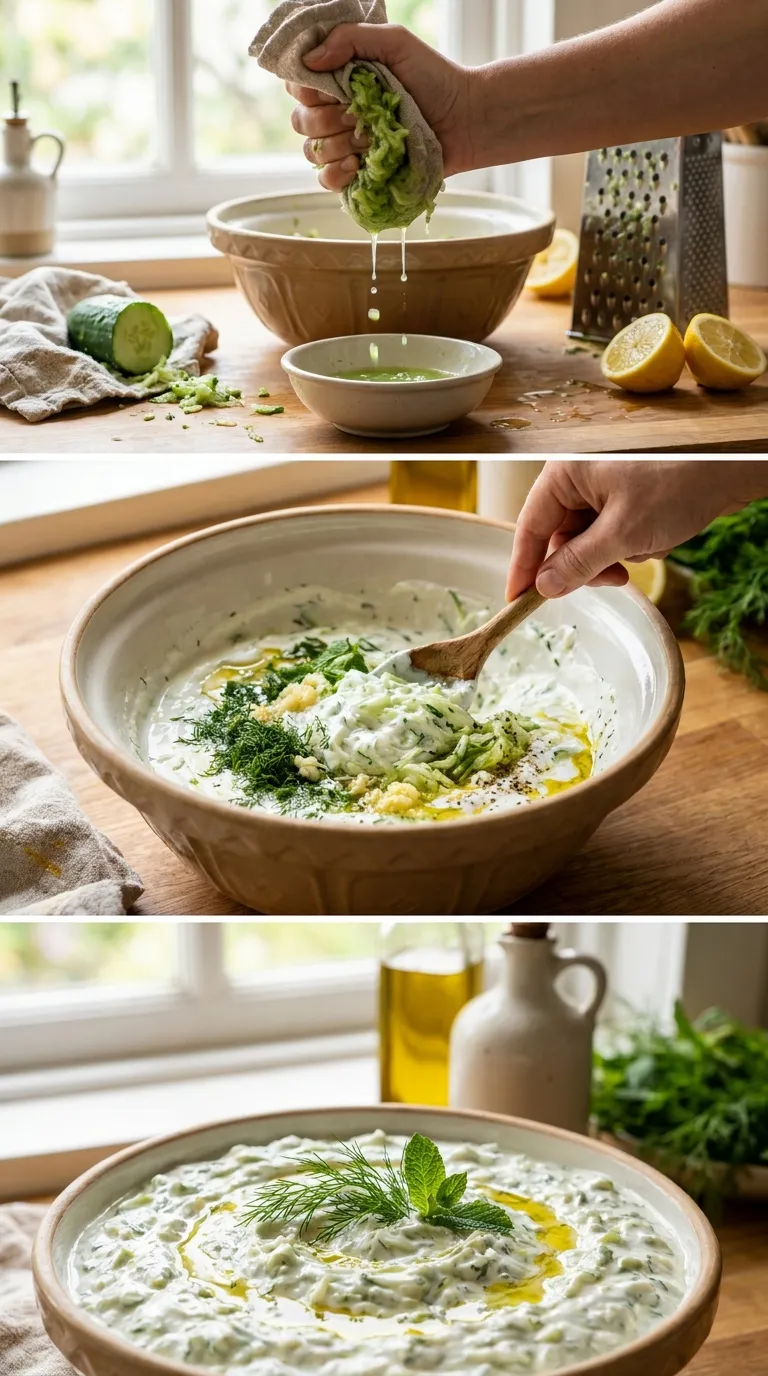
1. Prepare the Cucumber
Grate the cucumber using the large holes of a box grater. Place the grated cucumber in a clean kitchen towel or a few layers of cheesecloth. Sprinkle it with a pinch of salt. Gather the corners of the towel and twist tightly over the sink, squeezing out as much liquid as you possibly can. You will be surprised how much water comes out! This step is critical for preventing a runny tzatziki.2. Strain the Yogurt
While the cucumber is draining, line a fine-mesh sieve with a coffee filter or a paper towel. Place the sieve over a bowl and spoon the Greek yogurt into it. Let it sit for 15-20 minutes. You will see a small amount of whey collect in the bottom of the bowl. Discard this liquid. This extra step guarantees an ultra-thick, almost cream-cheese-like texture.3. Combine the Core Ingredients
In a medium mixing bowl, combine the strained yogurt, the squeezed-dry cucumber, the minced garlic, lemon juice, olive oil, fresh dill, and mint (if using). Add the salt and pepper. Stir everything together until it is uniformly combined. Taste the sauce and adjust the seasoning. You might want more salt, a squeeze more lemon, or an extra pinch of dill.4. Rest and Serve
This is the hardest step! Cover the bowl with plastic wrap and place it in the refrigerator for at least 30 minutes, though an hour is even better. This resting period allows the flavors to meld and marry together. The garlic will mellow, the herbs will infuse the yogurt, and the sauce will thicken slightly. Serve chilled, drizzled with a little extra olive oil and a sprinkle of fresh herbs.Common Mistakes to Avoid
- Skipping the Draining Steps: This is the number one mistake. If you don’t squeeze the cucumber and strain the yogurt, your tzatziki will be watery and thin, losing its signature creamy texture.
- Using Pre-Minced Garlic: Jarred garlic has a harsh, metallic taste. Always use fresh garlic cloves for the best, most aromatic flavor in your easy dishes.
- Not Letting It Rest: Tzatziki needs time for its flavors to develop. Serving it immediately will result in a harsh garlic bite and a less cohesive sauce. Patience is rewarded with a much more balanced dip.
Perfect Pairings
This tzatziki is a star player in so many simple meals. It’s the perfect partner for grilled meats, fresh vegetables, and warm bread.It is the essential finishing touch for our Irresistible Greek Chicken Gyro Bowls, adding a cool, creamy contrast to the savory spiced chicken. It also brings a refreshing element to our Sun Kissed Greek Chicken Bowl.
For a lighter meal, use it as a dressing for our Vibrant Greek Yogurt Street Corn Pasta Salad or our Creamy Dreamy Greek Yogurt Grinder Pasta Salad. It also makes a phenomenal sauce for our Zesty Greek Yogurt Taco Pasta Salad.
Beyond these, serve it alongside grilled lamb chops, spoon it over falafel, use it as a spread for wraps and sandwiches, or simply enjoy it as a dip with crunchy raw vegetables and warm pita bread. It transforms any easy dinner into something special.
The Grateful Host
Thanks for stopping by! I hope this dish brings joy to your table.Why is it important to drain the yogurt and squeeze the cucumber when making tzatziki?
Draining the yogurt and squeezing the grated cucumber are crucial steps to remove excess water. Skipping these steps will result in a watery, thin sauce instead of the thick, creamy, restaurant-quality texture that tzatziki is known for.
Can I make this tzatziki recipe dairy-free or with different herbs?
Yes. For a dairy-free version, use a thick, plain coconut or cashew-based yogurt, though you may need to strain it further. For herbs, you can substitute dill with extra mint, fresh chives, or parsley for a different flavor profile.
What is the purpose of letting the tzatziki rest in the refrigerator before serving?
Resting the tzatziki in the refrigerator for at least 30 minutes (ideally an hour) allows the flavors to meld and marry. This mellows the harsh garlic bite, lets the herbs infuse the yogurt, and thickens the sauce, resulting in a much more balanced and cohesive dip.
What are some ways to serve or use this Greek tzatziki sauce?
This tzatziki is incredibly versatile. It can be used as a dip for raw vegetables and pita bread, a sauce for grilled meats like lamb or chicken, a spread for wraps and sandwiches, or a dressing for pasta salads like the Greek Chicken Gyro Bowls mentioned in the article.


Greek Tzatziki Sauce Ready in 30 Minutes

Equipment
- Box grater
- Clean kitchen towel or cheesecloth
- fine mesh sieve
- Coffee filter or paper towel
- Medium mixing bowl
- Small bowl (for draining yogurt)
- Plastic Wrap
- Measuring cups and spoons
- Chef’s knife
- Cutting board
- Garlic press or microplane (optional)
Ingredients
- 1 large English cucumber or 2 Persian cucumbers
- 2-3 cloves garlic, minced or grated
- 2 tablespoons fresh lemon juice
- 2 tablespoons extra virgin olive oil
- 1 tablespoon fresh dill, finely chopped or 1 teaspoon dried
- 1 tablespoon fresh mint, finely chopped optional
- ½ teaspoon salt, plus more to taste
- ¼ teaspoon black pepper
Instructions
- Grate the cucumber using the large holes of a box grater. Place the grated cucumber in a clean kitchen towel or a few layers of cheesecloth. Sprinkle it with a pinch of salt. Gather the corners of the towel and twist tightly over the sink, squeezing out as much liquid as possible. Set aside.
- Line a fine-mesh sieve with a coffee filter or a paper towel. Place the sieve over a small bowl and spoon the Greek yogurt into it. Let it sit for 15-20 minutes to drain excess whey. Discard the liquid that collects in the bowl.
- In a medium mixing bowl, combine the strained yogurt, the squeezed-dry cucumber, the minced garlic, lemon juice, olive oil, fresh dill, and mint (if using). Add the salt and pepper. Stir everything together until uniformly combined.
- Taste the sauce and adjust the seasoning, adding more salt, lemon juice, or herbs as desired.
- Cover the bowl with plastic wrap and refrigerate for at least 30 minutes (or up to 1 hour) to allow the flavors to meld. Serve chilled, drizzled with a little extra olive oil and a sprinkle of fresh herbs.