There’s a quiet, almost magical moment when a spoonful of this sauce hits your tongue—the creamy peanut butter, the sharp bite of lime, the subtle warmth of chili, all swirling together in a perfect, velvety harmony. It’s a flavor that doesn’t just sit on your taste buds; it dances, a little bit sweet, a little bit savory, and entirely unforgettable.
This isn’t just any sauce; it’s your new secret weapon for transforming simple ingredients into something spectacular. In just five minutes, with a bowl and a whisk, you can create a sauce so luscious and versatile that it will become the cornerstone of your quick dinners and weeknight meals. It’s the kind of easy recipe that makes you feel like a culinary genius with almost no effort.
Why This Recipe Works
- Unbelievably Fast: No chopping, no cooking. Just whisk and serve. It’s the ultimate shortcut for busy evenings.
- Perfectly Balanced Flavor: The creamy richness of peanut butter is cut by tangy lime and brightened by a touch of sweetness, creating a complex, crave-worthy taste.
- Incredibly Versatile: Use it as a dip, a dressing, a marinade, or a stir-fry sauce. It’s the one homemade sauce you’ll make on repeat.
The Essential Components
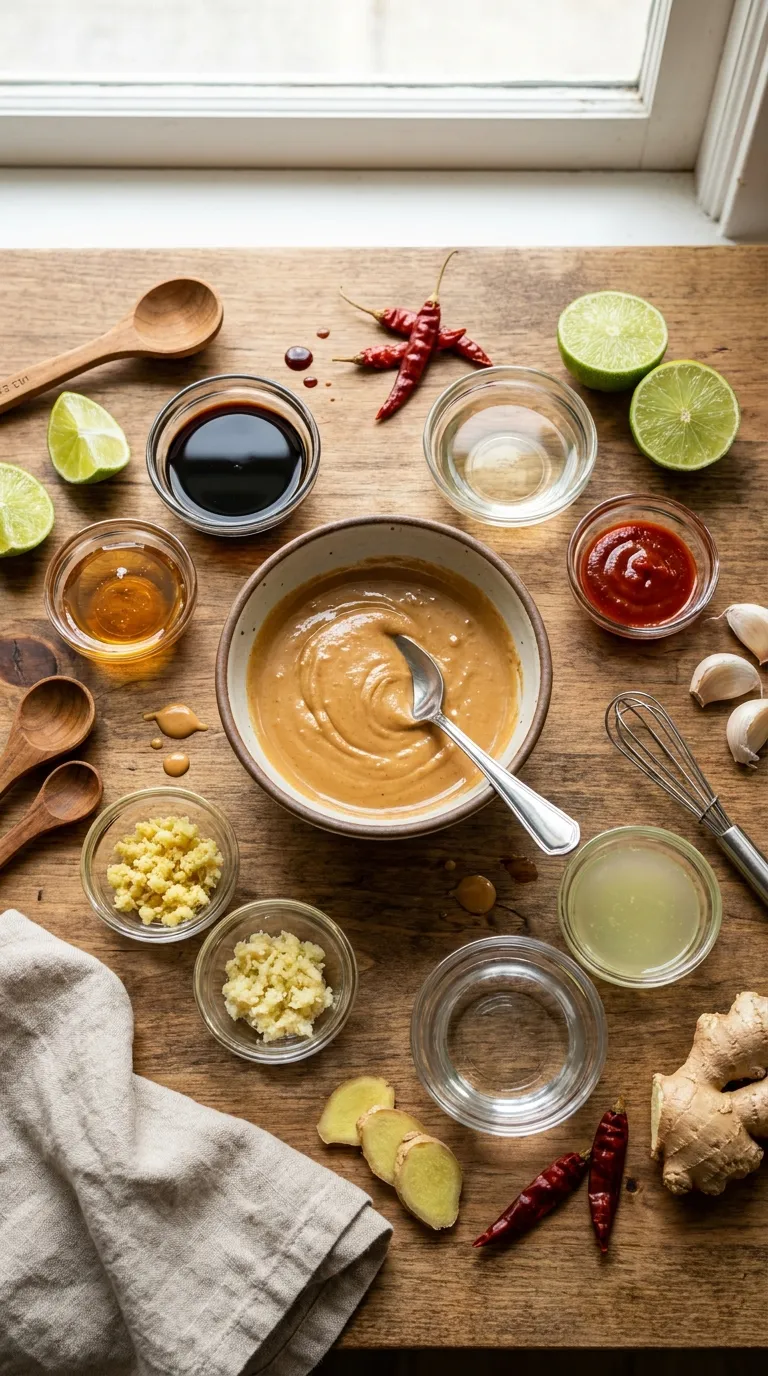
- ½ cup creamy peanut butter (Natural, no-stir works best for a smooth consistency; the oil helps emulsify the sauce.)
- 3 tablespoons soy sauce (For that deep, savory umami base. Use tamari for a gluten-free option.)
- 2 tablespoons rice vinegar (Provides the essential bright, tangy acidity to cut through the richness.)
- 1 tablespoon sriracha or chili garlic sauce (For a gentle, buildable heat. Adjust to your spice tolerance.)
- 1 tablespoon honey or maple syrup (Balances the salty and sour elements with a touch of sweetness.)
- 1 clove garlic, finely grated (Adds a pungent, aromatic kick that infuses the entire sauce.)
- 1 teaspoon fresh ginger, grated (A warm, zesty note that is the hallmark of Thai-inspired flavors.)
- 2-3 tablespoons warm water (To adjust the consistency to your liking, from a thick dip to a pourable dressing.)
- Juice of ½ a fresh lime (Fresh lime is non-negotiable for that vibrant, citrusy finish.)
Swaps & Alternatives
- Nut-Free: Substitute peanut butter with sunflower seed butter or tahini for a completely nut-free version.
- Lower Sodium: Use low-sodium soy sauce or coconut aminos to control the salt level.
- Extra Spicy: Add a pinch of red pepper flakes or a dash of your favorite hot sauce along with the sriracha.
- No Lime: In a pinch, you can use a little extra rice vinegar, but the flavor won’t be quite as bright.
- Thicker Sauce: For a dipping sauce, omit the water or add just 1 tablespoon for a dense, spoonable texture.
Chef’s Twists
Once you’ve mastered the base, it’s time to play. These small additions can elevate your sauce from great to unforgettable, making it the star of your family meals.- Coconut Cream Dream: Swap the water for 2 tablespoons of full-fat coconut milk for an ultra-luxurious, silky texture and a subtle tropical note.
- Toasted Sesame Depth: Stir in 1 teaspoon of toasted sesame oil at the end for a nutty, aromatic complexity that pairs beautifully with noodles.
- Herbaceous Freshness: Fold in a handful of finely chopped fresh cilantro or Thai basil just before serving for a burst of color and flavor.
- Curry Infusion: Whisk in 1 teaspoon of red curry paste along with the other ingredients for a deeper, more complex spice profile.
How to Make Thai Peanut Sauce
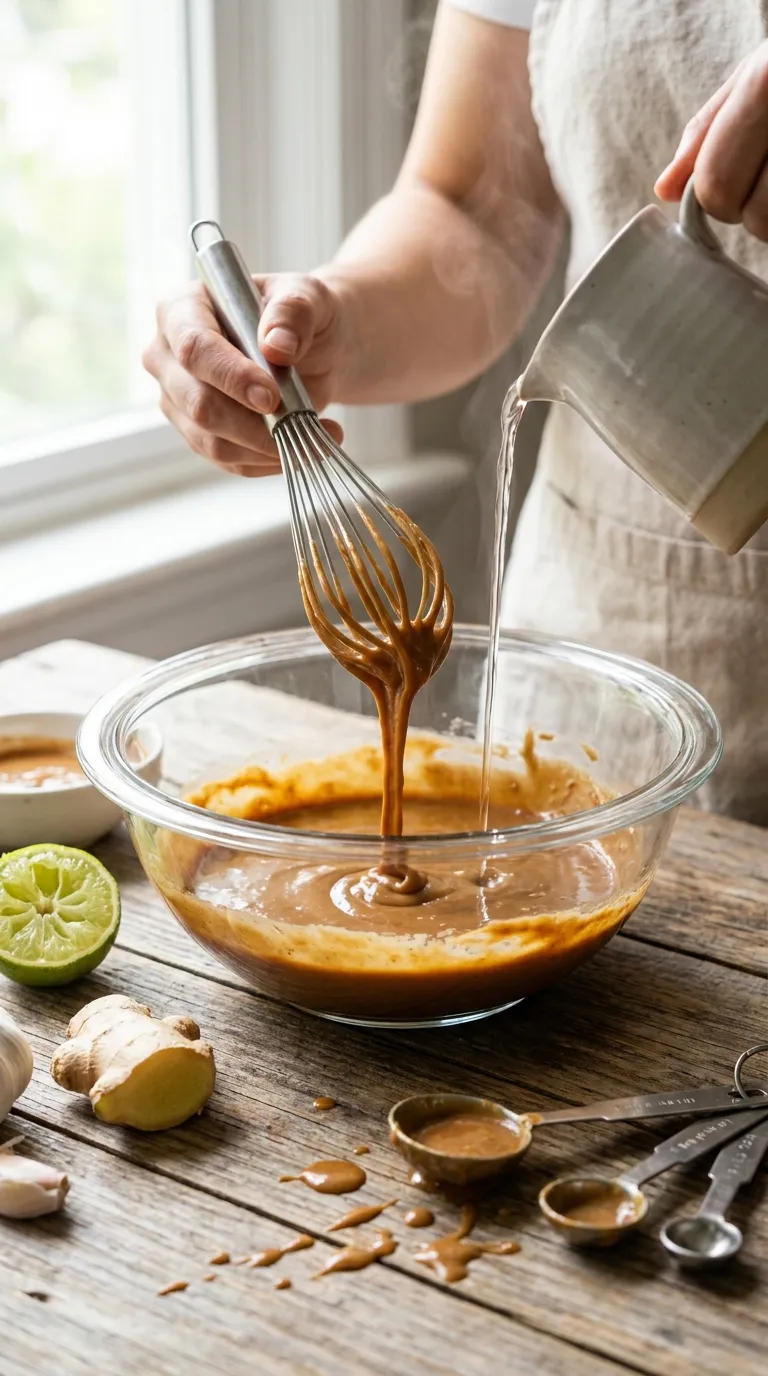
1. Combine the Aromatics
In a medium-sized mixing bowl, add the creamy peanut butter, soy sauce, rice vinegar, sriracha, honey, grated garlic, and grated ginger. Don’t worry about mixing them perfectly yet; just get them all in the same bowl.2. Whisk to a Paste
Using a sturdy whisk or a fork, vigorously stir the ingredients together. At first, it will look clumpy and thick, like a stiff paste. This is completely normal. Keep whisking until the peanut butter breaks down and the mixture becomes a cohesive, thick, and glossy paste.3. Adjust the Consistency
Now, add the warm water, one tablespoon at a time, whisking continuously after each addition. Watch the sauce transform from a thick paste into a smooth, silky, and pourable sauce. Stop when it reaches your desired consistency—thicker for a dip, thinner for a dressing.4. Finish with Lime and Taste
Squeeze in the fresh lime juice and give it one final, vigorous whisk. Taste your sauce. Is it salty enough? A pinch more soy sauce. Too acidic? A tiny bit more honey. Too thick? Another splash of water. This is your moment to perfect it to your liking.Common Mistakes to Avoid
- Using Cold Ingredients: Cold peanut butter is stiff and hard to whisk. Let your peanut butter sit at room temperature for 10 minutes for a smoother start.
- Skipping the Lime: Bottled lime juice lacks the bright, floral zing of fresh lime. Do not skip this step; it is the key to a vibrant sauce.
- Adding Too Much Water Too Fast: Add the water slowly. You can always thin it out, but you can’t thicken a watery sauce without adding more peanut butter and throwing off the balance.
- Not Tasting Before Serving: Flavors vary wildly between brands of peanut butter and soy sauce. Always taste and adjust the salt, sweet, and acid before serving.
Perfect Pairings
This sauce is a culinary chameleon. It’s the glue that holds so many of my favorite dishes together, from simple salads to hearty bowls. It’s the soul of many Thai Peanut Chicken Wraps and the star of a quick noodle dish.Drizzle it generously over a Vibrant Chicken Buddha Bowl With Peanut Sauce for a lunch that’s both healthy and deeply satisfying. Toss it with warm noodles, shredded chicken, and fresh veggies for a 15-minute dinner of Thai Chicken Peanut Noodles. It also makes a fantastic dipping sauce for fresh spring rolls or grilled chicken skewers.
For a heartier meal, use it as a finishing sauce for Thai Pineapple Fried Rice With Chicken, or stir a few spoonfuls into a warming bowl of Thai Chicken Soup for an extra layer of creamy, nutty flavor. You can even use it as a quick marinade for chicken or tofu before grilling.
The first time you make this sauce, you’ll wonder why you ever bought the bottled stuff. It’s that good, that fast, and that easy. I hope this guide made it easy for you! Let me know how it turned out!
What is the key to achieving the perfect consistency for this Thai peanut sauce?
The key is to add warm water slowly, one tablespoon at a time, while whisking continuously. This transforms the thick paste into a smooth, silky sauce. You can stop adding water when it reaches your desired consistency—thicker for a dip or thinner for a dressing.
Can I make this peanut sauce nut-free or lower in sodium?
Yes, for a nut-free version, substitute the peanut butter with sunflower seed butter or tahini. To lower the sodium, use low-sodium soy sauce or coconut aminos instead of regular soy sauce.
What are some common mistakes to avoid when making this sauce?
Common mistakes include using cold peanut butter (let it sit at room temperature for 10 minutes), skipping fresh lime juice (bottled lacks the bright flavor), adding too much water too fast, and not tasting the sauce before serving to adjust the salt, sweet, and acid balance.
How can I use this Thai peanut sauce beyond just a dip?
This sauce is very versatile. You can use it as a dressing for salads or Buddha bowls, a marinade for chicken or tofu, a stir-fry sauce for noodles, or even stir a few spoonfuls into soup for extra creamy, nutty flavor.
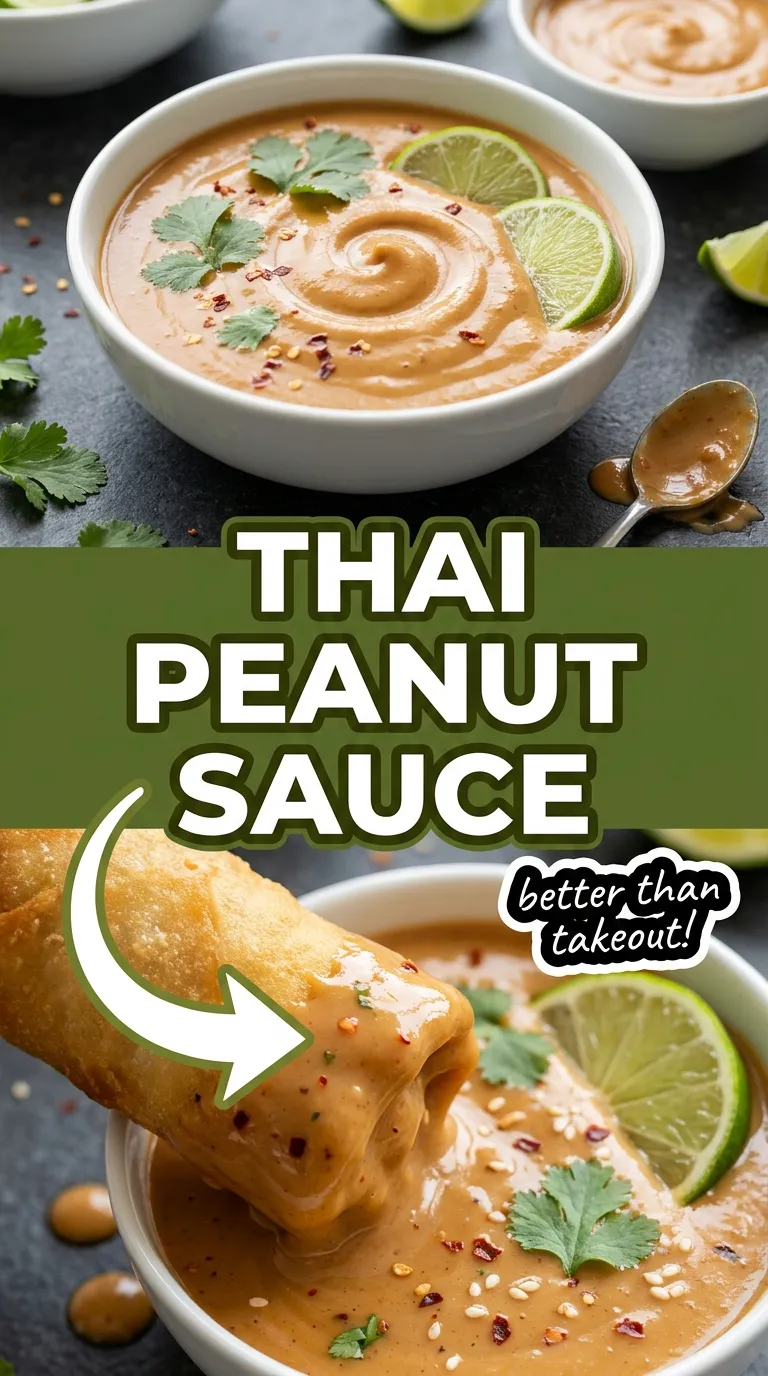

Thai Peanut Sauce Ready in Five Minutes

Equipment
- Medium mixing bowl
- Sturdy whisk or fork
- Measuring cups and spoons
- Citrus juicer or reamer
- Microplane or fine grater (for garlic and ginger)
Ingredients
- ½ cup creamy peanut butter natural, no-stir preferred
- 3 tablespoons soy sauce or tamari for gluten-free
- 2 tablespoons rice vinegar
- 1 tablespoon sriracha or chili garlic sauce
- 1 tablespoon honey or maple syrup
- 1 clove garlic, finely grated
- 1 teaspoon fresh ginger, grated
- 2-3 tablespoons warm water as needed for consistency
- Juice of ½ fresh lime
Instructions
- In a medium mixing bowl, combine the creamy peanut butter, soy sauce, rice vinegar, sriracha, honey, grated garlic, and grated ginger.
- Using a sturdy whisk or fork, vigorously stir the ingredients together until they form a thick, cohesive, and glossy paste.
- Add the warm water, one tablespoon at a time, whisking continuously after each addition. Stop when the sauce reaches your desired consistency—thicker for a dip, thinner for a dressing.
- Squeeze in the fresh lime juice and whisk one final time to combine.
- Taste the sauce and adjust seasoning: add a pinch more soy sauce for saltiness, a little more honey for sweetness, or an extra splash of water to thin. Serve immediately or store in the refrigerator.