This isn’t just a stir-fry; it’s a full-on flavor riot that comes together faster than you can order takeout. The magic lies in the holy trinity of fiery bird’s eye chilies, pungent garlic, and the unmistakable aniseed punch of holy basil, all clinging to juicy, caramelized chicken.
We are talking about a dish that delivers restaurant-quality depth in under half an hour, using a single skillet and a handful of pantry staples. By the time the steam clears, you’ll have a plate of deeply savory, spicy, and aromatic chicken that will ruin you for any other weeknight dinner.
What Makes This The Best
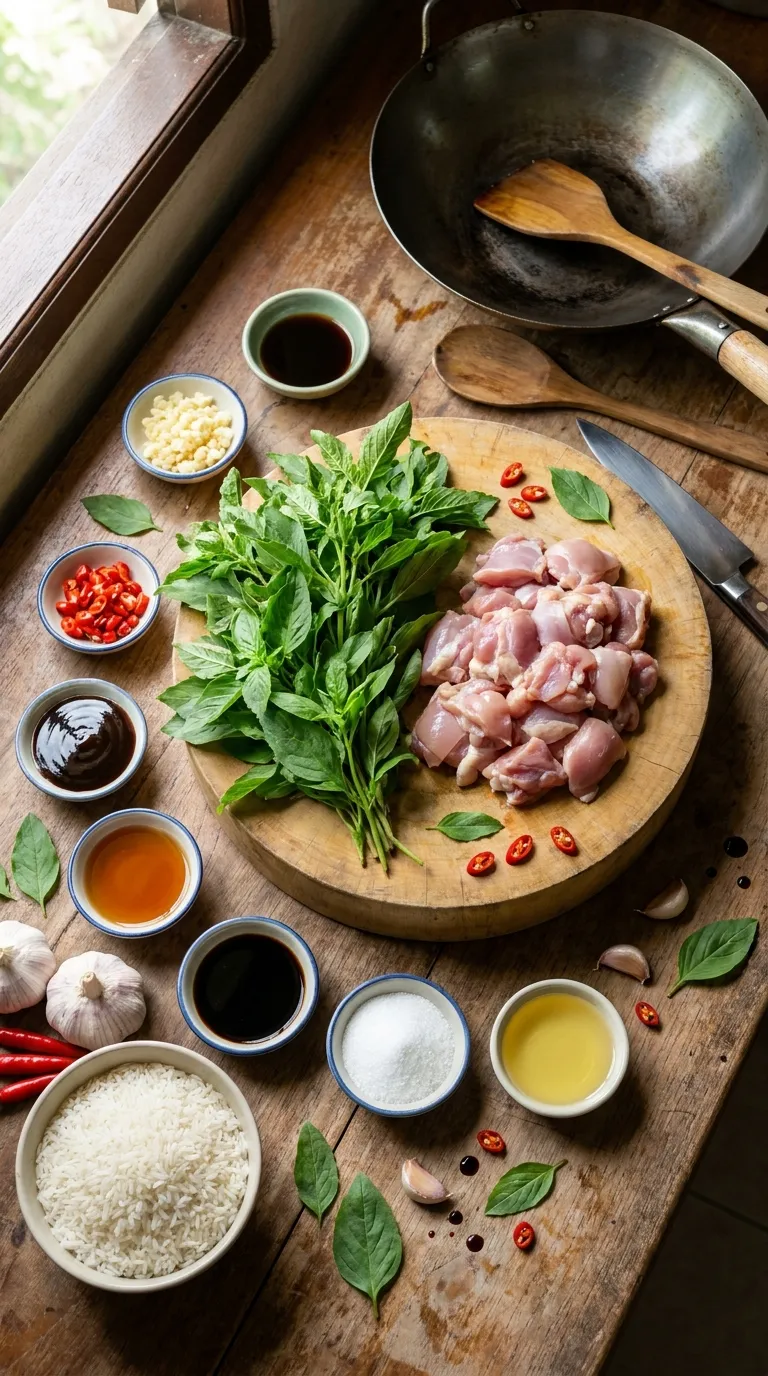
What Makes This The Best
- Unmatched Flavor Speed: The high-heat searing technique creates a deep, smoky char (wok hei) on the chicken in minutes, locking in juices while building a complex, savory crust.
- The Holy Basil Factor: Using fresh holy basil (or Thai basil) is non-negotiable. It releases a peppery, almost licorice-like aroma when wilted that standard sweet basil simply cannot replicate.
- Perfectly Balanced Sauce: The combination of oyster sauce, fish sauce, and soy sauce creates a salty-sweet-umami backbone that clings to every piece of chicken without being gloopy.
The Building Blocks
Before we fire up the stove, let’s talk about the players. Quality ingredients here make a massive difference because the list is so short. Do not skip the fresh chilies or the specific basil.
- 1 lb Boneless, Skinless Chicken Thighs: (Chopped into bite-sized pieces) Thighs stay juicier than breasts under high heat. Why it works: The extra fat content prevents drying out and adds richness.
- 1 cup Fresh Holy Basil Leaves (or Thai Basil): Packed tightly. Why it works: Its unique, spicy-clove flavor is the soul of this dish. Regular basil is a poor substitute.
- 5-6 Cloves Garlic: Minced. Why it works: A massive amount of garlic provides the aromatic foundation.
- 3-4 Bird’s Eye Chilies (Thai Chilies): Thinly sliced (adjust to heat preference). Why it works: They bring fruity, searing heat that builds slowly.
- 2 tablespoons Oyster Sauce: Why it works: Adds deep, briny-sweet umami that can’t be faked.
- 1 tablespoon Fish Sauce: Why it works: Provides the salty, savory backbone of authentic Thai cuisine.
- 1 tablespoon Soy Sauce: Why it works: Balances the fish sauce and adds color.
- 1 teaspoon Sugar: Why it works: Balances the heat and salt, creating a perfect savory-sweet profile.
- 2 tablespoons Vegetable Oil: For high-heat cooking.
- Steamed Jasmine Rice: For serving.
If You Don’t Have…
Don’t let a missing ingredient stop you. Here are some smart swaps.
- No Holy Basil? Use a mix of regular sweet basil and a pinch of fresh mint or tarragon to mimic the peppery notes.
- No Bird’s Eye Chilies? Use 2-3 serrano peppers or 1 jalapeño (with seeds for heat).
- No Oyster Sauce? Use vegetarian stir-fry sauce or a mix of hoisin and soy sauce.
- No Chicken Thighs? Chicken breast works, but cook it for 1-2 minutes less to avoid dryness.
Flavor Boosts
Once you master the base, these variations will make this recipe a permanent resident in your weekly rotation.
- Add a Fried Egg: Serve the chicken over rice with a crispy-edged, runny-yolk fried egg on top. The yolk mixing with the sauce is pure heaven.
- Make it a Chicken Wrap: Let the stir-fry cool slightly, then pile it into warm flour tortillas with fresh cucumber sticks and a drizzle of Thai Peanut Sauce for an incredible fusion wrap.
- Vegetable Load: Toss in a handful of green beans, bell peppers, or snap peas during the last 2 minutes of cooking for extra crunch and color.
- Nutty Crunch: Top with crushed roasted peanuts or cashews and a squeeze of fresh lime juice just before serving.
The Complete Method
This entire process takes about 20 minutes from start to finish. The key is to have all your ingredients prepped and within arm’s reach before you turn on the heat. Stir-frying waits for no one.
1. Prep the Sauce and Aromatics
In a small bowl, whisk together the oyster sauce, fish sauce, soy sauce, and sugar until the sugar dissolves. Set this aside. Have your minced garlic and sliced chilies ready on a small plate.
2. Sear the Chicken to Golden Perfection
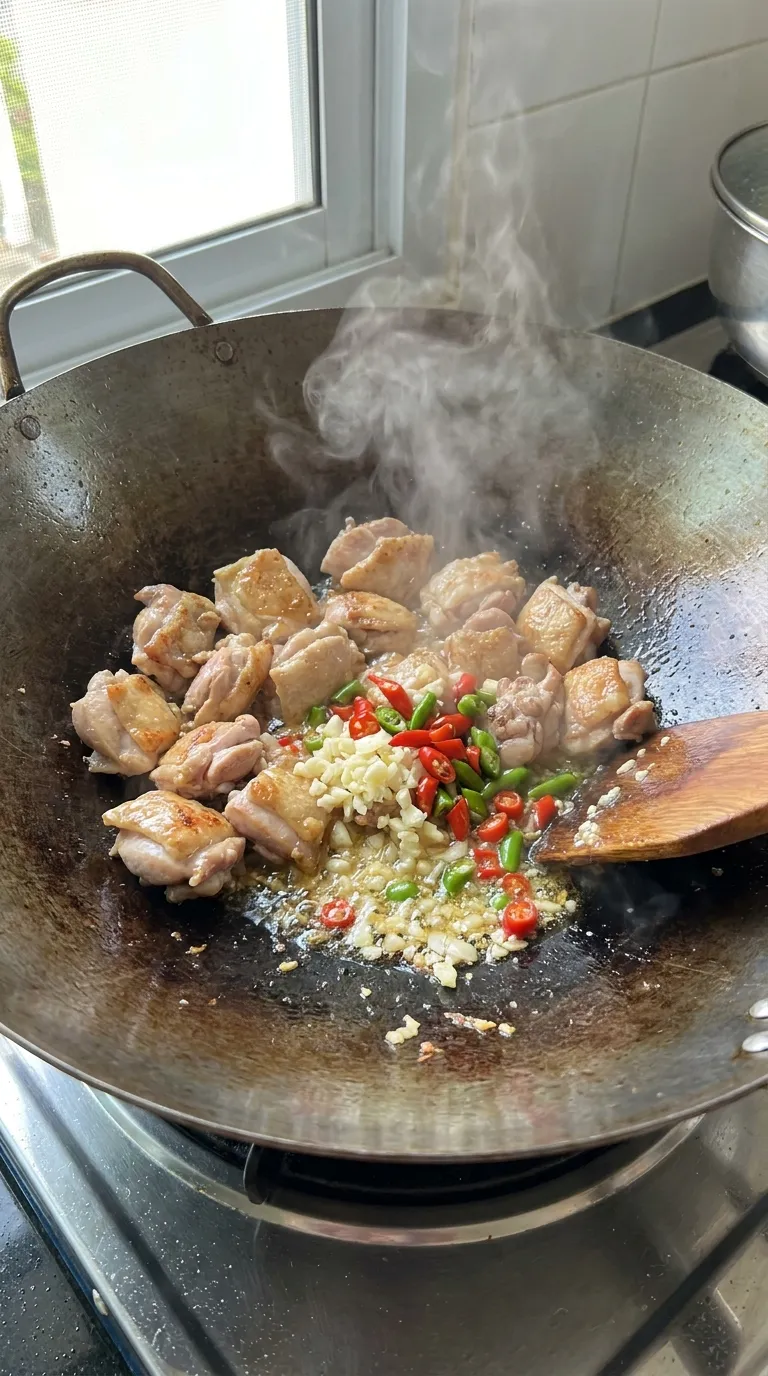
Heat your largest skillet or wok over high heat until it starts to smoke slightly. Add the vegetable oil and swirl to coat. Add the chicken pieces in a single layer (work in batches if needed). Let them sear undisturbed for 2-3 minutes until deeply golden brown. Toss and cook for another 2 minutes until cooked through. Remove the chicken to a plate.
3. Build the Aromatic Base
Reduce the heat to medium. In the same skillet, add the garlic and chilies. Stir constantly for about 30 seconds until fragrant, being careful not to burn the garlic. This is where the kitchen starts to smell incredible.
4. Combine and Simmer
Return the chicken to the skillet. Pour the prepared sauce over the top. Toss everything together to coat the chicken evenly. Let it simmer for 1 minute so the sauce thickens slightly and clings to the meat.
5. Wilt the Basil and Serve
Turn off the heat. Immediately add the fresh holy basil leaves. Toss vigorously for about 30 seconds. The residual heat will wilt the leaves perfectly without making them slimy. Serve immediately over steamed jasmine rice. For a complete meal, pair it with a side of Cilantro Lime Rice for a bright, citrusy contrast.
Where People Go Wrong
Where People Go Wrong
- Overcrowding the Skillet: If you add too much chicken at once, it steams instead of sears. You lose the crucial caramelized crust. Cook in batches if necessary.
- Adding Basil Too Early: Basil turns into a sad, dark mush if cooked too long. Always add it off the heat and toss gently.
- Using the Wrong Basil: Standard Italian basil lacks the spicy, peppery kick of holy basil. The dish will taste flat and herbaceous rather than complex.
- Forgetting the Sugar: That tiny teaspoon of sugar is not for sweetness—it balances the salt and heat. Without it, the sauce tastes harsh and one-dimensional.
Perfect Pairings
This dish is a star, but it loves good company. Here is how to build a complete Thai-inspired feast.
- The Classic Rice: Steamed jasmine rice is the traditional choice to soak up the sauce. For a twist, try my Vegetable Fried Rice With Crispy Garlic as a hearty base.
- Cooling Salad: A simple cucumber salad or a crisp green salad with Thai Peanut Salad Dressing cuts through the heat beautifully.
- Veggie Sides: Serve alongside a quick Pineapple Chicken Stir Fry for a sweet and spicy duo, or roast some broccoli with sesame oil.
- Leftover Magic: Shred leftover chicken and use it to fill chicken enchiladas or chicken fajitas for a fusion twist. It also makes a fantastic topping for a chicken skillet with rice and beans. For a completely different vibe, fold the leftovers into a creamy chicken curry or use them in a chicken wrap with fresh herbs.
First time making Thai Basil Chicken? I hope this guide made it easy. Let me know how it turned out!
What makes holy basil essential for this recipe, and can I substitute it with regular basil?
Holy basil (or Thai basil) is essential because it provides a unique peppery, aniseed-like flavor that is the soul of the dish. Regular sweet basil is a poor substitute as it lacks this spicy kick. If you don’t have holy basil, the article suggests using a mix of sweet basil with a pinch of fresh mint or tarragon to mimic the peppery notes.
Why is it important not to overcrowd the skillet when cooking the chicken?
Overcrowding the skillet causes the chicken to steam instead of sear, preventing the formation of a deep, caramelized crust. To achieve the crucial smoky char and lock in juices, you should cook the chicken in a single layer, working in batches if necessary.
What is the correct way to add the basil leaves to ensure they don’t become slimy or mushy?
You should turn off the heat before adding the basil leaves. Toss the fresh holy basil leaves vigorously in the hot skillet for about 30 seconds; the residual heat will wilt them perfectly without making them dark, slimy, or mushy.
What can I do with leftovers from this Spicy Thai Basil Chicken?
Leftover chicken can be shredded and used in various fusion dishes. The article suggests using it to fill chicken enchiladas or fajitas, topping a chicken skillet with rice and beans, folding it into a creamy chicken curry, or using it in a chicken wrap with fresh herbs.
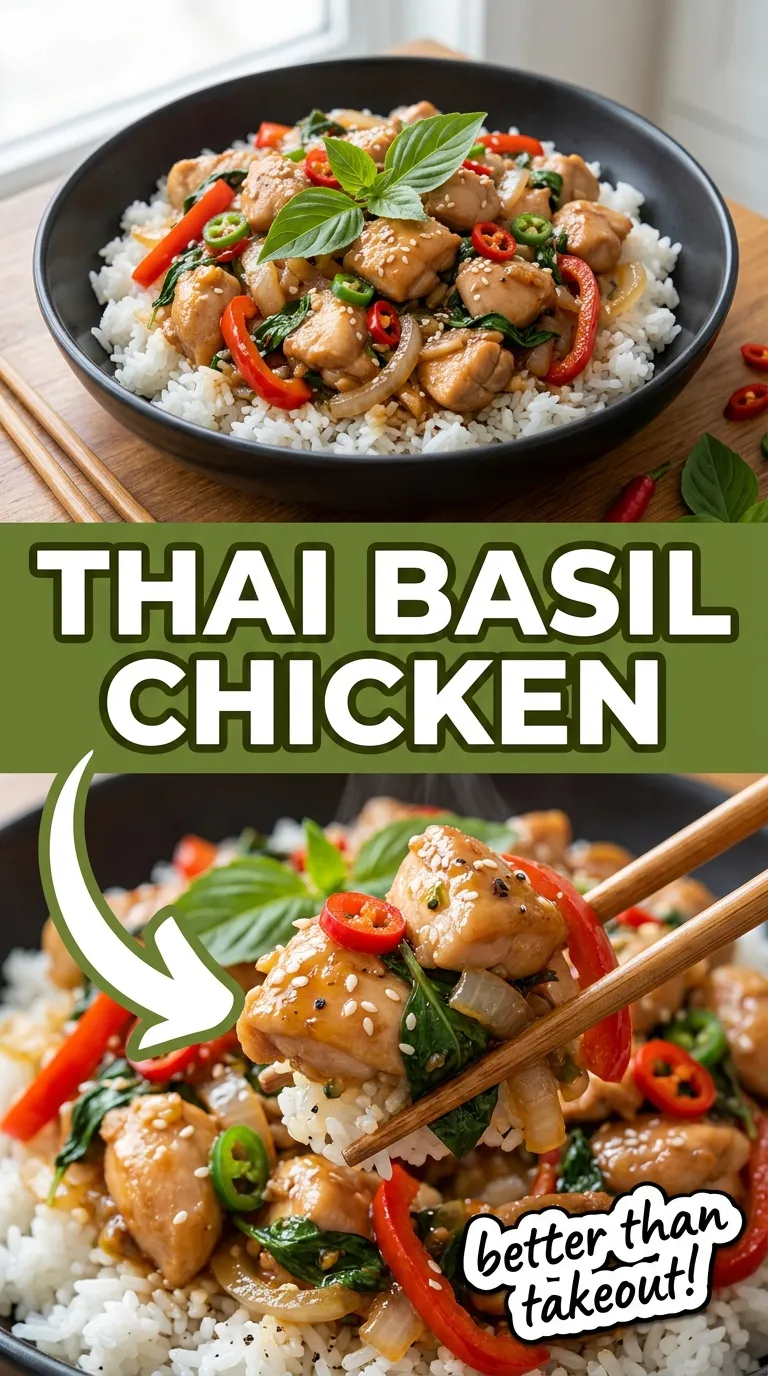

Spicy Thai Basil Chicken in 30 Minutes

Equipment
- Large Skillet or Wok
- Cutting board
- Chef’s knife
- Small bowl
- Whisk
- Measuring spoons
- Spatula or tongs
- Plate
Ingredients
- 1 lb boneless, skinless chicken thighs, chopped into bite-sized pieces
- 1 cup fresh holy basil leaves or Thai basil
- 5-6 cloves garlic, minced
- 3-4 bird’s eye chilies Thai chilies
- 2 tablespoons oyster sauce
- 1 tablespoon fish sauce
- 1 tablespoon soy sauce
- 1 teaspoon sugar
- 2 tablespoons vegetable oil
- Steamed jasmine rice, for serving
Instructions
- In a small bowl, whisk together the oyster sauce, fish sauce, soy sauce, and sugar until the sugar dissolves. Set aside.
- Heat a large skillet or wok over high heat until it starts to smoke slightly. Add the vegetable oil and swirl to coat.
- Add the chicken pieces in a single layer (work in batches if needed). Let them sear undisturbed for 2-3 minutes until deeply golden brown. Toss and cook for another 2 minutes until cooked through. Remove the chicken to a plate.
- Reduce the heat to medium. In the same skillet, add the garlic and chilies. Stir constantly for about 30 seconds until fragrant, being careful not to burn the garlic.
- Return the chicken to the skillet. Pour the prepared sauce over the top. Toss everything together to coat the chicken evenly. Let it simmer for 1 minute so the sauce thickens slightly and clings to the meat.
- Turn off the heat. Immediately add the fresh holy basil leaves. Toss vigorously for about 30 seconds. The residual heat will wilt the leaves perfectly without making them slimy.
- Serve immediately over steamed jasmine rice.