Salty cured meats and tangy vinaigrette collide in a bowl that celebrates the savory side of life without a single flaccid cucumber or stray cherry tomato in sight. This dish is a love letter to the carnivores and the texture-seekers who want every bite to be packed with protein, cheese, and perfectly al dente pasta.
You are about to create a masterpiece that stays firm in the fridge and delivers a punch of Mediterranean flavor that only gets better as the hours pass. It is the ultimate solution for potlucks where you want a side dish that actually feels like a meal and won’t wilt under the sun.
The Veggie-Free Italian Pasta Salad Difference
- Unmatched Texture: Without watery vegetables, the pasta stays firm and the meats retain their satisfying bite.
- Flavor Concentration: The dressing coats the pasta and proteins directly, creating a more intense savory profile that isn’t diluted by veggie juices.
- Extended Freshness: This salad won’t get soggy or wilted, making it the absolute king of make-ahead meals and leftovers.
The Essential Components
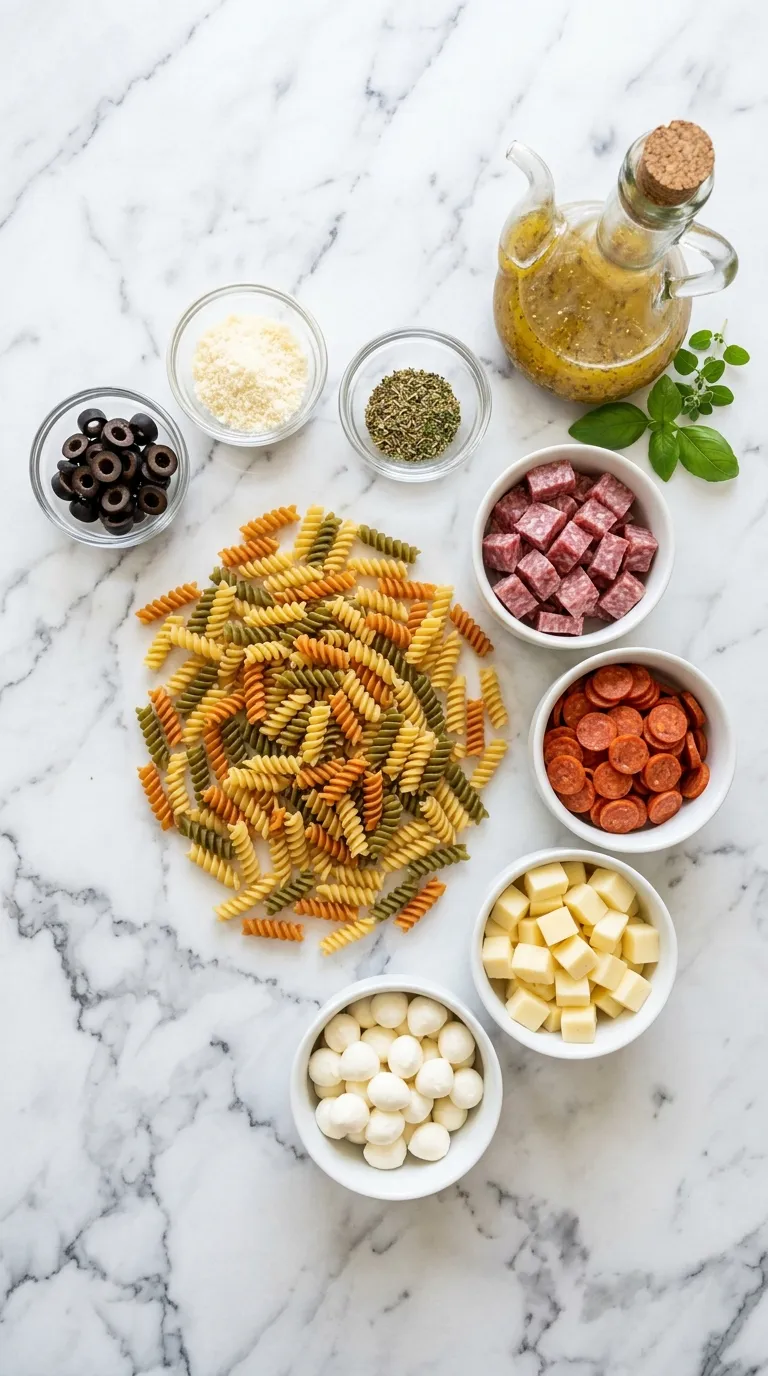
Quality is everything when you have fewer ingredients to hide behind in a recipe like this. When we strip away the peppers and onions, we allow the richness of the meats and the creaminess of the cheeses to take center stage.
Choosing the right pasta shape is your first step toward success, as you need something with nooks and crannies to trap the dressing. I always recommend a high-quality dried pasta made from durum wheat to ensure it holds its shape during the tossing process.
- Rotini or Fusilli: These corkscrew shapes are essential (To catch the dressing and herbs in their deep spirals).
- Genoa Salami: A mild, fatty salami provides a rich base (For a salty, melt-in-your-mouth fat content).
- Pepperoni: Use the sandwich-style or mini rounds (For a spicy, zesty kick and vibrant color).
- Provolone Cheese: Sharp or mild works, but ensure it is cubed (For a firm, creamy contrast to the chewy meat).
- Fresh Mozzarella Pearls: These small balls of cheese add a different dimension (For a soft, milky texture that balances the salt).
- Black Olives: While technically a fruit, they provide the necessary “earthiness” (For a briny depth that mimics the role of vegetables).
- Zesty Italian Dressing: Use a high-quality oil-based version (The acidic backbone that tenderizes the meats).
- Grated Parmesan: This acts as a thickener for the sauce (To help the dressing cling to the smooth pasta).
- Dried Oregano and Parsley: Even if your dressing has herbs, adding more is vital (To enhance the floral, Mediterranean aroma).
Swaps & Alternatives
Sometimes your pantry doesn’t have exactly what the recipe calls for, and that is perfectly okay. Being a flexible cook is the hallmark of an expert, and this salad is incredibly forgiving to substitutions.
- Swap salami for prosciutto or capicola if you want a more delicate or spicy Italian flair.
- Use cheese-filled tortellini instead of rotini to turn this into a Pesto Tortellini Salad inspired variation.
- Try smoked gouda instead of provolone if you want a deeper, woodsy profile that pairs well with cured meats.
- Replace black olives with green olives or even capers if you prefer a sharper, more acidic bite.
- If you want more protein, this base works perfectly for a High-protein Italian Pasta Salad by adding chickpeas or extra turkey.
Chef’s Twists
If you want to take this from a standard side dish to a gourmet experience, there are a few “pro moves” you can make. These additions don’t involve vegetables, but they do involve layers of flavor that will have people asking for your secret.
First, consider toasting some pine nuts in a dry pan until they are golden and fragrant. The buttery crunch they add mimics the texture of a firm vegetable without the watery downside.
Another great trick is to use a combination of different Italian meats, much like you would find in an Antipasto Grinder Pasta Salad. Mixing spicy soppressata with sweet ham creates a complex flavor profile that keeps your palate interested with every forkful.
Finally, don’t be afraid of a little heat; a teaspoon of red pepper flakes stirred into the dressing can wake up all the other ingredients. The oil in the dressing will carry that heat to every corner of the bowl, making the whole dish feel more vibrant.
The Complete Method
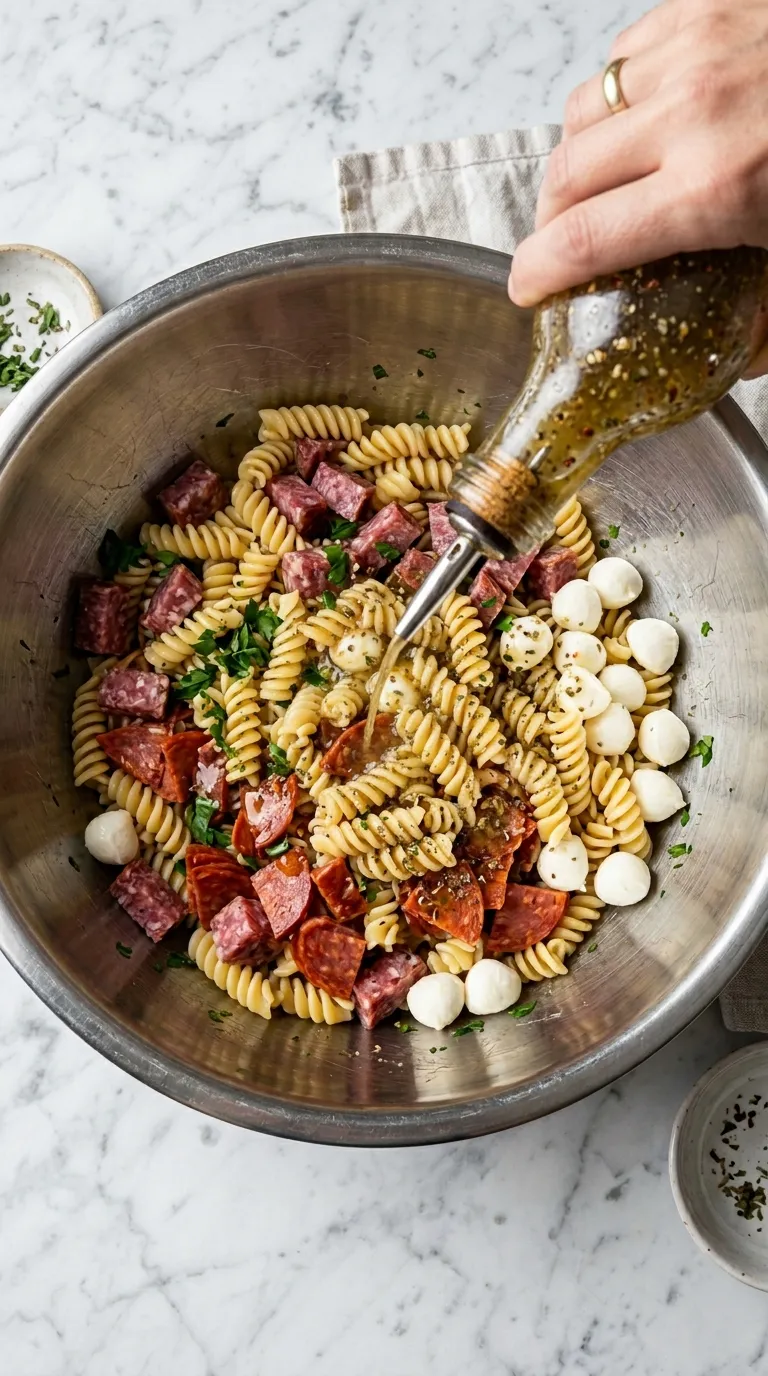
The beauty of this recipe lies in its simplicity, but the order of operations matters more than you might think. We want to ensure the pasta is seasoned from the inside out while maintaining the integrity of the delicate cheeses.
Expect this process to take about 20 minutes of active work, followed by at least an hour of chilling time. That resting period is where the magic happens, as the pasta absorbs the vinaigrette and the flavors marry together.
1. Boil the Pasta to Al Dente
Start by bringing a large pot of heavily salted water to a rolling boil. The water should taste like the sea, as this is your only chance to season the pasta itself.
Cook the rotini for about one minute less than the package directions suggest. We want it “al dente,” or firm to the bite, because it will continue to soften slightly as it sits in the dressing.
2. The Warm Dressing Toss
Once the pasta is drained, do not rinse it with cold water unless you are in a massive rush. Instead, place the warm pasta in a large bowl and pour over about one-third of your Italian dressing.
Tossing the pasta while it is warm allows the starch to soak up the flavors of the dressing. This technique is what separates a bland pasta salad from a professional-grade dish.
3. Prep the Meats and Cheeses
While the pasta cools slightly, take the time to cube your salami and provolone into uniform, bite-sized pieces. Consistency is key here; you want to be able to get a bit of everything on a single fork.
If you are looking for a creamier vibe, you might consider the elements of a Mayo-free Italian Grinder Pasta Salad by adding extra cheese. Drain your olives and mozzarella pearls thoroughly so they don’t add excess water to the bowl.
4. Combine and Season
Once the pasta is no longer steaming hot, add in your meats, cheeses, and olives. Add the remaining dressing, the grated Parmesan, and your extra dried herbs.
Fold everything together gently using a large spatula to avoid breaking the pasta spirals. Taste a piece of pasta and a piece of meat together to check if you need an extra pinch of salt or a crack of black pepper.
5. The Essential Chill
Cover the bowl tightly with plastic wrap or a lid and place it in the refrigerator. Let it sit for at least one hour, though three to four hours is the “sweet spot” for maximum flavor.
Before serving, give it one last toss. If the pasta has soaked up all the liquid and looks a bit dry, simply splash in a tablespoon more of dressing or olive oil to revive the shine.
Avoid These Pitfalls
- Overcooking the Pasta: If the pasta is too soft, it will fall apart when you toss it with the heavy meats and cheeses.
- Adding Cheese Too Early: If the pasta is still steaming, the mozzarella pearls will melt and create a clumpy mess rather than distinct bites.
- Under-Seasoning: Cold dishes dull the taste buds, so you need to season this more aggressively than you would a hot pasta dish.
Complete the Menu
This veggie-free Italian pasta salad is a powerhouse on its own, but it also plays well with others on a crowded table. Because it is so savory and rich, it pairs beautifully with grilled proteins like lemon herb chicken or even a simple steak.
If you are hosting a large gathering, you might want to offer a variety of options for your guests. You could serve this alongside a more traditional Italian Pasta Salad for those who actually enjoy their raw peppers and onions.
For a sandwich-inspired spread, this salad is the natural companion to a Salami And Provolone Grinder Pasta Salad. The lack of vegetables in this version makes it a favorite for kids and picky eaters who usually spend their time picking out the “green bits.”
Don’t forget the bread! A crusty loaf of Italian bread or some warm garlic knots can be used to swipe up any leftover dressing at the bottom of the bowl.
If you find yourself with leftovers, this salad makes an incredible lunch the next day. The flavors will have deepened, and the pasta will have a wonderful, chewy texture that is incredibly satisfying.
You can even transform the leftovers by tossing them with some fresh arugula right before eating if you decide you want a little bit of “green” after all. But as it stands, this veggie-free version is a bold, unapologetic celebration of Italian deli flavors that stands entirely on its own.
If you tried this recipe and loved it, please leave a 5-star rating below. It helps us so much!
Why is it beneficial to make an Italian pasta salad without vegetables?
A veggie-free pasta salad prevents the dish from becoming soggy or wilted because there are no watery vegetables to dilute the dressing. This keeps the pasta firm, ensures the meats retain their texture, and allows for a more concentrated, intense savory flavor.
How do I prevent the pasta from becoming bland or dry?
To ensure the pasta is flavorful, toss it with a portion of the dressing while it is still warm so it can absorb the vinaigrette. If the salad looks dry after chilling, simply add another tablespoon of dressing or olive oil before serving to revive the shine and moisture.
What are the best pasta shapes to use for this recipe?
Corkscrew shapes like rotini or fusilli are ideal because their deep spirals and nooks are perfect for trapping the dressing, herbs, and grated cheese, ensuring every bite is well-seasoned.
How long should this pasta salad chill before serving?
While the salad needs at least one hour of refrigeration, the ‘sweet spot’ for maximum flavor is three to four hours. This resting period allows the pasta to absorb the vinaigrette and the flavors of the meats and cheeses to marry together.
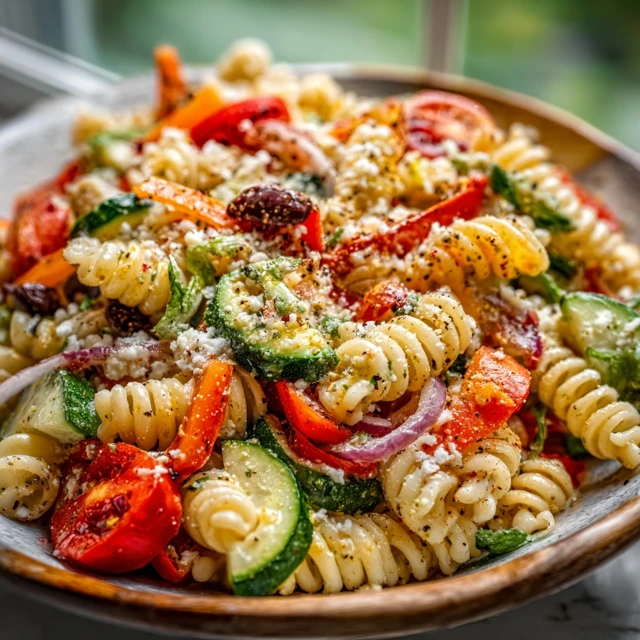

Zesty Veggie-Free Italian Pasta Salad

Equipment
- Large stockpot
- Colander
- Large mixing bowl
- Chef’s knife
- Cutting board
- Rubber spatula
- Plastic Wrap
Ingredients
- 16 oz Rotini or Fusilli pasta
- 8 oz Genoa salami, cubed
- 6 oz Pepperoni mini rounds or chopped sandwich-style
- 8 oz Provolone cheese, cubed
- 8 oz Fresh mozzarella pearls, drained
- 6 oz Black olives, sliced and drained
- 16 oz Zesty Italian dressing high-quality oil-based
- ½ cup Grated Parmesan cheese
- 1 tablespoon Dried oregano
- 1 tablespoon Dried parsley
- 1 teaspoon Red pepper flakes optional for heat
- Kosher salt for pasta water
- Freshly cracked black pepper to taste
Instructions
- Bring a large pot of heavily salted water to a rolling boil and cook the pasta for one minute less than the package directions to achieve a firm al dente texture.
- Drain the pasta but do not rinse it; immediately place the warm pasta into a large mixing bowl.
- Pour approximately one-third of the Italian dressing over the warm pasta and toss well to allow the dressing to absorb into the noodles.
- While the pasta cools, cube the Genoa salami and provolone cheese into uniform, bite-sized pieces.
- Ensure the mozzarella pearls and black olives are thoroughly drained to prevent excess moisture in the salad.
- Once the pasta is no longer steaming hot, add the cubed salami, pepperoni, provolone, mozzarella pearls, and black olives to the bowl.
- Add the remaining Italian dressing, grated Parmesan cheese, dried oregano, dried parsley, and red pepper flakes if using.
- Gently fold the ingredients together with a spatula until everything is evenly coated, taking care not to break the pasta spirals.
- Cover the bowl tightly with plastic wrap and refrigerate for at least one hour, though three to four hours is recommended for maximum flavor development.
- Give the salad a final toss before serving, adding an extra splash of dressing or olive oil if the pasta has absorbed all the liquid.