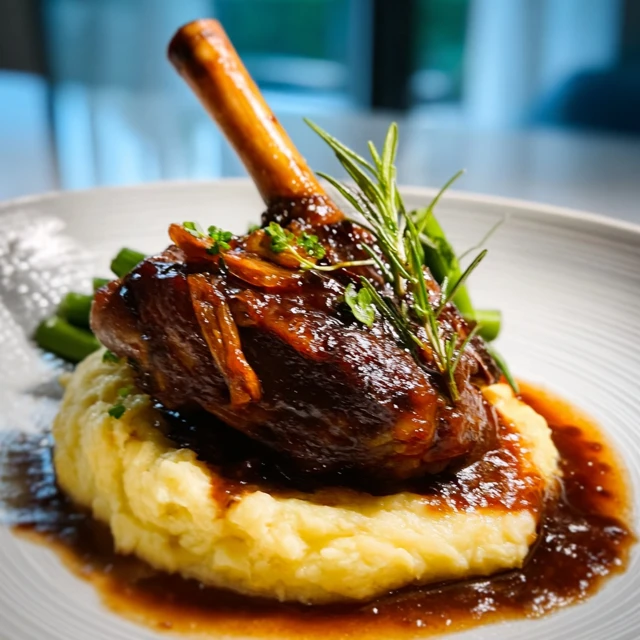
That moment when a dish arrives at the table, so stunning it silences conversation, is pure magic. It’s the kind of main course you’d expect at a fine dining restaurant, a towering, magnificent piece of meat lacquered in a glossy sauce, promising an experience that’s both rustic and unbelievably elegant. For years, I thought a perfect lamb shank was a secret held by chefs in tall white hats, a complex art form reserved for special occasions out. But I’m here to tell you, my friend, that this power is entirely within your reach, right in your own kitchen.
This recipe is your key to unlocking that magic. We are going to create a large, tender roasted lamb shank that literally falls away from the bone with the gentlest nudge of a fork. It will be bathed in a deeply savory, dark red wine reduction sauce so rich and complex you’ll want to bottle it. This isn’t just dinner; it’s an event, a showstopper that proves a little patience and a lot of love can transform a humble cut into a masterpiece.
The Lamb Shank Difference
- Flavor Layering: We build flavor at every single step, from the initial hard sear on the lamb to sautéing the aromatics and deglazing the pan with rich red wine. This creates a sauce with incredible depth that you just can’t get from a simple simmer.
- Low-and-Slow Braising: The true secret to unbelievably tender meat is patience. By braising the shanks slowly over a low heat for hours, we break down all the tough connective tissues, transforming them into luscious, melt-in-your-mouth gelatin.
- A Perfect, Glossy Sauce: This recipe doesn’t just braise the lamb; it creates a finished, restaurant-quality reduction sauce. We’ll strain and reduce the braising liquid until it’s a perfect, syrupy consistency that clings beautifully to the meat.
The Building Blocks
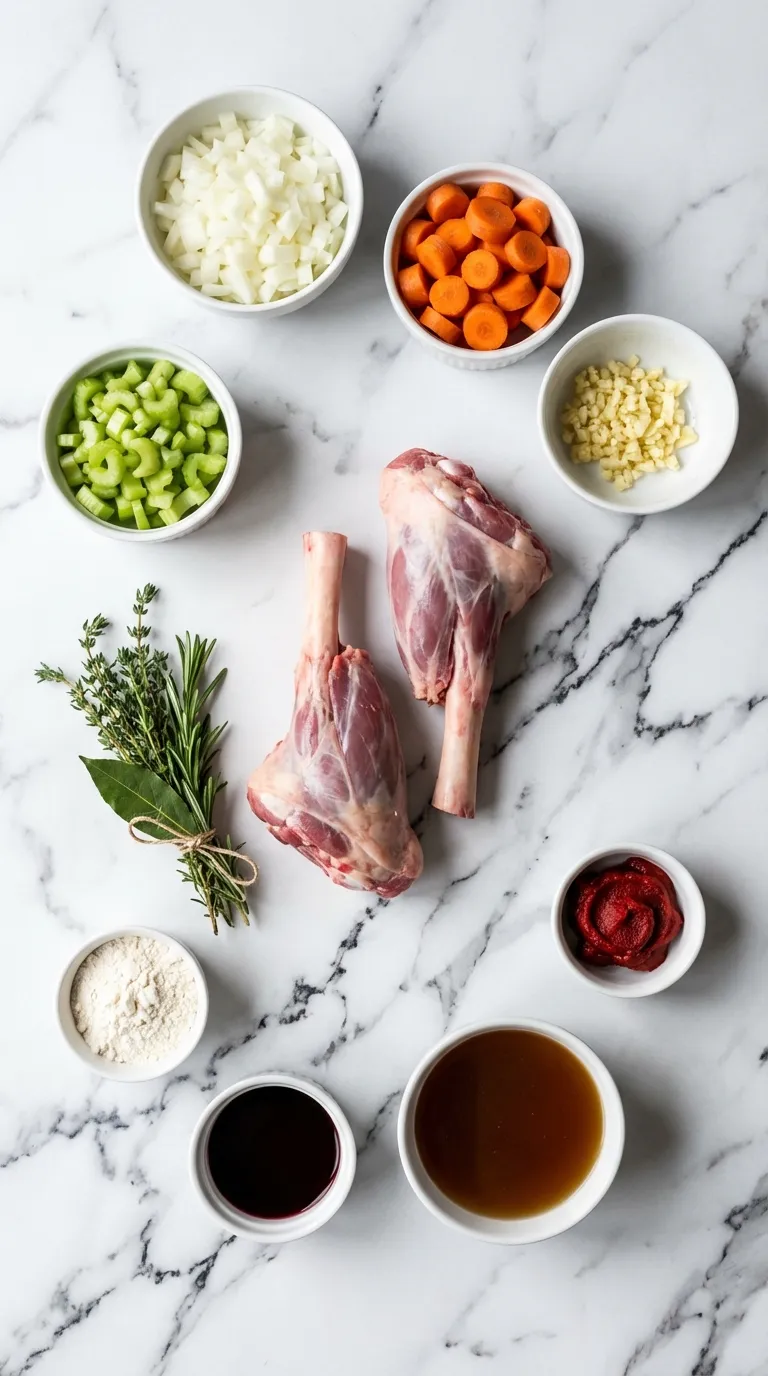
- Lamb Shanks: You’ll want 4 petite or 2 large lamb foreshanks (about 3-4 pounds total). Look for meaty shanks with a good amount of connective tissue—that’s what will melt down into succulent tenderness.
- All-Purpose Flour: Just a light dusting to help create a beautiful, brown crust when searing.
- Kosher Salt & Freshly Ground Black Pepper: Essential for seasoning the meat from the very beginning.
- Olive Oil & Butter: A combination for searing. The oil has a higher smoke point, and the butter adds rich flavor and helps with browning.
- Yellow Onion, Carrots, and Celery (Mirepoix): The holy trinity of flavor for any braise. Finely chopped, they melt into the sauce, providing a sweet, earthy base.
- Garlic: Use plenty of fresh cloves, roughly chopped. They add a pungent, aromatic depth that is absolutely crucial.
- Tomato Paste: This is a powerhouse ingredient for umami. Sautéing it briefly deepens its flavor and adds a rich, savory backbone to the sauce.
- Dry Red Wine: Choose something you’d enjoy drinking! A Cabernet Sauvignon, Merlot, or Syrah works perfectly. (This is the key to the red wine reduction sauce).
- Beef or Lamb Broth: A quality, low-sodium broth adds body and liquid for the long braise.
- Fresh Herbs: A bundle of fresh thyme and rosemary, along with a bay leaf, infuses the braising liquid with classic, woody, and fragrant notes.
Swaps & Alternatives
Don’t have everything on hand? No worries. A great braise is flexible, and you can make some easy adjustments.- No Red Wine? While it’s key for the classic flavor, you can substitute an equal amount of additional beef broth with a tablespoon of balsamic vinegar or red wine vinegar to add some acidity.
- Different Broth: If you don’t have beef or lamb broth, a rich chicken broth or even a dark vegetable broth can work in a pinch.
- Herb Variations: Don’t have fresh thyme or rosemary? A teaspoon of dried thyme and a half-teaspoon of dried rosemary can be substituted. You could also add fresh parsley stems for a brighter note.
- Flour Alternatives: For a gluten-free version, you can skip the flour dredge entirely or use a light dusting of a gluten-free all-purpose blend. The sear won’t be quite as crusty, but it will still be delicious.
Gourmet Variations
Once you’ve mastered the classic, you can start playing with the flavors to make this dish uniquely yours. These little twists can elevate your lamb shank from amazing to unforgettable.- Add Anchovies and Orange Zest: It sounds unusual, but melting two or three anchovy fillets into the sautéing vegetables adds a massive, savory umami bomb without any fishy taste. A strip of orange zest added to the braising liquid brightens the whole dish.
- Introduce Smoky Spices: Add a teaspoon of smoked paprika or a pinch of ground cumin along with the tomato paste. This will give the final sauce a subtle, smoky complexity that pairs beautifully with the rich lamb.
- Mushroom and Pearl Onion Boost: About an hour before the lamb is done, add a cup of seared cremini mushrooms and a cup of peeled pearl onions to the pot. They will soak up the incredible sauce and add another layer of texture and earthy flavor.
- Finish with Gremolata: For a vibrant, fresh finish, top the finished lamb shanks with a simple gremolata. Just finely chop fresh parsley, a clove of garlic, and the zest of one lemon. It cuts through the richness perfectly.
How to Make Lamb Shank
1. Prepare and Sear the Lamb
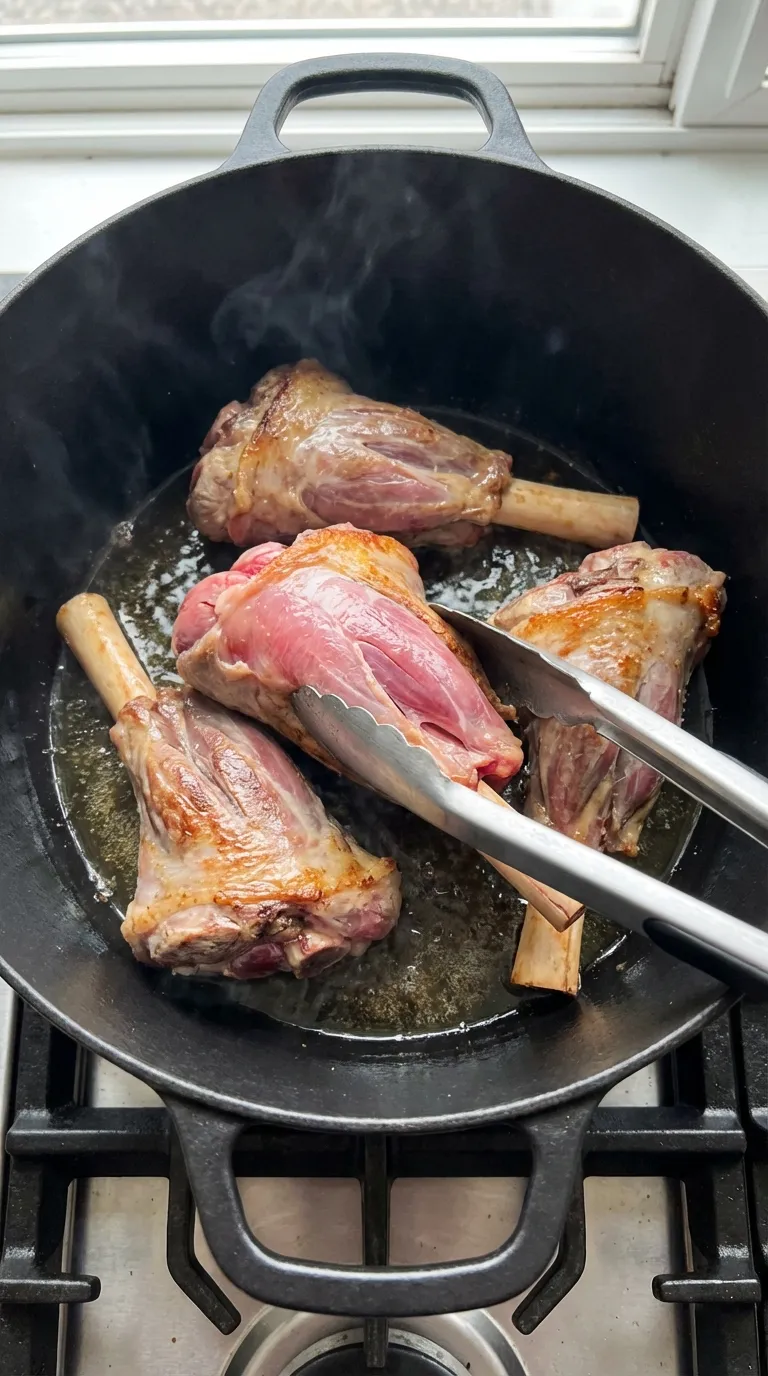
First things first, pat your lamb shanks completely dry with paper towels. This is non-negotiable for getting a deep, golden-brown crust! Season them very generously on all sides with kosher salt and freshly ground black pepper. In a small bowl, add your flour and lightly dredge each shank, tapping off any excess.In a large Dutch oven or heavy-bottomed pot, heat the olive oil and butter over medium-high heat until the butter is melted and foaming. Carefully place the lamb shanks in the pot, making sure not to overcrowd them. Sear them on all sides until they are deeply browned, which should take about 8-10 minutes total. This step is crucial for developing flavor. Once browned, remove the shanks and set them aside on a plate.
2. Sauté the Aromatics
Reduce the heat to medium and add the chopped onion, carrots, and celery to the same pot. There will be wonderful browned bits (called fond) on the bottom of the pot—that’s pure flavor! Sauté the vegetables, stirring occasionally, until they have softened and are lightly caramelized, about 6-8 minutes.Next, add the chopped garlic and cook for another minute until fragrant. Be careful not to burn it! Finally, add the tomato paste. Use your spoon to stir it into the vegetables and cook it for about 2 minutes. This step toasts the paste, deepening its flavor and removing any raw taste.
3. Deglaze and Build the Braising Liquid
Now for the fun part. Pour the red wine into the pot. As it bubbles, use a wooden spoon to scrape up all those delicious browned bits from the bottom of the pot. Let the wine simmer and reduce by about half, which will concentrate its flavor and cook off the harsh alcohol taste. This is the foundation of your amazing sauce.Once the wine has reduced, pour in the beef or lamb broth. Add the fresh thyme, rosemary, and the bay leaf. Stir everything together and bring the liquid to a gentle simmer.
4. The Low and Slow Braise
Carefully return the seared lamb shanks to the pot, nestling them into the liquid. The liquid should come about two-thirds of the way up the shanks. If it doesn’t, you can add a bit more broth or even some water.Bring the pot back to a bare simmer, then cover it with a tight-fitting lid. You have two choices here: you can either reduce the heat to low and let it simmer gently on the stovetop, or you can transfer the entire pot to a preheated 325°F (165°C) oven. Braise for 2.5 to 3.5 hours, turning the shanks once halfway through. The lamb is done when it is exceptionally tender and easily pulls away from the bone.
5. Finish the Sauce
Once the lamb is tender, carefully remove the shanks from the pot and set them aside on a platter. Cover them with foil to keep warm. Now, we turn that braising liquid into a glorious, glossy sauce.Strain the liquid through a fine-mesh sieve into a clean saucepan, pressing on the solids to extract all the liquid. Discard the solids. Skim any excess fat from the surface of the liquid. Bring the strained liquid to a simmer over medium heat and let it reduce until it has thickened enough to coat the back of a spoon. This could take 10-15 minutes. Taste the sauce and adjust for seasoning with salt and pepper. This final step is what creates that perfect dark red wine reduction sauce.
Avoid These Pitfalls
- Not Getting a Good Sear: A pale, grey sear means you’re missing out on a huge layer of flavor. Make sure your pot is hot and your lamb is dry before it goes in. Don’t rush this step!
- Rushing the Braise: There is no shortcut to tender lamb. If you try to cook it at a higher temperature for less time, the connective tissues won’t have a chance to break down, resulting in tough, chewy meat. Low and slow is the only way.
- Forgetting to Reduce the Sauce: The liquid in the pot after braising is flavorful, but it’s thin. Taking the time to strain and reduce it is what transforms it from a simple broth into a rich, concentrated sauce that clings to the lamb.
Complete the Menu
Serving this magnificent lamb shank is all about providing the perfect canvas to soak up every last drop of that incredible sauce. You’ve created a fine dining experience, so let’s complete the plate.The absolute classic and, in my opinion, best pairing is a bed of creamy polenta. Its soft, comforting texture is the perfect counterpoint to the rich meat and a perfect vessel for the sauce. Creamy mashed potatoes are another fantastic choice, working in much the same way. For something a bit different, try a parsnip purée or a celery root mash.
While the dish is rich, it benefits from something green and fresh on the side. Simple steamed green beans, sautéed spinach with garlic, or roasted asparagus with a squeeze of lemon will cut through the richness and balance the meal beautifully. The techniques for slow-cooked meats are often similar; if you love this method, you’ll also adore a classic Pot Roast With Carrots, Potatoes & Gravy or even a hearty Beef Stew.
For wine, continue with the same type of red wine you used in the braise. A bold Cabernet Sauvignon or a rich Merlot will stand up to the flavors of the dish without overpowering it. The goal is to have a large, tender roasted lamb shank dripping with dark red wine reduction sauce, served on a bed of creamy polenta, making for a truly memorable meal. The same principles of slow cooking to achieve tenderness apply to other amazing dishes like a comforting French Onion Pot Roast or a luxurious Short Rib Ragu. For those who love set-it-and-forget-it meals, the slow cooker can achieve similar results, like in this Crock Pot Beef Stew or even these amazing Slow Cooker Garlic Butter Beef Bites.
First time making Lamb Shank? I hope this guide made it easy. Let me know how it turned out
What is the secret to making lamb shanks fall-off-the-bone tender?
The secret is low-and-slow braising. By cooking the lamb shanks slowly over a low heat for 2.5 to 3.5 hours, the tough connective tissues break down into gelatin, resulting in exceptionally tender, melt-in-your-mouth meat.
How do I create a rich, glossy sauce for the lamb?
After the lamb is cooked, remove it from the pot and strain the braising liquid through a fine-mesh sieve into a clean saucepan. Skim any excess fat from the surface, then bring the liquid to a simmer and let it reduce for 10-15 minutes until it thickens enough to coat the back of a spoon.
Can I make this recipe if I don’t have red wine?
Yes. While red wine is key for the classic flavor, you can substitute it with an equal amount of beef broth. To add the necessary acidity, simply stir in a tablespoon of balsamic vinegar or red wine vinegar.
What are the most common mistakes to avoid when cooking lamb shanks?
The three main pitfalls to avoid are: not searing the lamb until it’s deeply browned, rushing the braising process with high heat, and forgetting to reduce the braising liquid into a concentrated, thick sauce.
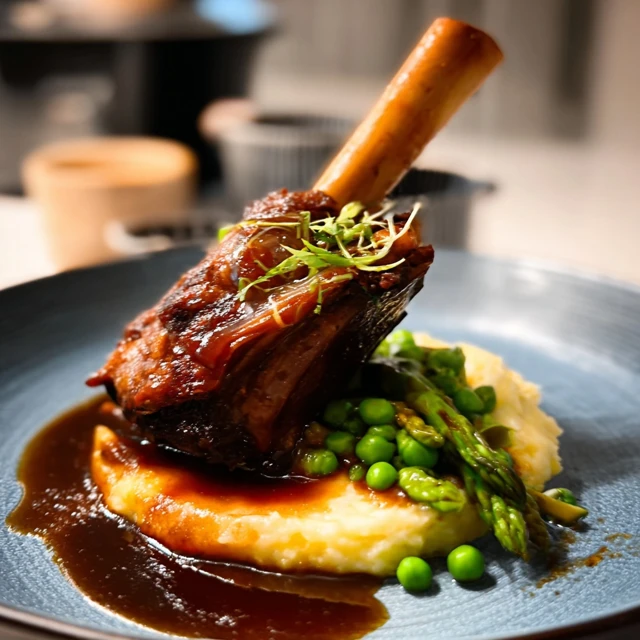

Slow-Braised Lamb Shanks with Red Wine Reduction

Equipment
- Large Dutch oven or heavy-bottomed pot with lid
- Large plate
- Wooden Spoon
- fine mesh sieve
- saucepan
- Cutting board
- Chef’s knife
- Paper towels
- Tongs
Ingredients
- 4 petite or 2 large lamb foreshanks about 3-4 lbs total
- 2 tablespoons All-Purpose Flour
- Kosher salt and freshly ground black pepper, to taste
- 1 tablespoon Olive Oil
- 1 tablespoon Unsalted Butter
- 1 large Yellow Onion, chopped
- 2 medium Carrots, chopped
- 2 Celery stalks, chopped
- 6 cloves Garlic, roughly chopped
- 2 tablespoons Tomato Paste
- 1.5 cups Dry Red Wine e.g., Cabernet Sauvignon or Merlot
- 3-4 cups low-sodium Beef or Lamb Broth
- 3 sprigs Fresh Thyme
- 1 sprig Fresh Rosemary
- 1 Bay Leaf
Instructions
- Preheat your oven to 325°F (165°C).
- Pat the lamb shanks completely dry with paper towels. Season them generously on all sides with kosher salt and black pepper. Lightly dredge each shank in flour, tapping off any excess.
- In a large Dutch oven over medium-high heat, heat the olive oil and butter. Once the butter is foaming, carefully sear the lamb shanks on all sides until deeply browned, about 8-10 minutes total. Remove the shanks and set them aside on a plate.
- Reduce the heat to medium. Add the chopped onion, carrots, and celery to the pot. Sauté for 6-8 minutes, stirring occasionally, until softened and lightly caramelized.
- Add the chopped garlic and cook for 1 minute until fragrant. Stir in the tomato paste and cook for another 2 minutes to deepen its flavor.
- Pour in the red wine to deglaze the pot, using a wooden spoon to scrape up any browned bits from the bottom. Simmer until the wine has reduced by about half.
- Pour in the beef or lamb broth. Add the fresh thyme, rosemary, and bay leaf. Stir to combine and bring the liquid to a gentle simmer.
- Return the seared lamb shanks to the pot, nestling them into the liquid. The liquid should come about two-thirds of the way up the shanks.
- Cover the pot with a tight-fitting lid and transfer to the preheated oven. Braise for 2.5 to 3.5 hours, turning the shanks once halfway through, until the meat is exceptionally tender and pulls away from the bone.
- Carefully remove the tender lamb shanks from the pot and place them on a platter. Cover with foil to keep warm.
- Strain the braising liquid through a fine-mesh sieve into a clean saucepan, pressing on the vegetables to extract all the liquid. Discard the solids.
- Skim any excess fat from the surface of the strained liquid. Bring the sauce to a simmer over medium heat and let it reduce for 10-15 minutes, or until it has thickened enough to coat the back of a spoon.
- Taste the finished sauce and adjust seasoning with salt and pepper if needed. Pour the sauce over the lamb shanks and serve immediately.