Flipping open a can of tuna often feels like the start of a culinary compromise, a quick fix destined for a heavy, mayo-laden fate. We’ve all been there, stirring together a lunch that feels more like a chore than a pleasure. But what if that simple can held the key to something vibrant, something that was both incredibly satisfying and genuinely nourishing? This recipe is the answer, a complete reimagining of tuna salad that trades lackluster for luscious, and obligation for obsession.
Prepare to meet your new favorite lunch, a powerhouse of flavor and protein that will completely change how you see canned tuna. We’re talking about a creamy, tangy, and crunchy masterpiece that comes together in minutes. This is the kind of recipe that makes you feel strong, energized, and brilliant for having discovered it—a perfect bowl of flaked tuna mixed with Greek yogurt, red onions, and celery, ready to be scooped up with crackers or piled high on a bed of crisp greens.
The High Protein Tuna Difference
- Creaminess Without the Weight: We swap out mayonnaise for protein-packed Greek yogurt. This genius move delivers a rich, tangy creaminess that binds the salad beautifully without the heavy, oily feeling, all while significantly boosting the protein content.
- A Focus on Freshness: This recipe is built on bright, crisp textures and flavors. Finely diced celery and red onion provide a satisfying crunch, while fresh dill and lemon juice cut through the richness, making every bite feel clean and vibrant.
- Effortless and Adaptable: Ready in under 10 minutes, this is the ultimate healthy meal for busy days. It’s a perfect base recipe that you can easily customize with your favorite herbs, spices, or crunchy add-ins to make it uniquely yours.
The Building Blocks
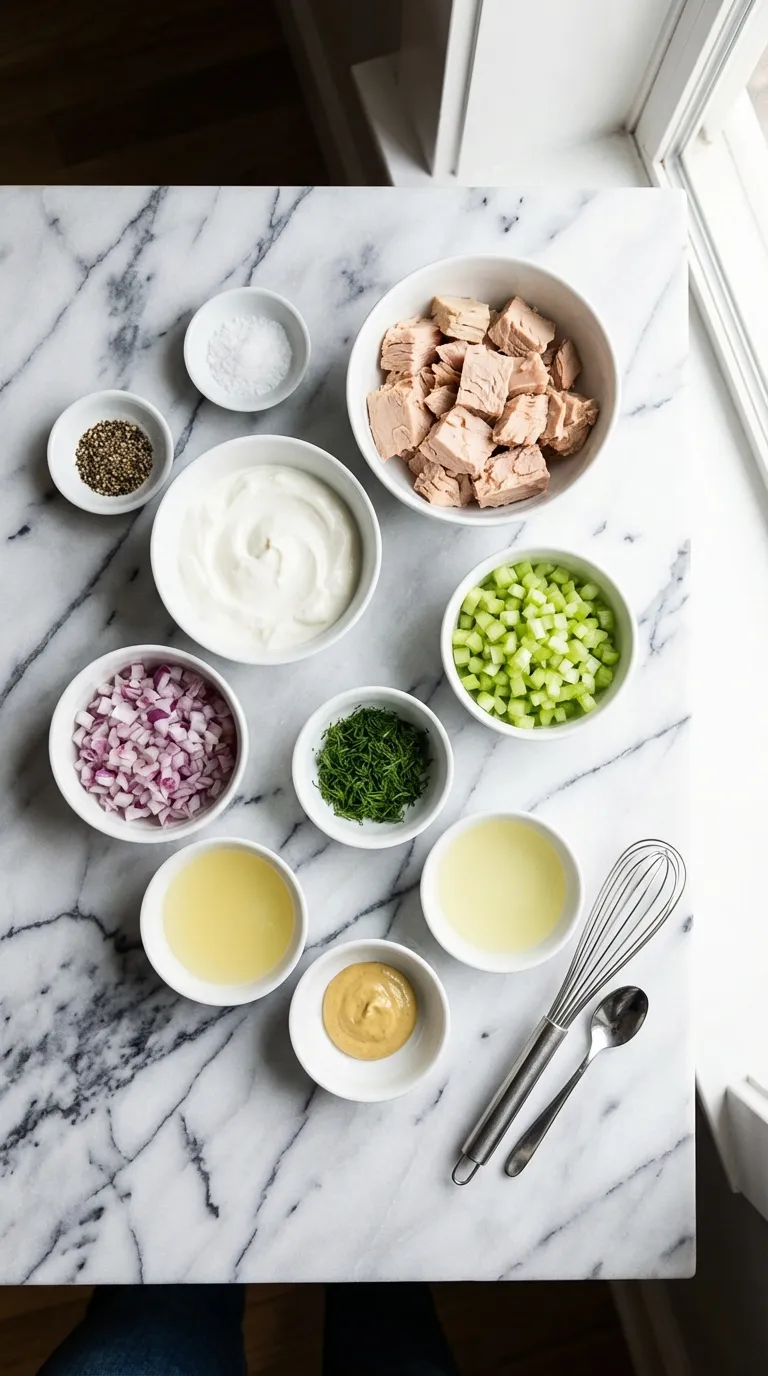
Here’s what you’ll need to bring this to life:
- Canned Tuna: Two 5-ounce cans of solid white albacore or skipjack tuna packed in water. (Using tuna packed in water, not oil, gives us a clean slate for flavor and keeps the dish light. Be sure to drain it very well!)
- Plain Greek Yogurt: The star of the show! (Use full-fat or 2% for the richest, creamiest texture. This is our high-protein replacement for mayo, adding a wonderful tang.)
- Celery: Finely diced for that essential, non-negotiable crunch. (This adds a fresh, slightly savory note and a fantastic textural contrast to the creamy yogurt and soft tuna.)
- Red Onion: Finely diced. (It provides a sharp, slightly sweet bite that cuts through the richness. If you find it too strong, you can soak the diced onion in cold water for 10 minutes to mellow it out.)
- Fresh Dill: Chopped. (This herb is a classic partner for fish, lending a bright, slightly anise-like flavor that makes the salad taste incredibly fresh and gourmet.)
- Lemon Juice: From a fresh lemon, please! (The acidity is crucial for brightening all the flavors and balancing the creaminess of the yogurt. Bottled juice just doesn’t compare.)
- Dijon Mustard: For a little kick of flavor. (This adds a layer of complexity and a subtle, tangy spice that complements the tuna perfectly.)
- Salt and Black Pepper: To taste. (These are essential for making all the other flavors pop. Don’t be shy with the pepper!)
Swaps & Alternatives
Don’t have everything on hand? No problem! This recipe is incredibly forgiving and easy to adapt. Here are a few simple swaps you can make in a pinch.- No Greek Yogurt? You can use cottage cheese (blended until smooth for a similar texture) or even mashed avocado for a different kind of creamy base.
- Red Onion Too Strong? Shallots are a wonderful, milder alternative. Green onions or chives will also work well, offering a more delicate onion flavor.
- Out of Fresh Dill? While fresh is best, you can substitute with 1 teaspoon of dried dill. Parsley or cilantro would also be delicious, completely changing the flavor profile in a fun way.
- Different Tuna: While albacore in water is my go-to, you can certainly use light tuna or even high-quality oil-packed tuna if you drain it exceptionally well. You could even make a similar salad with canned salmon, much like the concept behind these Quick Garlic Sauce Salmon Patties.
- Lemon Juice Substitute: A splash of apple cider vinegar or white wine vinegar can provide the necessary acidity if you don’t have a fresh lemon.
Chef’s Twists
Once you’ve mastered the basic recipe, it becomes a perfect canvas for your culinary creativity. Think of this as your starting point for a whole world of high-protein tuna salad variations.Here are a few of my favorite ways to level it up:
- Add a Pop of Brine: A tablespoon of chopped capers or some finely diced pickles or cornichons can add a fantastic salty, briny kick that cuts through the creaminess and makes the salad even more dynamic.
- Bring in Some Heat: If you like a little spice, add a pinch of red pepper flakes, a dash of your favorite hot sauce, or some finely minced jalapeño. The contrast of cool creaminess and warm spice is incredible.
- Boost the Veggies: Don’t stop at celery and onion! You can add shredded carrots for sweetness, diced bell peppers for color and crunch, or even some chopped sun-dried tomatoes for a rich, savory flavor, similar to what you might find in a vibrant Italian Pasta Salad.
- Introduce Healthy Fats: For an even creamier and more satisfying salad, fold in half of a diced avocado. The buttery texture is a game-changer and adds valuable nutrients. A sprinkle of toasted sunflower seeds or chopped walnuts can also add a great crunch and healthy fats.
Step-by-Step Instructions
1. Prepare the Tuna
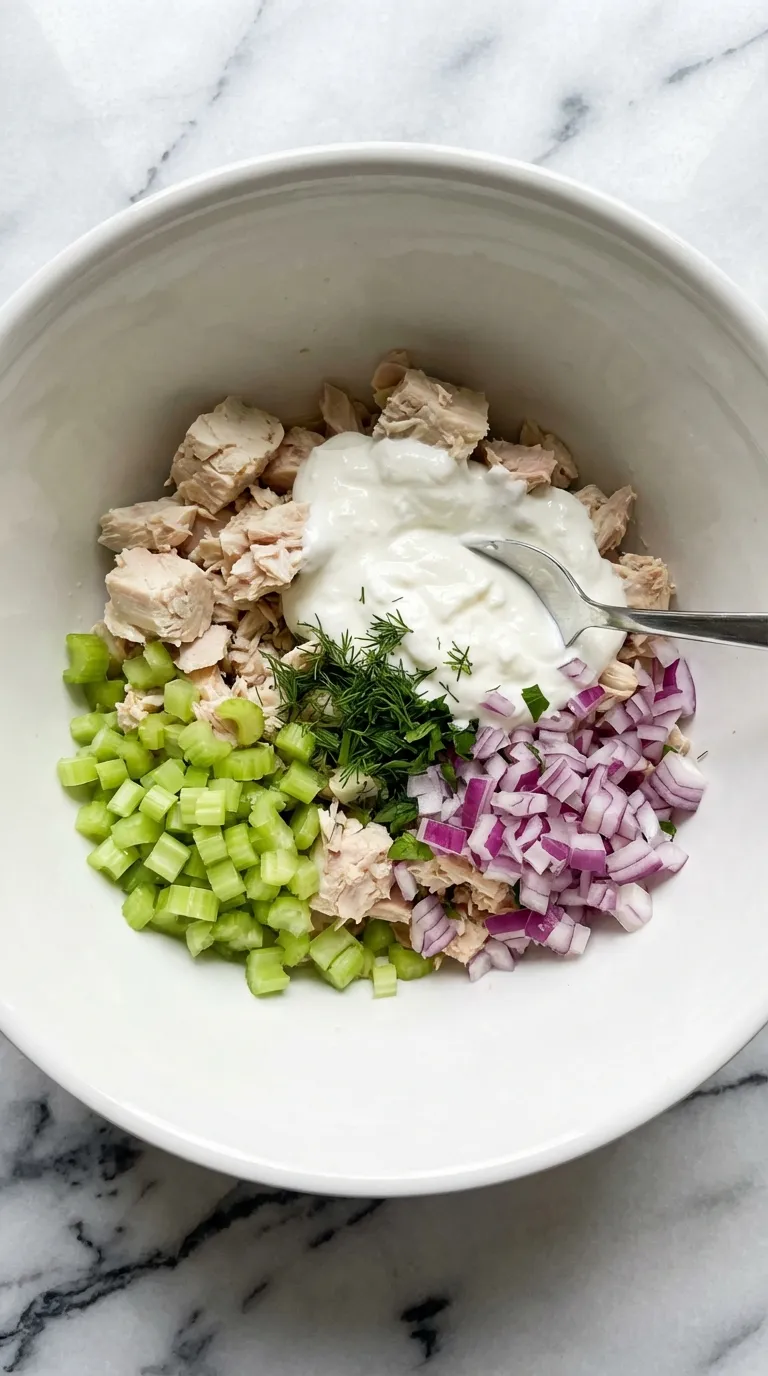
First things first, we need to deal with the tuna. Open your cans and drain them thoroughly. I mean it—press the lid down firmly to squeeze out as much water as possible. Watery tuna is the number one enemy of a good tuna salad.Once drained, flake the tuna into a medium-sized mixing bowl using a fork. Break up any large chunks until you have a uniform, fluffy texture. This creates the perfect base for our dressing to cling to.
2. Chop Your Fresh Ingredients
Now for the crunch factor. Finely dice your celery and red onion. The goal is to have small, consistent pieces that distribute evenly throughout the salad, ensuring you get a bit of everything in each bite. There’s nothing worse than a giant, overpowering chunk of onion!Chop your fresh dill as well. The aroma alone will tell you you’re on the right track. This is where all that fresh, vibrant flavor comes from.
3. Mix the Creamy Dressing
In a small, separate bowl, combine the Greek yogurt, Dijon mustard, and fresh lemon juice. Whisk them together until the mixture is smooth and completely combined. This is your creamy, high-protein “dressing.”Season this mixture generously with salt and freshly cracked black pepper. Give it a taste! It should be tangy, creamy, and well-seasoned. Adjust if needed—maybe it needs a little more lemon for brightness or another pinch of salt to make the flavors sing.
4. Combine and Chill (Optional)
Pour the Greek yogurt dressing over the flaked tuna in the larger bowl. Add the diced celery, red onion, and fresh dill. Using a spatula or spoon, gently fold everything together until it’s just combined.Be careful not to overmix! We want to maintain some of the tuna’s texture, not turn it into a paste. Once everything is coated, you can serve it immediately, or for the best flavor, cover the bowl and chill it in the refrigerator for about 30 minutes. This gives the flavors time to meld and marry into something truly special.
Avoid These Pitfalls
- Water-Logged Tuna: The most common mistake is not draining the tuna well enough. Excess water will make your salad soupy and dilute the flavor of the dressing. Press that lid and get every last drop out!
- Over-Mixing the Salad: It’s tempting to stir vigorously, but over-mixing breaks down the tuna into a mushy paste. Gently fold the ingredients until they are just combined to maintain a pleasant, flaky texture.
- Skimping on Seasoning: Greek yogurt and tuna are both fairly bland on their own. Be bold with your salt, pepper, and lemon juice. Taste the dressing before you add it to the tuna, and then taste the final salad and adjust again if necessary. A well-seasoned salad is a delicious salad.
Serving Ideas
Now for the best part: enjoying your creation! This high-protein tuna salad is a true chameleon, ready to be served in countless delicious ways. It’s a fantastic staple for quick lunches, light dinners, or satisfying snacks.My absolute favorite way to serve it is in a big, beautiful bowl. A bowl of flaked tuna mixed with Greek yogurt, red onions, and celery is a beautiful thing on its own, but it’s even better when you build around it. Try it on a bed of greens like arugula or butter lettuce with some sliced tomatoes and cucumbers for a complete, nutrient-dense meal. It’s as satisfying as other protein-packed meals like Cheeseburger Bowls or even Best Fish Taco Bowls Ever.
For a more traditional approach, scoop it onto your favorite whole-grain bread or into a soft whole-wheat pita for a classic tuna salad sandwich. It’s also fantastic served as a dip with a side of sturdy crackers, crisp bell pepper strips, or cucumber slices for a low-carb option. For a heartier meal, you could even stuff it into a tortilla for a quick wrap, not unlike the idea behind a Chicken Ranch Quesadilla.
This recipe is a lifesaver for meal prep. It keeps beautifully in an airtight container in the refrigerator for up to 3-4 days, making it an easy grab-and-go lunch. It’s a much quicker protein option than something like Honey Garlic Shrimp, but just as satisfying.
If you tried this recipe and loved it, please leave a 5-star rating below. It helps us so much
Why does this tuna salad recipe use Greek yogurt instead of mayonnaise?
This recipe uses Greek yogurt as a high-protein substitute for mayonnaise. It delivers a rich, tangy creaminess to bind the salad without the heavy, oily feeling of mayo, while also significantly increasing the protein content.
What can I use if I don’t have Greek yogurt?
If you don’t have Greek yogurt, you can use cottage cheese (blended until smooth for a similar texture) or mashed avocado as an alternative creamy base.
How do I prevent my tuna salad from becoming watery?
The most common mistake is not draining the tuna properly. To avoid a watery salad, you must drain the canned tuna thoroughly, pressing down on the lid to squeeze out as much water as possible before mixing it with other ingredients.
How long does this high-protein tuna salad last in the fridge?
This tuna salad is suitable for meal prep and keeps well when stored in an airtight container in the refrigerator for up to 3-4 days.
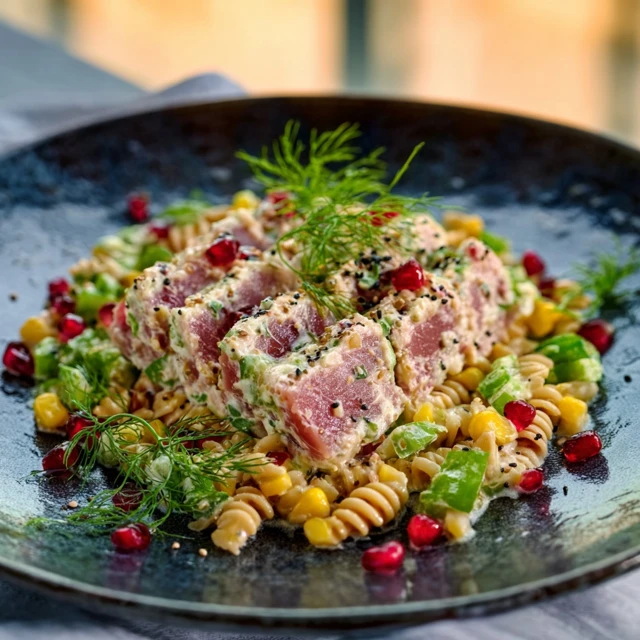

No-Mayo High-Protein Tuna Salad

Equipment
- Medium mixing bowl
- Small bowl
- Can opener
- Fork
- Knife
- Cutting board
- Whisk
- Spatula or spoon
Ingredients
- ½ cup plain Greek yogurt 2% or full-fat recommended
- 1 large celery stalk, finely diced
- ¼ cup red onion, finely diced
- 2 tablespoons fresh dill, chopped
- 1 tablespoon fresh lemon juice
- 1 teaspoon Dijon mustard
- Salt and freshly cracked black pepper, to taste
Instructions
- Open and thoroughly drain the tuna cans, pressing to remove as much water as possible. Place the drained tuna in a medium mixing bowl and use a fork to flake it into small, uniform pieces.
- In a separate small bowl, whisk together the Greek yogurt, Dijon mustard, and fresh lemon juice until smooth. Season the dressing generously with salt and black pepper, then taste and adjust as needed.
- Add the finely diced celery, red onion, and chopped fresh dill to the bowl with the flaked tuna.
- Pour the Greek yogurt dressing over the tuna and vegetables. Use a spatula to gently fold all the ingredients together until just combined. Be careful not to overmix to maintain a flaky texture.
- Serve immediately or, for best results, cover and chill in the refrigerator for at least 30 minutes to allow the flavors to meld together.
Notes
– For a briny kick, add 1 tablespoon of chopped capers or diced pickles.
– For heat, add a pinch of red pepper flakes or finely minced jalapeño.
– Boost the veggies with shredded carrots or diced bell peppers.
– For extra creaminess and healthy fats, fold in half a diced avocado.
– No Greek Yogurt? Use blended cottage cheese or mashed avocado as a base.
– No Fresh Dill? Substitute with 1 teaspoon of dried dill, or try fresh parsley. Serving Suggestions: Serve on a bed of greens for a light salad, scoop into a sandwich or pita, use as a dip with crackers and fresh vegetables, or stuff into a whole-wheat wrap.