I remember the first time I made this lemon asparagus pasta on a Tuesday night when the fridge was looking bare and my energy was lower. It was one of those evenings where takeout was tempting, but the thought of greasy food made me feel heavier than I already did. I grabbed a bunch of asparagus, a lemon that had seen better days, and some dried pasta, and within twenty minutes, I was sitting down to a bowl of something that felt like pure springtime on a plate.
That’s the real magic here. This isn’t just a quick recipe; it’s a revelation. It proves that you don’t need a long list of ingredients or hours in the kitchen to create a meal that feels elegant, bright, and deeply satisfying. The lemon cuts through the richness of the butter and Parmesan, while the asparagus brings a fresh, snappy texture that makes every forkful interesting. This is your new go-to for those nights when you want something beautiful on the table without breaking a sweat.
The Lemon Asparagus Pasta Difference
- Blanched Asparagus for Perfect Texture: Instead of tossing raw asparagus into the pan, we blanch it first. This keeps it vibrant green and tender-crisp, never mushy or stringy.
- Emulsified Lemon Butter Sauce: We use a splash of pasta water to create a silky, creamy sauce that clings to every strand of pasta without needing any heavy cream.
- Brightness That Lingers: Fresh lemon zest and juice are added at two different stages, building layers of citrus flavor that taste clean and zesty, not sour or overpowering.
The Building Blocks
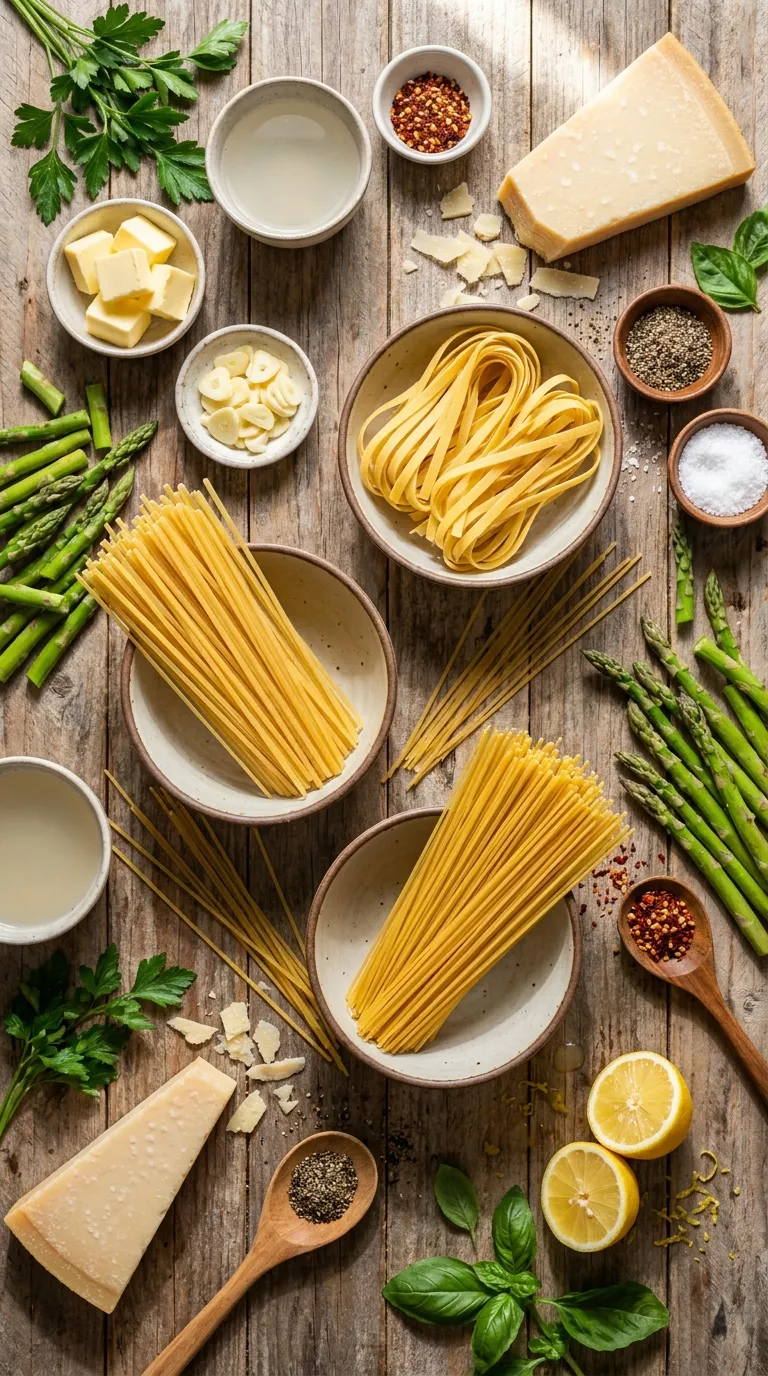
- 12 oz (340g) dried pasta (linguine, fettuccine, or spaghetti work beautifully)
- 1 bunch (about 1 lb / 450g) asparagus, woody ends trimmed and cut into 2-inch pieces
- 3 tablespoons unsalted butter
- 3 cloves garlic, thinly sliced
- 1 large lemon (zest and juice)
- ½ cup (50g) freshly grated Parmesan cheese, plus more for serving
- ½ cup (120ml) reserved pasta cooking water
- ½ teaspoon red pepper flakes (optional, for a little heat)
- Salt and freshly ground black pepper, to taste
- Fresh parsley or basil, chopped, for garnish
Swaps & Alternatives
- Gluten-Free: Use your favorite gluten-free pasta. Just be sure to cook it al dente and reserve extra pasta water, as gluten-free pasta can absorb more liquid.
- Dairy-Free: Swap the butter for a good quality vegan butter and use nutritional yeast or a dairy-free Parmesan alternative. The sauce will be slightly less creamy but still delicious.
- Protein Boost: Add grilled chicken, sautéed shrimp, or crispy chickpeas. For a seafood twist, try this with our Vibrant Lemon Garlic Shrimp And Asparagus Skillet for a complete meal.
- No Asparagus? You can substitute green beans, sugar snap peas, or even broccoli florets. Adjust the blanching time based on the vegetable you choose.
- More Veggies: Toss in some cherry tomatoes halved, or a handful of baby spinach at the end for extra color and nutrients.
Flavor Boosts
Once you’ve mastered the base recipe, it’s fun to play around. A sprinkle of toasted pine nuts or slivered almonds adds a lovely crunch. For a richer, nuttier flavor, brown the butter before adding the garlic—just watch it closely so it doesn’t burn. You could also stir in a tablespoon of capers or a handful of Kalamata olives for a briny pop that contrasts beautifully with the lemon. If you’re feeling indulgent, a dollop of crème fraîche or mascarpone stirred in at the end makes the sauce extra luxurious.Let’s Get Cooking
1. Blanch the Asparagus
Bring a large pot of generously salted water to a rolling boil. Drop in the asparagus pieces and cook for exactly 2 minutes. They should turn bright green and become just tender. Use a slotted spoon or a spider strainer to transfer the asparagus to a bowl of ice water to stop the cooking. This step locks in that beautiful color and perfect snap. Drain the asparagus and set it aside. Keep the pot of water boiling for the pasta.2. Cook the Pasta
Add your pasta to the same boiling water and cook according to the package directions until al dente. While the pasta is cooking, reserve about 1 cup of the starchy pasta water before draining. Do not skip this! That cloudy, salty water is liquid gold for building your sauce. Drain the pasta (do not rinse it) and set it aside.3. Build the Lemon Butter Base
While the pasta cooks, melt the butter in a large skillet over medium heat. Add the sliced garlic and the red pepper flakes if you’re using them. Sauté for about 1 minute until the garlic is fragrant but not browned—you want it soft and sweet, not bitter. Add the zest of your whole lemon and stir for about 30 seconds to release the oils.4. Create the Emulsified Sauce
Reduce the heat to low. Add the juice of the lemon (about 2-3 tablespoons) and about ½ cup of your reserved pasta water to the skillet. Whisk everything together. Now, gradually sprinkle in the grated Parmesan while whisking constantly. Keep whisking until the cheese is fully melted and the sauce is smooth and glossy. If it seems too thick, add a splash more pasta water. If it’s too thin, let it simmer for a minute to reduce.5. Combine and Finish
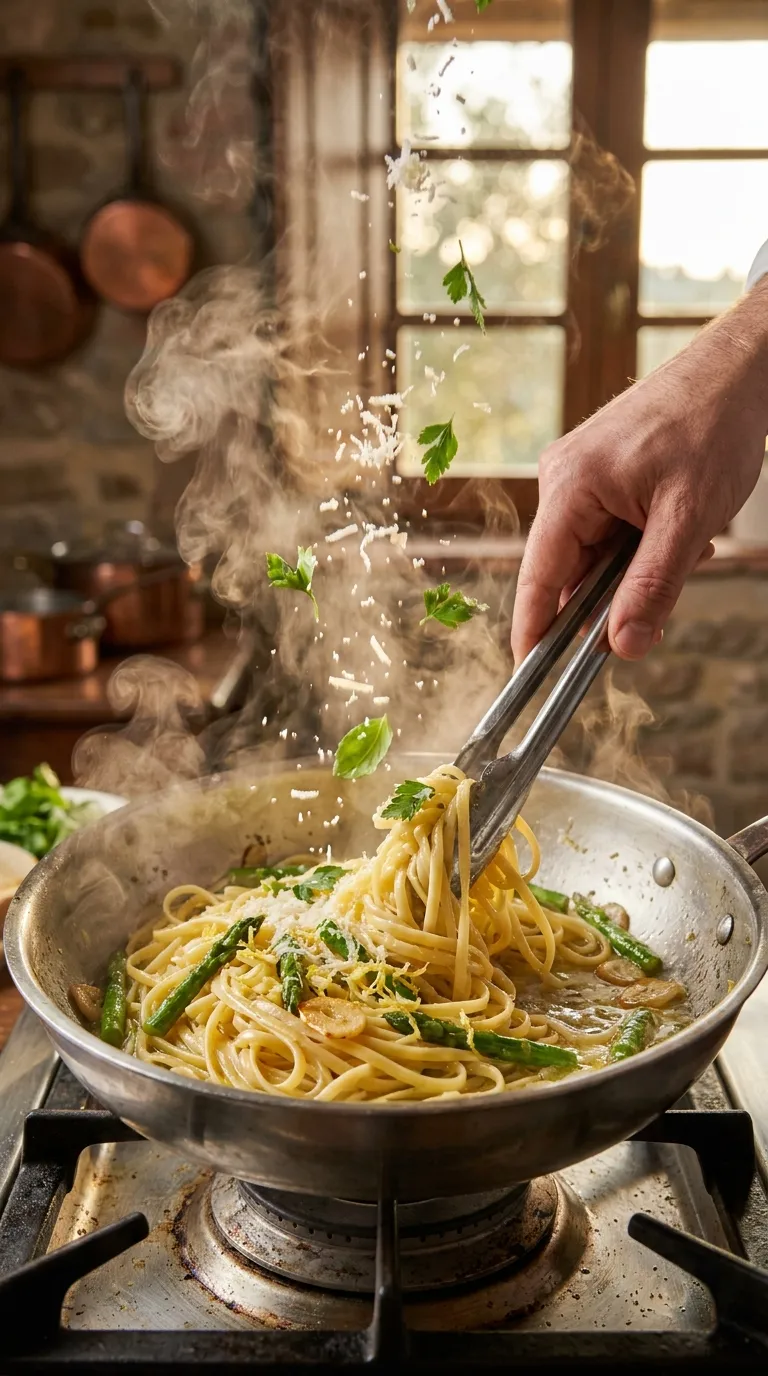
Add the drained pasta and the blanched asparagus to the skillet. Toss everything together gently using tongs, making sure every strand of pasta is coated in that beautiful lemon sauce. Taste and adjust seasoning with salt and pepper. Remember, the Parmesan is salty, so go easy on the salt at first. Serve immediately in warm bowls, topped with extra grated Parmesan, a sprinkle of fresh parsley or basil, and an extra pinch of lemon zest for brightness.Common Mistakes to Avoid
Common Mistakes to Avoid
- Overcooking the Asparagus: If you blanch it too long, it turns into mush. Stick to the 2-minute rule and shock it in ice water immediately.
- Skipping the Pasta Water: This is the single most common mistake. The starch in the water is what binds the butter, cheese, and lemon into a creamy sauce. Without it, you’ll have a greasy, separated mess.
- Using Pre-Shredded Cheese: Those anti-caking coatings prevent the cheese from melting smoothly. Always grate your Parmesan fresh from a block for a silky, lump-free sauce.
Perfect Pairings
This lemon asparagus pasta is a star on its own, but it also plays beautifully with others. A simple green salad with a light vinaigrette is all you need to round out the meal. For a heartier spread, serve it alongside some crusty bread to soak up any leftover sauce. If you’re planning a spring dinner party, start with a bowl of our Creamy Asparagus Soup A Velvety Dream for a gorgeous double-asparagus course. You could also pair it with a glass of crisp Pinot Grigio or Sauvignon Blanc. For a fun twist, try this pasta as a warm base for cold pasta salad recipes the next day—just toss it with a little extra lemon juice and serve at room temperature.This dish truly shines as a quick recipe for busy weeknights, but it’s elegant enough for a weekend gathering. It’s the kind of easy dinner that makes you feel like a rockstar with minimal effort. If you love this bright, springy flavor profile, you’ll also adore our Sunshine Lemon Garlic Butter Pasta Primavera for another burst of seasonal vegetables. And for a more decadent, creamy take on asparagus, our Foolproof Asparagus Risotto Insanely Creamy is a total showstopper. If you’re craving something with a crispy, roasted element, don’t miss the Crispy Sheet Pan Gnocchi With Asparagus—it’s a game-changer for a family meal.
First time making Lemon Asparagus Pasta? I hope this guide made it easy. Let me know how it turned out!
What is the secret to a creamy lemon butter sauce without using heavy cream?
The secret is using reserved starchy pasta water. The starch in the water binds the butter, cheese, and lemon together, creating a silky, emulsified sauce that clings to the pasta without needing any heavy cream.
How do you prevent the asparagus from becoming mushy in this pasta dish?
To keep the asparagus vibrant and tender-crisp, blanch it in boiling salted water for exactly 2 minutes, then immediately transfer it to a bowl of ice water to stop the cooking process. This locks in the color and perfect snap.
Can I make this lemon asparagus pasta dairy-free or gluten-free?
Yes. For a gluten-free version, use your favorite gluten-free pasta and reserve extra pasta water as it absorbs more liquid. For a dairy-free version, swap the butter for vegan butter and use nutritional yeast or a dairy-free Parmesan alternative.
What is the most common mistake to avoid when making this recipe?
Skipping the reserved pasta water is the most common mistake. Without the starchy water, the sauce will not emulsify properly and will turn into a greasy, separated mess instead of a creamy coating.
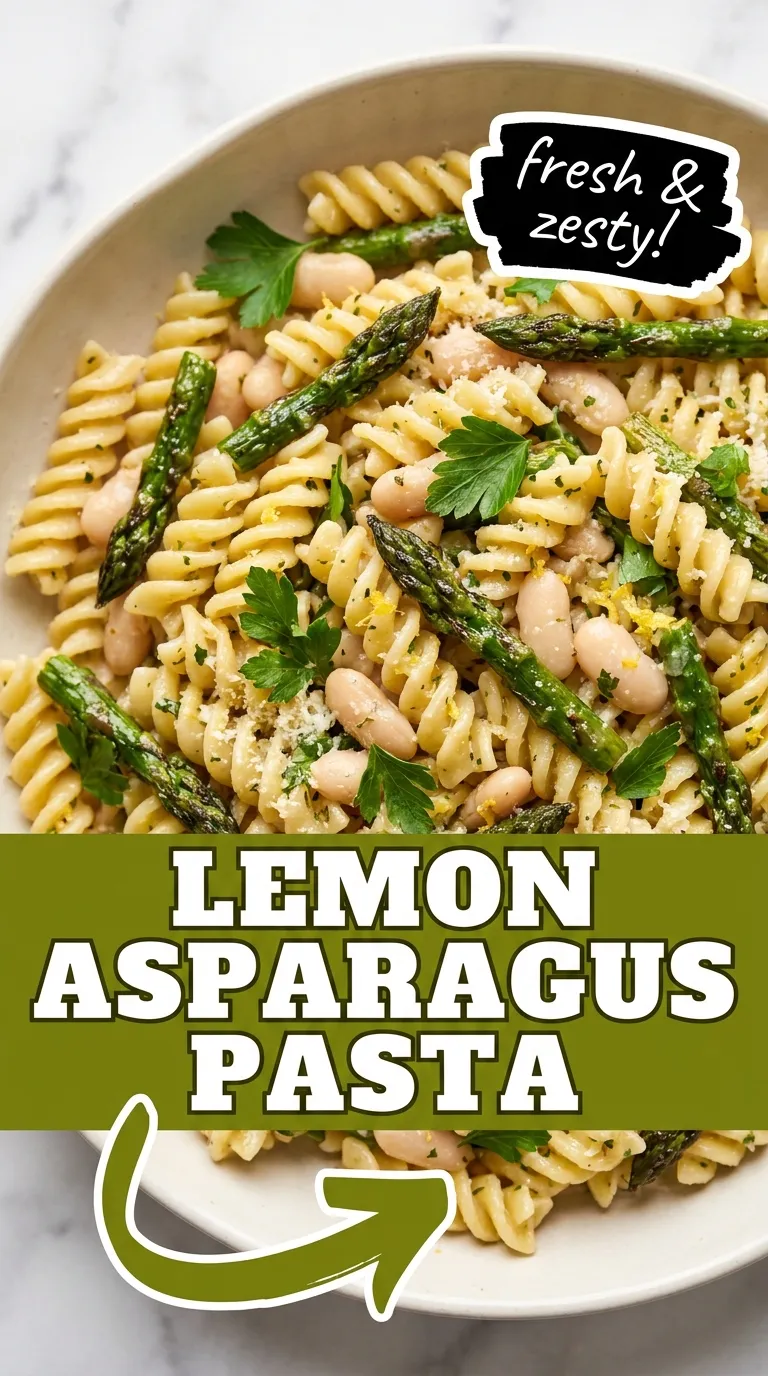

Lemon Asparagus Pasta A 20 Minute Meal

Equipment
- Large pot
- Slotted spoon or spider strainer
- Bowl of ice water
- Large skillet
- Whisk
- Tongs
- Chef’s knife
- Cutting board
- Microplane or Zester
- Measuring cups and spoons
- Colander
Ingredients
- 3 tablespoons unsalted butter
- 3 cloves garlic, thinly sliced
- 1 large lemon zest and juice
- ½ cup 50g
- ½ cup 120ml
- ½ teaspoon red pepper flakes optional
- Salt and freshly ground black pepper, to taste
- Fresh parsley or basil, chopped, for garnish
Instructions
- Bring a large pot of generously salted water to a rolling boil. Add the asparagus pieces and cook for exactly 2 minutes until bright green and tender-crisp. Use a slotted spoon to transfer the asparagus to a bowl of ice water to stop the cooking. Drain and set aside. Keep the pot of water boiling.
- Add the pasta to the same boiling water and cook according to package directions until al dente. Before draining, reserve about 1 cup of the starchy pasta water. Drain the pasta (do not rinse) and set aside.
- While the pasta cooks, melt the butter in a large skillet over medium heat. Add the sliced garlic and red pepper flakes (if using). Sauté for about 1 minute until fragrant but not browned. Add the lemon zest and stir for 30 seconds.
- Reduce the heat to low. Add the lemon juice (about 2-3 tablespoons) and ½ cup of the reserved pasta water to the skillet. Whisk to combine. Gradually sprinkle in the grated Parmesan while whisking constantly until the sauce is smooth and glossy. Add more pasta water if needed to adjust consistency.
- Add the drained pasta and blanched asparagus to the skillet. Toss gently with tongs until every strand is coated in the sauce. Season with salt and pepper to taste. Serve immediately in warm bowls, topped with extra Parmesan, fresh herbs, and an extra pinch of lemon zest.