Caramelizing morsels of ground beef in a sizzling pan, watching them transform from simple to sublime, is one of my kitchen’s greatest joys. This isn’t just another weeknight meal; it’s a symphony of savory, sweet, and spicy notes that come together in under 30 minutes. The secret lies in a perfectly balanced sauce that clings to every piece of beef, creating a flavor so profound you’ll wonder how something so simple could be so utterly addictive. It’s the kind of dish that makes you close your eyes for a second on the first bite.
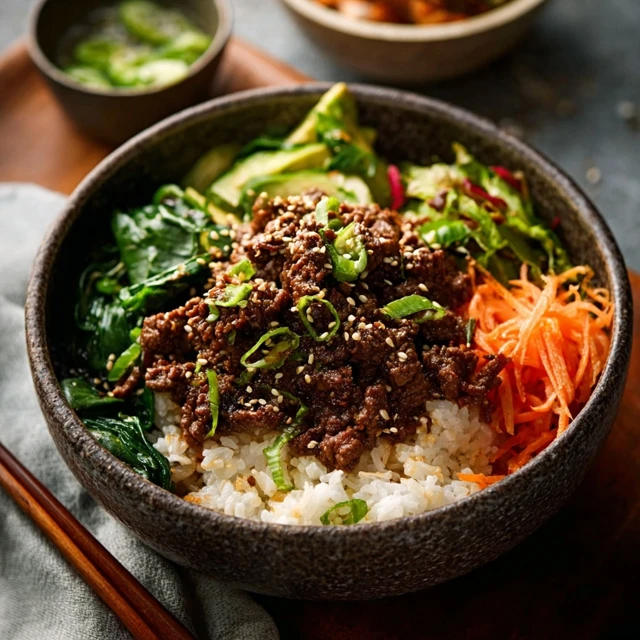
Get ready for a bowl of pure comfort that will redefine your weeknight dinner rotation. We’re talking tender, juicy Korean beef piled high on a bed of fluffy steamed rice, garnished with vibrant green onions and a sprinkle of toasted sesame seeds. This is more than just food; it’s an experience that delivers a restaurant-quality meal without the fuss, making it one of those truly special, high protein, easy recipes you’ll come back to again and again.
The Korean Beef Bowls Difference
- Flavor Depth from Simplicity: The sauce uses common pantry staples but combines them in a way that creates incredible depth. The balance of salty soy, sweet brown sugar, nutty sesame, and a hint of heat is what makes every bite spectacular.
- Perfect Texture Technique: We don’t just brown the beef; we let it get slightly crispy in spots. This technique creates a delightful textural contrast against the soft rice and the rich, glossy sauce.
- Weeknight Wonder: This entire meal comes together in less than 30 minutes, making it the ultimate healthy dinner solution for busy nights. It proves that budget meals can be incredibly flavorful and satisfying.
The Essential Components
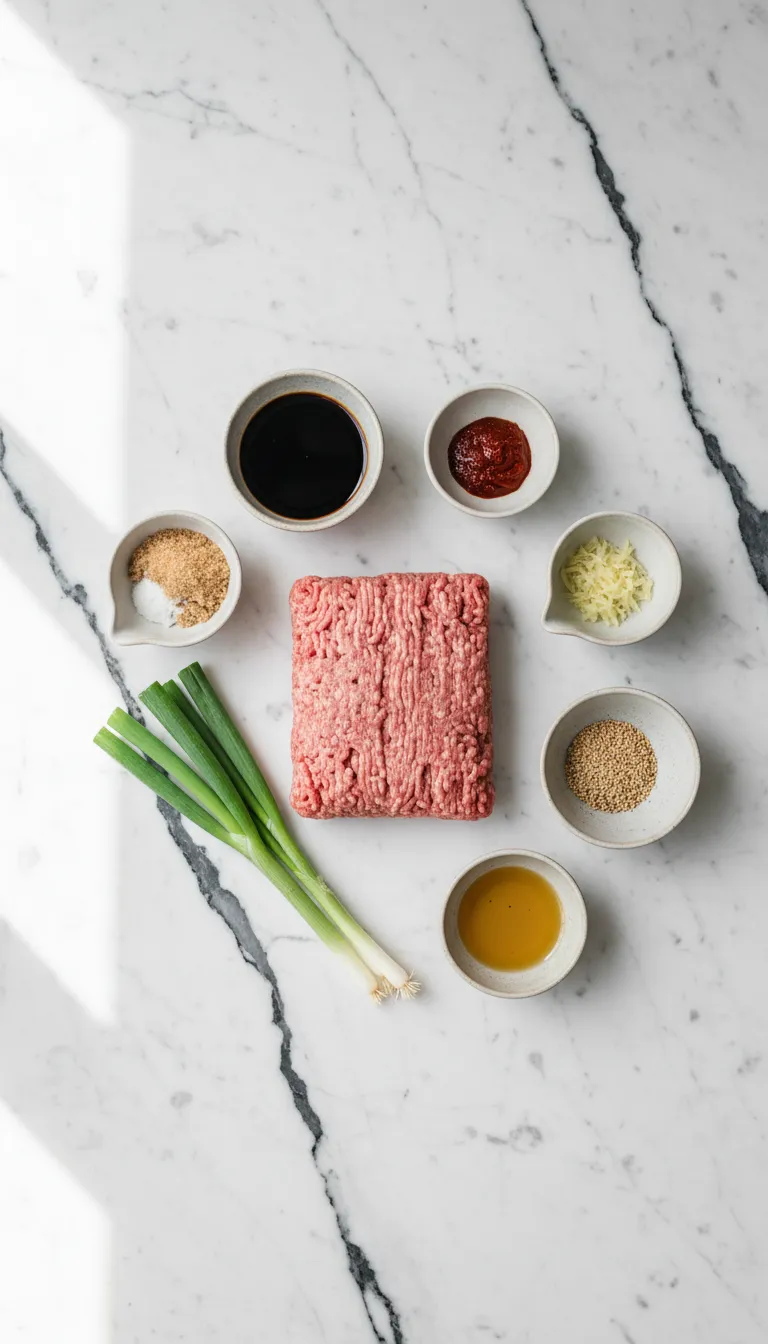
- Lean Ground Beef: (The star of the show) Using 90/10 or 85/15 ground beef provides enough fat for flavor without making the final dish greasy. It’s a fantastic high protein choice that makes this one of the best budget meals around.
- Low-Sodium Soy Sauce: (The savory foundation) Using low-sodium gives you control over the saltiness, allowing the other flavors to shine through.
- Toasted Sesame Oil: (For that signature nutty aroma) A little goes a long way! This is a finishing oil, added at the end for its incredible fragrance and flavor. Don’t use regular sesame oil.
- Brown Sugar: (The sweet counterpoint) Light or dark brown sugar works perfectly, adding a molasses-like sweetness that caramelizes beautifully with the beef.
- Fresh Garlic & Ginger: (The aromatic duo) Freshly minced garlic and grated ginger are non-negotiable. They provide a pungent, zesty backbone that powdered versions simply can’t replicate.
- Gochujang (Korean Chili Paste): (For a touch of smoky heat) This fermented chili paste adds a complex, savory, and slightly sweet heat. Adjust the amount to your personal spice preference.
- Rice Vinegar: (The bright acidic note) A splash of rice vinegar cuts through the richness of the sauce and brightens everything up.
- Green Onions & Sesame Seeds: (For garnish and texture) Sliced green onions add a fresh, mild oniony bite, while toasted sesame seeds provide a nutty crunch.
- Cooked Rice: For serving. Jasmine or short-grain white rice is traditional and perfect for soaking up the delicious sauce.
Pantry Substitutions
While the classic ingredients are recommended, sometimes you need to work with what you have. Here are a few reliable swaps that won’t compromise the dish too much.- For Ground Beef: Ground turkey, ground chicken, or even finely chopped mushrooms for a vegetarian option work well. Just be mindful of cooking times.
- For Brown Sugar: Honey or maple syrup can be used in a pinch. Start with a little less, as they can be sweeter than brown sugar.
- For Gochujang: If you don’t have it, a mix of sriracha and a tiny bit of miso paste can mimic the spicy-savory flavor, though it won’t be an exact match.
- For Rice Vinegar: Apple cider vinegar or lime juice can provide the necessary acidity, though they will slightly alter the flavor profile.
- For Soy Sauce: Tamari or coconut aminos are excellent gluten-free alternatives.
Chef’s Twists
Once you’ve mastered the basic recipe, it’s incredibly fun to customize. Think of this Korean beef bowl as a canvas for your culinary creativity. These additions can turn a simple weeknight meal into something truly special.First, consider adding a jammy, soft-boiled or fried egg on top. The runny yolk creates a secondary, creamy sauce that melds beautifully with the savory beef. It’s a simple addition that adds a ton of richness and makes the bowl feel even more complete.
Next, introduce some fermented funk with a side of kimchi. The tangy, spicy crunch of kimchi cuts through the richness of the beef and sauce, providing a fantastic contrast in both flavor and texture. You can either serve it on the side or mix it right in.
For extra nutrition and color, wilt a large handful of fresh spinach into the beef during the last minute of cooking. The spinach soaks up the delicious sauce and adds a dose of greens without creating any extra dishes. You could also add shredded carrots or finely chopped broccoli for more crunch. This is a great way to make it an even more well-rounded healthy dinner.
Let’s Get Cooking
1. Create the Flavorful Sauce
In a small bowl, whisk together the low-sodium soy sauce, brown sugar, minced garlic, grated ginger, gochujang, and rice vinegar. Keep whisking until the brown sugar is mostly dissolved. This step is crucial because it ensures the flavors are perfectly blended before they hit the hot pan. Set this magic mixture aside for now.2. Perfectly Brown the Beef
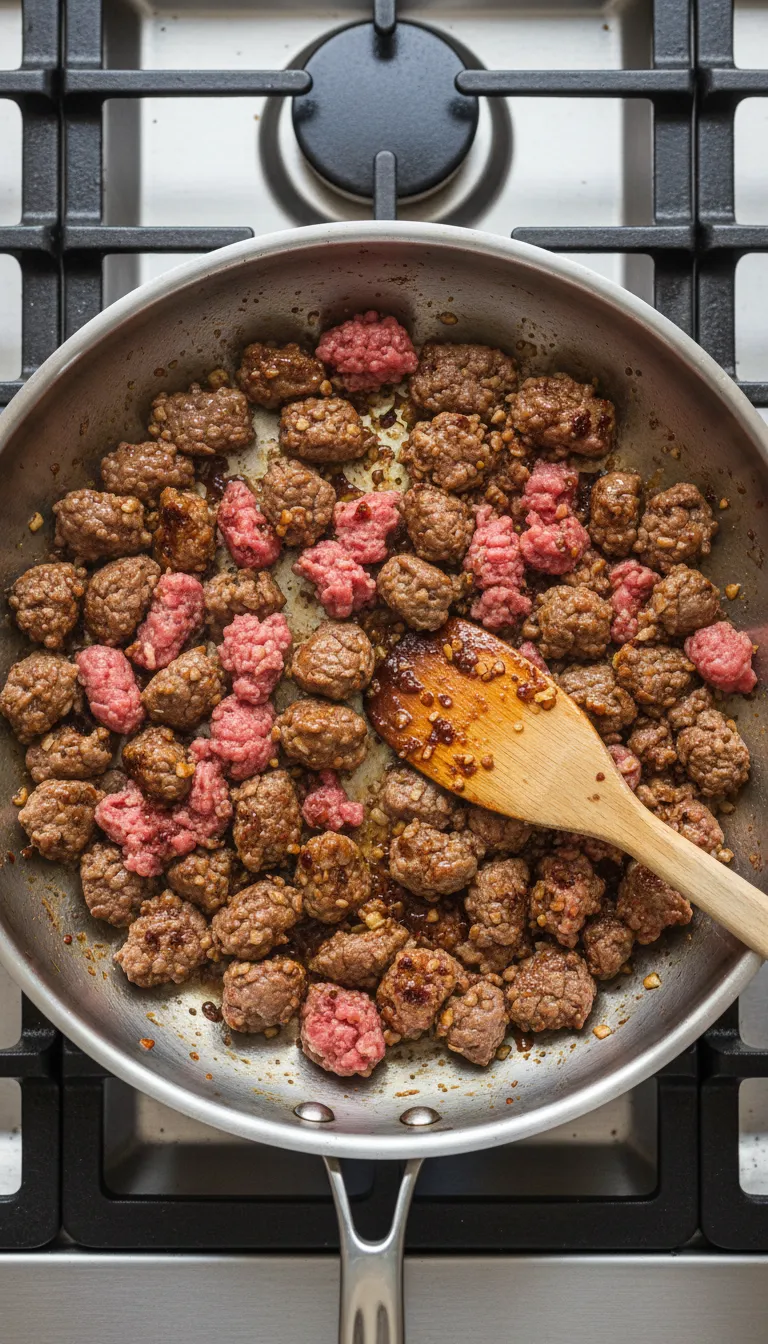
Heat a large skillet or wok over medium-high heat. Once it’s hot, add the ground beef. Break it apart with a wooden spoon or spatula and let it cook until it’s browned and cooked through, which should take about 5-7 minutes. The key here is to let the beef get some nice crispy, caramelized edges. Don’t be afraid of a little color—that’s where the flavor is! Once cooked, drain off any excess grease from the pan.3. Simmer and Thicken
Pour the prepared sauce mixture over the cooked ground beef in the skillet. Stir everything together to ensure every piece of beef is coated in that glorious sauce. Bring the mixture to a simmer and let it cook for another 2-3 minutes. The sauce will thicken slightly and become glossy as the sugar caramelizes, clinging beautifully to the beef. This is when your kitchen will start to smell absolutely incredible. Just before you take it off the heat, stir in the toasted sesame oil. Adding it at the end preserves its delicate, nutty aroma.4. Assemble Your Bowls
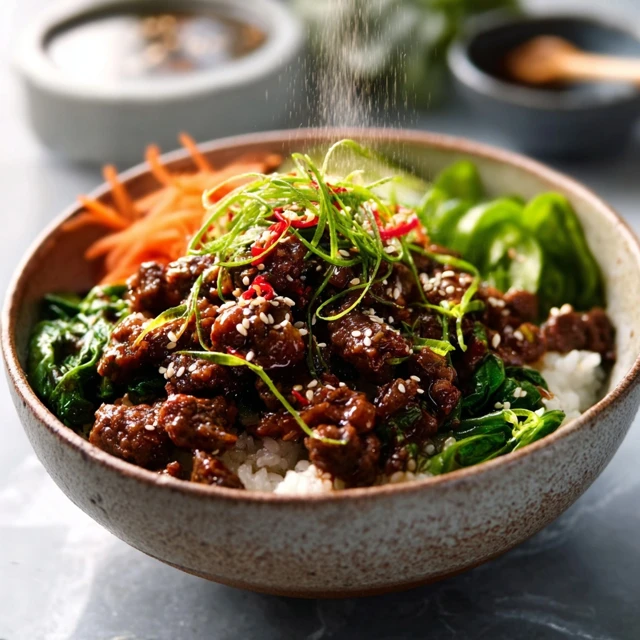
Now for the best part! To assemble your Korean beef bowls, scoop a generous portion of fluffy, steamed rice into each bowl. Top the rice with a hearty serving of the saucy Korean beef. Garnish generously with freshly sliced green onions and a sprinkle of toasted sesame seeds. Serve immediately while it’s hot and delicious.Avoid These Pitfalls
- Overcrowding the Pan: If you’re doubling the recipe, brown the beef in two batches. Overcrowding the pan will cause the meat to steam instead of brown, and you’ll miss out on those delicious crispy bits.
- Adding Sesame Oil Too Early: Toasted sesame oil has a low smoke point and its flavor is delicate. Adding it at the beginning of the cooking process will burn off its signature nutty taste. Always stir it in at the very end, off the heat.
- Not Draining the Grease: Using ground beef will render fat. Failing to drain the excess grease before adding the sauce will result in a greasy, heavy final dish instead of a clean, glossy one.
Toppings & Sides
The beauty of a bowl meal is in the toppings and sides that complete it. This is where you can add texture, freshness, and even more nutrients. While the Korean beef is fantastic on its own over rice, these additions take it to the next level.For toppings, think about color and crunch. Sliced green onions and toasted sesame seeds are classic for a reason. You can also add shredded carrots, thinly sliced cucumber, or even some quick-pickled radishes for a tangy bite. A spoonful of spicy kimchi is also a must-try for those who love a bit of fermented heat.
When it comes to sides, simple is often best. A side of steamed or stir-fried vegetables like broccoli, bok choy, or bell peppers adds a healthy component that complements the rich beef. If you’re looking for another dish to round out a larger meal, something like this Egg Roll In A Bowl offers a similar flavor profile with a different texture.
This recipe is a fantastic starting point. If you love the flavors but want to try it with a different cut of meat, the marinade works wonderfully in these Korean Bbq Steak Bowls. And for those days when you want something even spicier and more comforting, the core flavors here are reminiscent of a great Spicy Korean Ramen. The versatility of these Korean flavors is truly endless, even translating beautifully to slow-cooked dishes like this Slow Cooker Mongolian Beef. It’s a flavor profile that, once you master it, you can apply to so many different easy recipes, from a simple Korean Ground Beef Bowl to a more complex noodle dish like Beef And Broccoli Lo Mein.
Did you change any ingredients? Let me know in the comments how you made this recipe your own
What makes this Korean beef bowl recipe different from others?
This recipe stands out due to its incredible depth of flavor from simple pantry staples, a specific technique for browning the beef to create crispy edges for better texture, and its speed—the entire meal is ready in under 30 minutes, making it an ideal weeknight dinner.
Can I substitute the ground beef or other ingredients in this recipe?
Yes, several substitutions work well. You can replace ground beef with ground turkey, ground chicken, or finely chopped mushrooms for a vegetarian option. For brown sugar, honey or maple syrup can be used. For a gluten-free alternative to soy sauce, tamari or coconut aminos are excellent choices.
What are the most common mistakes to avoid when making these beef bowls?
To ensure the best result, avoid three key mistakes: 1) Overcrowding the pan, which steams the beef instead of browning it. 2) Forgetting to drain the excess grease, which can make the final dish heavy. 3) Adding the toasted sesame oil too early, as its flavor is delicate and should be stirred in at the very end.
What are some ways to customize or add toppings to this Korean beef bowl?
You can easily customize your bowl by adding a jammy soft-boiled or fried egg on top for extra richness. For a tangy, spicy crunch, add a side of kimchi. To boost nutrition, you can wilt a handful of fresh spinach into the beef during the last minute of cooking or top the bowl with shredded carrots and sliced cucumber.
Korean Beef Bowls

Equipment
- Large Skillet or Wok
- Small bowl
- Whisk
- Wooden spoon or spatula
- Knife
- Cutting board
- Measuring cups and spoons
- Rice cooker or pot
Ingredients
- ¼ cup low-sodium soy sauce
- 2 tablespoons brown sugar, packed
- 1 tablespoon gochujang Korean chili paste
- 4 cloves garlic, minced
- 1 tablespoon fresh ginger, grated
- 1 tablespoon rice vinegar
- 1 teaspoon toasted sesame oil
- 4 cups cooked rice Jasmine or short-grain
- 2 green onions, thinly sliced
- 1 teaspoon toasted sesame seeds
Instructions
- In a small bowl, whisk together the low-sodium soy sauce, brown sugar, gochujang, minced garlic, grated ginger, and rice vinegar until the sugar is mostly dissolved. Set the sauce aside.
- Heat a large skillet or wok over medium-high heat. Add the ground beef and break it apart with a wooden spoon. Cook for 5-7 minutes, until browned and slightly crispy in spots.
- Carefully drain off any excess grease from the skillet.
- Pour the prepared sauce over the cooked beef. Stir to coat evenly and bring the mixture to a simmer.
- Let it simmer for 2-3 minutes, allowing the sauce to thicken and become glossy.
- Remove the skillet from the heat and stir in the toasted sesame oil.
- To serve, divide the cooked rice among four bowls. Top with a generous portion of the saucy Korean beef. Garnish with sliced green onions and toasted sesame seeds.