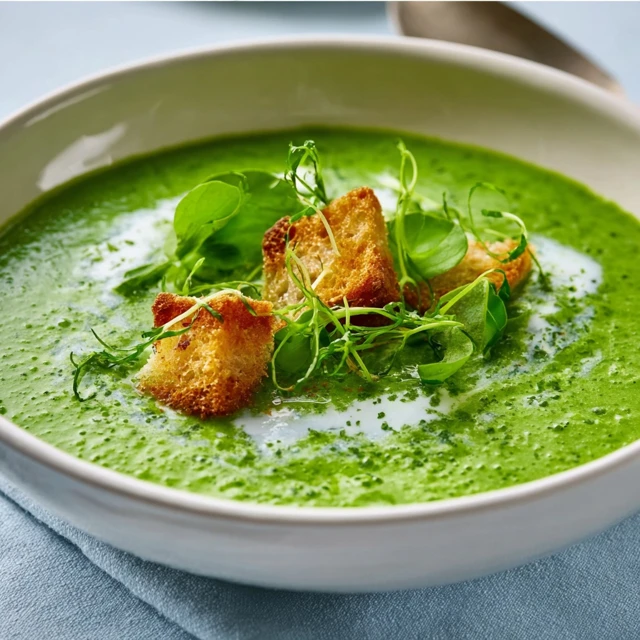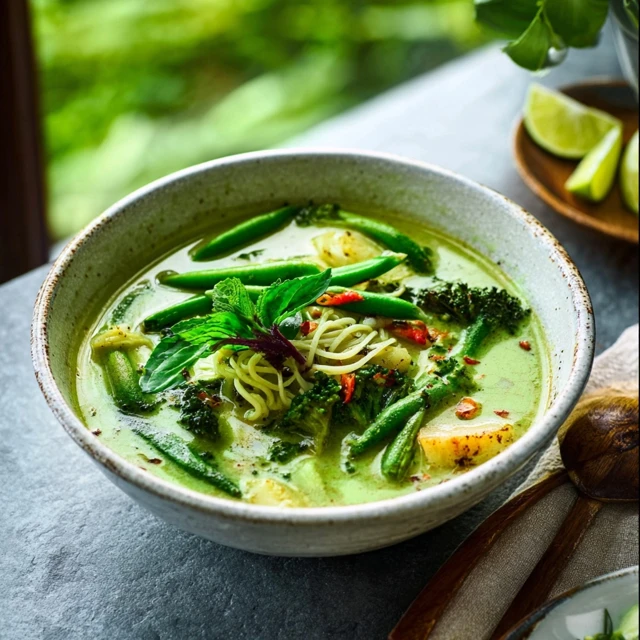
Forget everything you think you know about a broth-and-veggie soup being a quiet, background player on the dinner table. This Thai green curry soup doesn’t just enter the room; it kicks down the door with a fragrant explosion of lemongrass, galangal, and fiery green chilies, all mellowed by the silkiest, most luxurious coconut milk. It’s the kind of soup that makes you stop mid-conversation, close your eyes, and just savor the complex dance of flavors happening on your palate.
We’re talking about a vibrant, emerald-green broth that’s both fiercely bold and creamily comforting, a perfect canvas for the crisp-tender jewels of spring vegetables. Each spoonful is a journey: first, the bright, aromatic heat of the curry, then the sweet, cooling coconut, and finally, the fresh snap of asparagus, peas, and bok choy. This isn’t just a healthy dinner; it’s an experience that will make your kitchen smell like the best Thai restaurant in town, and it comes together faster than you can decide on takeout.
The Thai Green Curry Spring Vegetable Soup Difference
- Layered, Not Flat, Flavor: We don’t just dump everything in a pot. By “blooming” the curry paste in coconut cream first, we unlock its deepest aromatic oils, creating a profoundly flavorful base that you can’t achieve by simply stirring it into broth.
- Vibrant, Crisp Vegetables: The secret to avoiding sad, mushy vegetables is timing. We add the heartier veggies first and the delicate ones at the very end, ensuring each one retains its perfect color, snap, and nutritional value.
- Luxurious, Silky Broth: Using full-fat coconut milk is non-negotiable. This creates a rich, velvety texture that beautifully balances the spice and acidity, making the soup feel indulgent and satisfying without any dairy.
The Building Blocks
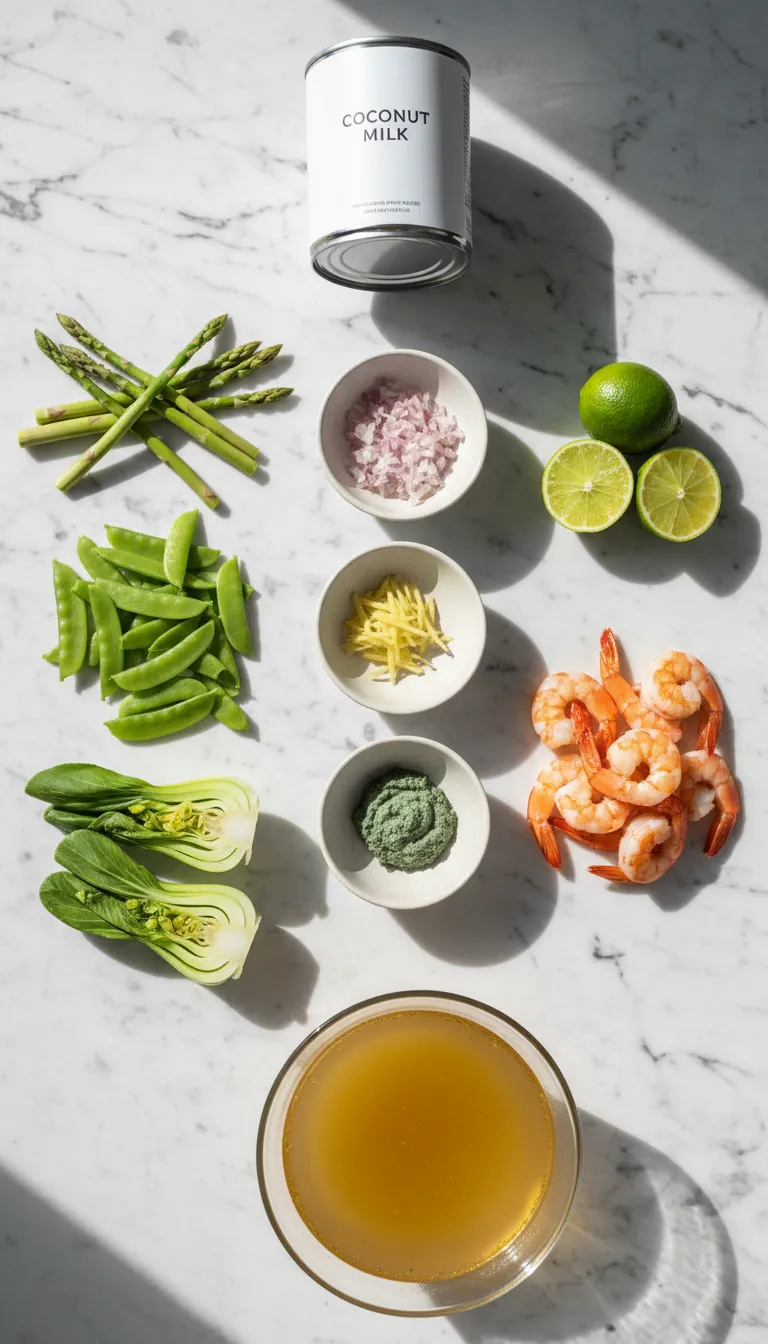
The magic of this Thai curry lies in a handful of powerful, authentic ingredients. Don’t be tempted to skimp on quality here; using a good brand of curry paste and full-fat coconut milk will make all the difference between a good soup and a truly spectacular one.
- Coconut Oil: A neutral oil for sautéing. Avocado oil works too.
- Shallots & Garlic: The foundational aromatics that build the first layer of savory flavor.
- Fresh Ginger: For that signature warm, zesty spice that cuts through the richness.
- Thai Green Curry Paste: (The star of the show! Use a high-quality brand for the best flavor. It provides the complex blend of green chilies, lemongrass, galangal, and spices.)
- Full-Fat Canned Coconut Milk: (Absolutely crucial for a creamy, rich broth. Do not use light coconut milk or the kind from a carton, as the soup will be thin and watery.)
- Vegetable Broth: To create the perfect soup consistency without diluting the coconut flavor.
- Fish Sauce: (The secret weapon for umami! It adds a deep, savory, salty complexity that is irreplaceable in Thai cooking.)
- Coconut Sugar or Brown Sugar: Just a touch to balance the saltiness and spice.
- Lime Juice: (Essential for brightness! A fresh squeeze at the end awakens all the flavors and cuts through the richness.)
- Asparagus: Trimmed and cut into bite-sized pieces.
- Snap Peas or Snow Peas: For a delightful, sweet crunch.
- Baby Bok Choy: Halved or quartered, it wilts beautifully while the stems stay crisp.
- Fresh Thai Basil or Regular Basil: For a final burst of fresh, anise-like aroma.
- Optional Protein: Cubed firm tofu, shrimp, or shredded cooked chicken.
Swaps & Alternatives
One of the best things about soup recipes is how adaptable they are. Whether you’re working with what’s in your fridge or catering to dietary needs, this recipe is incredibly flexible.
- Make it Vegan: This is an easy swap! To create one of the best vegan recipes, simply substitute the fish sauce with a vegan fish sauce, tamari, or soy sauce. Start with a smaller amount of soy sauce and adjust, as it’s saltier. Add pressed, cubed tofu for protein.
- Vegetable Variations: Don’t have the listed spring veggies? No problem. Broccoli florets, sliced bell peppers, mushrooms, zucchini, or green beans are all fantastic additions. Just adjust cooking times accordingly.
- No Coconut Sugar?: You can use maple syrup, agave, or even regular granulated sugar. The goal is just a hint of sweetness to balance the other flavors.
- Spice Level Control: If you’re sensitive to spicy food, start with less green curry paste. You can always add more, but you can’t take it out! Conversely, if you love heat, add a sliced red chili or a dash of chili garlic sauce.
Chef’s Twists
Ready to take this incredible soup to the next level? These simple additions can add new dimensions of flavor and texture, turning a weeknight healthy dinner into a gourmet experience.
First, try adding a few bruised kaffir lime leaves along with the vegetable broth. They impart an intensely fragrant, citrusy aroma that is quintessentially Thai. Just remember to remove them before serving, as they are tough to eat.
For a nutty, toasty depth, garnish the finished soup with a tablespoon of toasted sesame seeds or unsweetened shredded coconut. Toasting them in a dry pan for a few minutes until fragrant makes a world of difference.
If you love a richer, more complex flavor profile, consider adding a spoonful of peanut butter or almond butter to the broth as it simmers. It will thicken the soup slightly and add a wonderful savory note that pairs beautifully with the coconut and lime. This is a common trick in many Southeast Asian curry dishes.
Finally, for an extra layer of freshness and crunch, top each bowl with a handful of fresh bean sprouts and chopped roasted peanuts. The textural contrast is absolutely divine.
The Cooking Process
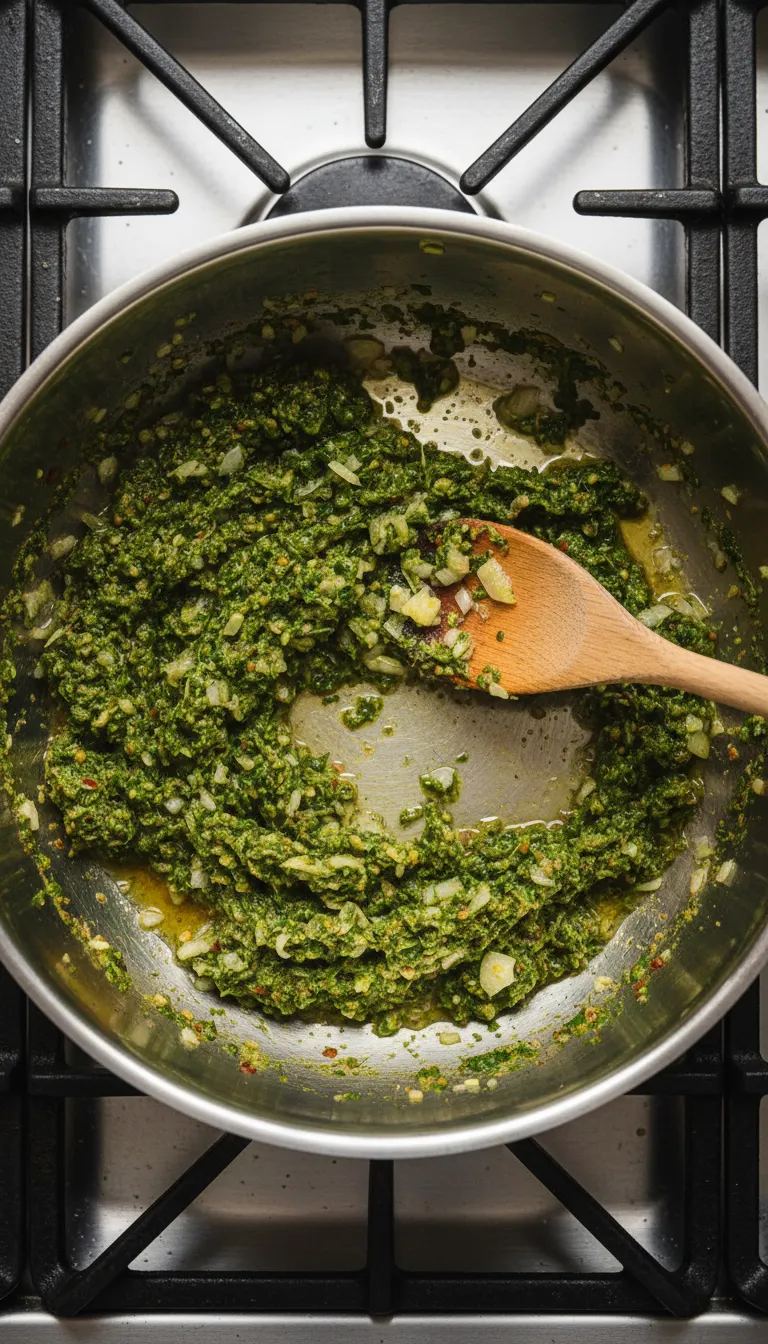
This soup comes together surprisingly quickly, making it perfect for a weeknight. The key is to have all your ingredients prepped and ready to go before you even turn on the stove. This is called *mise en place*, and it’s your best friend for a stress-free cooking experience.
1. Sauté the Aromatics
Heat the coconut oil in a large pot or Dutch oven over medium heat. Once it shimmers, add the minced shallots and cook for 2-3 minutes until they begin to soften and become fragrant.
Next, add the minced garlic and grated ginger. Stir constantly for about 30 seconds until you can smell their wonderful aroma. Be careful not to let the garlic burn, as it will become bitter.
2. Bloom the Curry Paste
This is the most important step for developing deep flavor. Add the Thai green curry paste to the pot. Use your spoon to break it up and stir it into the aromatics, cooking for about 1-2 minutes. The paste will darken slightly and become incredibly fragrant. This process, known as “blooming,” toasts the spices and releases their essential oils.
3. Build the Creamy Broth
Pour in about half a cup of the full-fat coconut milk. Scrape the bottom of the pot to lift up any bits of curry paste and aromatics that have stuck. Let this mixture sizzle and bubble for a minute, allowing the coconut cream to meld with the paste.
Now, pour in the remaining coconut milk and the vegetable broth. Whisk everything together until smooth. Add the fish sauce and coconut sugar, stirring to combine. Bring the soup to a gentle simmer over medium heat, then reduce the heat to low to maintain that gentle simmer. Avoid a rolling boil, which can cause the coconut milk to separate.
4. Simmer and Add Vegetables
Let the broth simmer gently for about 5-10 minutes to allow the flavors to meld. This is a great time to taste and adjust. Does it need more salt (fish sauce), sweetness (sugar), or spice (curry paste)?
Now it’s time for the vegetables. Add the asparagus pieces and cook for 2-3 minutes. Next, add the snap peas and baby bok choy. Cook for another 2-3 minutes, just until the asparagus is crisp-tender and the bok choy has wilted but its stems are still crunchy. You want to avoid overcooking the vegetables; they should remain bright and vibrant. This technique is similar to what makes a great Chicken And Vegetables Skillet so appealing—perfectly cooked veggies.
5. The Finishing Touches
Turn off the heat. Stir in the fresh lime juice and the fresh basil leaves. The residual heat will wilt the basil perfectly. If you’re adding a pre-cooked protein like shrimp or shredded chicken, add it now to warm through. If you’re using tofu, you can add it with the asparagus.
Ladle the hot soup into bowls and prepare to be amazed. The balance of flavors is what makes Thai food so special, and this soup is a perfect example, much like its cousin, the classic Thai Chicken Soup.
Avoid These Pitfalls
- Using Light Coconut Milk: The biggest mistake you can make. Light coconut milk lacks the fat content needed to create a rich, creamy broth and to balance the intensity of the curry paste. Your soup will be thin, watery, and less flavorful. Stick to full-fat, always.
- Boiling the Soup Violently: Once the coconut milk is in, maintain a gentle simmer. A hard, rolling boil can cause the coconut milk to “break” or curdle, resulting in a grainy texture instead of a smooth, silky one.
- Overcooking the Vegetables: The beauty of this spring soup is the fresh, crisp texture of the vegetables. Dumping them in too early will leave you with a pot of mush. Add them in stages at the very end of cooking so they are perfectly crisp-tender.
Serving Ideas
This Thai green curry soup is a stunning meal all on its own, but a few simple additions can make it even more satisfying. The toppings are where you can really customize each bowl to your liking.
Set out small bowls of fresh cilantro, more Thai basil, thinly sliced red chilies or jalapeños for extra heat, and plenty of lime wedges for squeezing over the top. The fresh herbs and extra lime juice add a final layer of brightness that makes the soup sing. For a bit of crunch, chopped peanuts or crispy fried shallots are fantastic.
While it’s a complete meal, you can easily make it heartier by serving it with a side of fluffy jasmine rice or by ladling the soup over a nest of cooked rice noodles. If you love noodle soups, you’ll appreciate how well this broth works, much like in a Thai Red Curry Noodle Soup.
For those who love exploring different soup recipes, this dish provides a wonderful contrast to other Asian-inspired soups like a savory Potsticker Soup. It also stands apart from creamy Western-style soups like a classic Creamy Vegetable Soup by offering a complex, spicy-sour-sweet flavor profile. It’s a testament to how versatile and exciting the world of soups can be, and it shares a flavor DNA with other beloved curry dishes, such as a rich Coconut Curry Chicken. This is truly a gluten free dish that doesn’t compromise on flavor.
Did you change any ingredients? Let me know in the comments how you made this recipe your own
Can I make this Thai green curry soup vegan?
Yes, this recipe is easily adapted to be vegan. Simply substitute the fish sauce with a vegan fish sauce, tamari, or soy sauce. For protein, you can add pressed, cubed firm tofu when you add the asparagus.
Why is it so important to use full-fat coconut milk?
Using full-fat canned coconut milk is crucial for creating a rich, velvety, and indulgent broth. It provides the necessary fat content to balance the spice of the curry paste. Using light or carton coconut milk will result in a thin, watery, and less flavorful soup.
How do I prevent the vegetables from getting mushy?
The key to keeping the vegetables crisp and vibrant is timing. Add heartier vegetables like asparagus first, and then add more delicate ones like snap peas and bok choy at the very end of the cooking process. This ensures they are cooked through but retain their perfect color and snap.
What does it mean to ‘bloom’ the curry paste and why is it important?
Blooming the curry paste means cooking it in a bit of oil or coconut cream before adding the other liquids. This step is essential because it toasts the spices within the paste, releasing their deepest aromatic oils and creating a profoundly flavorful base for the soup that you can’t achieve by just stirring it into the broth.
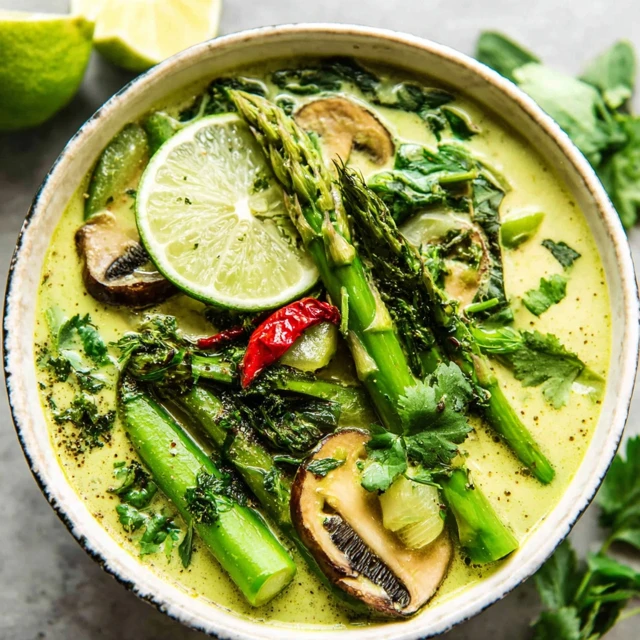
Vibrant Thai Green Curry Spring Vegetable Soup

Equipment
- Large pot or Dutch oven
- Chef’s knife
- Cutting board
- Measuring cups and spoons
- Whisk
- Ladle
- Garlic press or microplane grater
Ingredients
- 1 tbsp coconut oil or avocado oil
- 2 shallots, finely minced
- 3 cloves garlic, minced
- 1- inch piece fresh ginger, grated
- 2-3 tbsp Thai green curry paste adjust to spice preference
- 1-2 tbsp fish sauce or vegan alternative
- 1 tsp coconut sugar or brown sugar
- 1 bunch asparagus, trimmed and cut into 1-inch pieces
- 1 cup snap peas or snow peas
- 2-3 heads baby bok choy, halved or quartered
- 1 lime, juiced
- ½ cup fresh Thai basil leaves or regular basil
- Optional protein: 1 block 14 oz
- Optional garnishes: fresh cilantro, sliced red chilies, lime wedges, chopped peanuts
Instructions
- Heat coconut oil in a large pot or Dutch oven over medium heat. Add the minced shallots and cook for 2-3 minutes until softened and fragrant.
- Add the minced garlic and grated ginger. Stir constantly for 30 seconds until aromatic, being careful not to burn the garlic.
- Add the Thai green curry paste. Break it up with a spoon and cook, stirring frequently, for 1-2 minutes until it darkens slightly and becomes very aromatic. This step is called ‘blooming’ and is key for flavor.
- Open the can of coconut milk without shaking it. Scoop out the thick cream from the top (about 1/2 cup) and add it to the pot. Stir and scrape the bottom of the pot, letting it sizzle for a minute to combine with the paste.
- Whisk in the remaining coconut milk and the vegetable broth until smooth. Stir in the fish sauce and coconut sugar.
- Bring the soup to a gentle simmer, then immediately reduce the heat to low. Let it simmer gently for 5-10 minutes for the flavors to meld. Avoid a rolling boil, which can cause the coconut milk to separate.
- Taste the broth and adjust seasoning if needed—more fish sauce for saltiness, sugar for sweetness, or curry paste for heat.
- Add the asparagus pieces to the pot (and tofu, if using). Cook for 2-3 minutes.
- Add the snap peas and baby bok choy. Cook for another 2-3 minutes, just until the asparagus is crisp-tender and the bok choy is wilted but the stems remain crisp.
- Turn off the heat. Stir in the fresh lime juice and Thai basil leaves. If adding pre-cooked shrimp or chicken, add them now to warm through.
- Ladle the hot soup into bowls. Garnish with optional toppings like fresh cilantro, sliced red chilies, or chopped peanuts before serving.
Notes
Vegan Variation: To make this recipe vegan, use a vegan fish sauce, tamari, or soy sauce in place of regular fish sauce. Add pressed, cubed firm tofu for a hearty protein.
Vegetable Swaps: Feel free to substitute with other vegetables like broccoli florets, sliced bell peppers, mushrooms, or green beans. Adjust cooking times as needed.
Spice Level: Control the heat by starting with less green curry paste and adding more to taste. For extra heat, add a sliced red chili with the aromatics or as a garnish.
Gourmet Twists: For deeper flavor, add a few bruised kaffir lime leaves with the broth (remove before serving), or stir in a tablespoon of peanut butter. Garnish with toasted sesame seeds, chopped peanuts, or fresh bean sprouts for added texture.