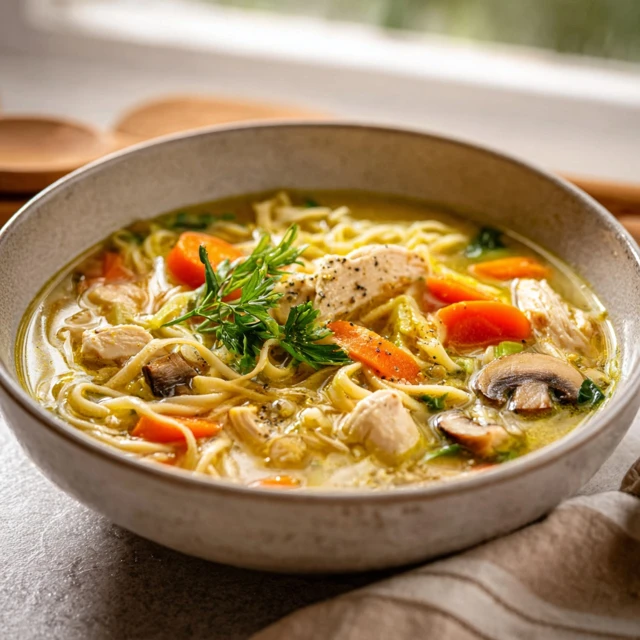
Healing isn’t always a quiet, gentle process; sometimes it arrives in a steaming, fragrant bowl that zings your senses back to life. This isn’t your average, sleepy chicken noodle soup that lulls you into a nap. This is a vibrant, wake-up-your-palate kind of soup, where fiery fresh ginger and pungent garlic create a golden broth that feels like pure, liquid sunshine, clearing the sinuses and warming you from the inside out.
Prepare for a soup experience that redefines comfort food. We’re talking about incredibly tender, velvety chicken, slurpable noodles, and a clear, deeply flavorful broth that tastes like it simmered for hours but comes together in under 45 minutes. This is the easy dinner that feels like a luxurious, restorative ritual, perfect for chasing away a chill, nursing a cold, or simply celebrating a Tuesday.
The Ginger Garlic Chicken Noodle Soup Difference
- Layered Aromatics: We don’t just dump everything in. By blooming the fresh ginger and garlic in hot oil first, we unlock their potent, fragrant oils, creating a deeply flavorful foundation that powdered spices could never replicate.
- Velveted Chicken Technique: A quick toss in cornstarch and soy sauce before searing is the secret to the most tender, succulent chicken. This simple Asian cooking technique creates a micro-crust that locks in moisture, ensuring every bite is juicy, never dry or stringy.
- The Bright Finish: While many soups finish simmering and are done, we add a final layer of flavor off the heat. A swirl of toasted sesame oil, a squeeze of fresh lime, and a shower of fresh herbs at the very end wakes everything up, adding a bright, clean finish that makes the soup taste incredibly fresh.
The Building Blocks
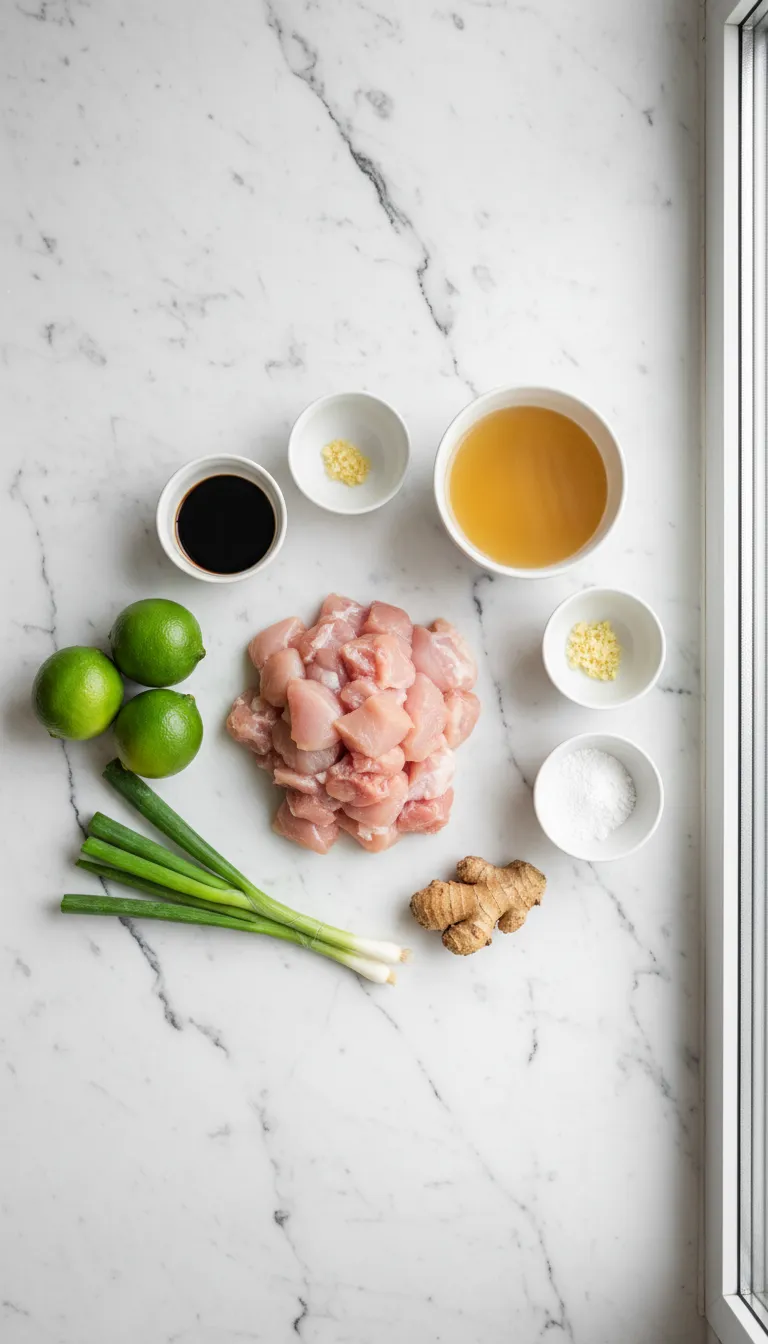
The magic of this healthy soup lies in using fresh, high-quality ingredients that each play a critical role. Think of this list not just as components, but as the cast of characters that will create a truly spectacular easy dinner.
- Boneless, Skinless Chicken Thighs: (The star) Thighs are my go-to for soups because they have more flavor and fat than breasts, meaning they stay incredibly moist and tender even when simmered.
- Low-Sodium Chicken Broth: (The foundation) Using low-sodium broth is crucial because it allows you to control the final saltiness of the dish, especially since we’re adding soy sauce.
- Fresh Ginger: (The fire) This is non-negotiable. You need a big knob of fresh ginger, finely grated or minced. It provides that signature warm, zesty spice that gives the soup its healing, sinus-clearing quality.
- Fresh Garlic: (The soul) Like ginger, fresh is a must. It provides a pungent, savory depth that is the heart of this ginger garlic combination.
- Low-Sodium Soy Sauce or Tamari: (The umami) This adds a savory, salty depth and beautiful color to the broth. Tamari is a great gluten-free alternative.
- Toasted Sesame Oil: (The aroma) A little goes a long way! This is a finishing oil, added at the end for its incredible nutty aroma and flavor.
- Noodles of Choice: (The comfort) Ramen noodles, udon, or even thin spaghetti work beautifully. We cook them separately to keep the broth clear and prevent them from getting mushy.
- Greens: (The freshness) A few handfuls of spinach or bok choy wilted in at the end add color, nutrients, and a lovely texture.
- Scallions & Cilantro: (The bright finish) Fresh herbs are essential for topping. They add a burst of freshness that cuts through the richness of the broth.
- Cornstarch: (The secret weapon) This is for velveting the chicken, ensuring it’s unbelievably tender.
- Avocado or Neutral Oil: For sautéing the aromatics and searing the chicken.
Swaps & Alternatives
Don’t have everything on hand? No problem! This recipe is wonderfully flexible.
- For the Chicken: If you prefer, you can use boneless, skinless chicken breast. Just be extra careful not to overcook it. You can also use leftover shredded rotisserie chicken, adding it near the end just to heat through.
- For the Noodles: No ramen? No worries. Rice noodles, soba noodles, or even angel hair pasta can be used. Just cook according to package directions.
- Make it Gluten-Free: Simply use a gluten-free noodle (like rice noodles) and substitute tamari or coconut aminos for the soy sauce.
- Different Greens: Kale (finely chopped), Swiss chard, or napa cabbage are all fantastic substitutes for spinach or bok choy.
- Vegetable Add-ins: Feel free to add thinly sliced carrots, mushrooms, or bell peppers. Sauté them with the aromatics for a few minutes to soften.
Flavor Boosts
Ready to take this already amazing soup to the next level? Here are a few of my favorite ways to add a little extra personality and flair.
For those who love a bit of heat, a teaspoon of chili garlic sauce or sambal oelek swirled into the broth adds a wonderful kick that complements the ginger perfectly. It’s a simple addition that transforms the dish into something reminiscent of my favorite Spicy Ginger Chicken, but in soup form.
Another fantastic addition is sautéed shiitake mushrooms. Sauté them after you sear the chicken until they are golden brown and their edges are crispy. Their earthy, umami flavor adds an incredible depth to the broth, making the soup feel even more luxurious.
For a richer, creamier texture and an extra boost of protein, add a jammy soft-boiled egg to each bowl right before serving. The creamy yolk mingling with the savory ginger garlic broth is an absolute game-changer.
Finally, don’t underestimate the power of a simple acid. A generous squeeze of fresh lime juice over the finished soup brightens all the flavors and adds a zesty counterpoint to the savory broth. It’s a small step that makes a huge difference.
Step-by-Step Instructions
This process is all about building layers of flavor, but don’t let that intimidate you. It’s a straightforward and incredibly rewarding journey that results in the best chicken noodle soup you’ve ever had.
1. Prep and Velvet the Chicken
First things first, let’s get our chicken ready. Cut the chicken thighs into small, bite-sized pieces, about 1-inch cubes. Place them in a medium bowl. Add a tablespoon of soy sauce and a tablespoon of cornstarch, and toss everything together until the chicken is evenly coated. This simple step is the key to that tender, velvety texture. Set it aside to marinate for about 10-15 minutes while you prep your other ingredients.During this time, mince your garlic, grate your ginger, and chop your scallions, separating the white/light green parts from the dark green tops. This is also a great time to get your broth and other ingredients measured and ready to go. A little prep makes the cooking process smooth and stress-free.
2. Sear the Chicken
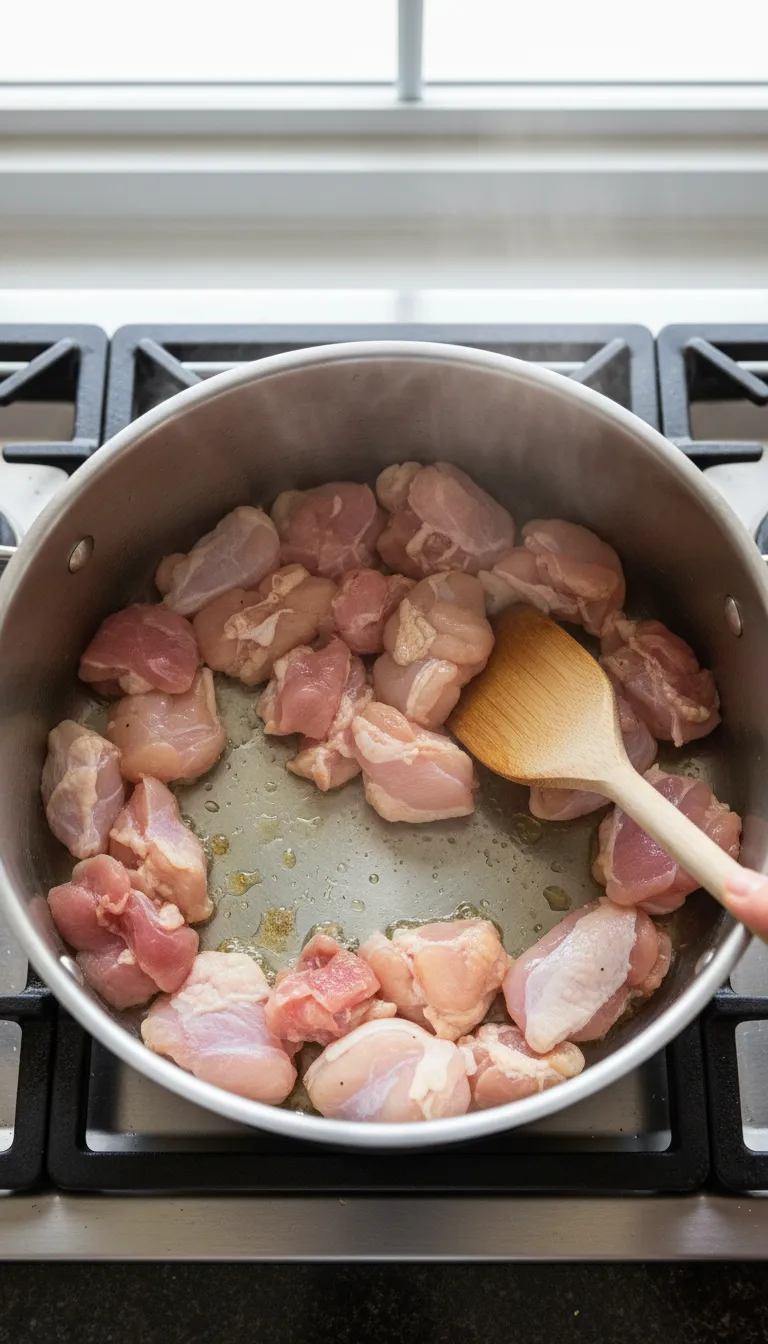
Place a large pot or Dutch oven over medium-high heat and add a tablespoon of oil. Once the oil is shimmering, add the chicken in a single layer, being careful not to crowd the pan (you may need to do this in two batches). Let the chicken sear for 2-3 minutes per side, until it’s golden brown and cooked through. Don’t worry about perfect browning on all sides; we just want that initial color and flavor.Once cooked, remove the chicken from the pot with a slotted spoon and set it aside on a plate. The little browned bits left in the bottom of the pot are pure gold—we’ll use those in the next step! This searing method is a great technique used in many Asian recipes, including these delicious Sticky Garlic Chicken Noodles.
3. Bloom the Aromatics
Reduce the heat to medium and add another drizzle of oil to the pot if needed. Add the white and light green parts of the scallions and sauté for about a minute until they start to soften. Now, add the minced garlic and grated ginger. Stir constantly for about 30-60 seconds until they are incredibly fragrant. Be very careful not to burn the garlic! This step, called blooming, is what releases all their essential oils and creates the aromatic backbone of our soup.4. Build the Broth
Pour in the low-sodium chicken broth, using a wooden spoon to scrape up all those delicious browned bits from the bottom of the pot. This is called deglazing, and it’s where so much flavor lives! Add the remaining soy sauce and bring the broth to a gentle simmer.Once it’s simmering, reduce the heat to low, cover the pot, and let it gently simmer for at least 15 minutes. This allows the ginger and garlic flavors to fully infuse into the broth. A gentle simmer is key, just like when making a classic Chicken Noodle Soup, as a rolling boil can make the broth cloudy.
5. Cook Noodles and Add Greens
While the broth is simmering, cook your noodles in a separate pot of water according to the package directions. Cooking them separately is my number one rule for any noodle soup, from this one to a Potsticker Soup. It prevents the noodles from absorbing all your beautiful broth and turning mushy. Once cooked, drain them well.Just before you’re ready to serve, return the seared chicken to the pot of broth. Add your greens, like spinach or bok choy, and stir them in. They will wilt in the hot broth in just a minute or two. This is a much lighter approach than the rich, hearty base of a Creamy Chicken Noodle Soup, focusing instead on freshness.
6. Finish and Assemble
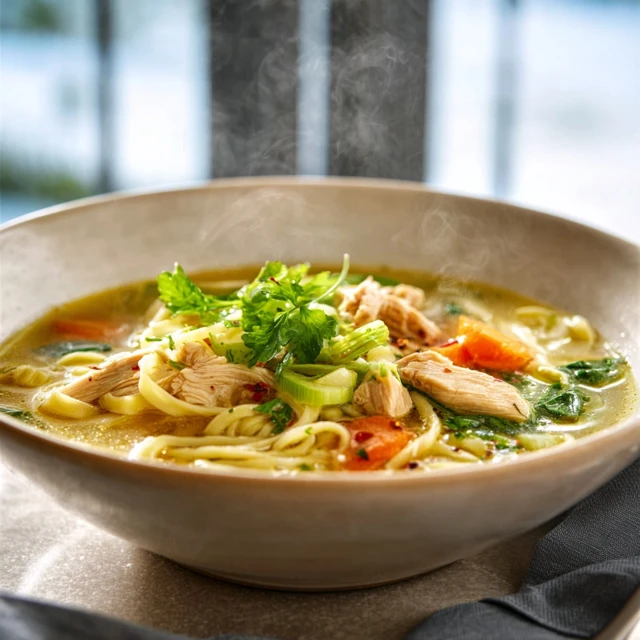
Turn off the heat. Now for the final, crucial flavor layer: stir in the toasted sesame oil. This finishing oil adds an incredible nutty aroma that you’d lose if you added it too early. Give the broth a taste and add a pinch of salt or a splash more soy sauce if you think it needs it.To serve, place a portion of the cooked noodles in the bottom of each bowl. Ladle the hot broth, chicken, and greens over the noodles. Garnish generously with the reserved dark green scallion tops, fresh cilantro, and a sprinkle of sesame seeds. Serve immediately and enjoy that glorious, golden broth.
Avoid These Pitfalls
- Overcooking the Noodles: The most common mistake! Cooking noodles directly in the soup broth makes them release starch, clouding your beautiful broth and turning them into a mushy mess. Always cook them separately and add them to the bowl just before serving.
- Using Powdered Aromatics: Please don’t! The entire soul of this soup comes from the vibrant, zesty punch of fresh ginger and garlic. Powdered versions will result in a flat, one-dimensional, and disappointing broth.
- Boiling the Broth Aggressively: After the initial bring-up, the broth should be kept at a gentle, happy simmer. A hard, rolling boil can make the chicken tough (even with velveting!) and can cause the broth to become cloudy. Patience and gentle heat are your friends.
Toppings & Sides
The perfect bowl of Ginger Garlic Chicken Noodle Soup is all about the final touches. Setting up a small “toppings bar” is a fun way for everyone to customize their own bowl.
My must-have toppings include:
- Thinly sliced scallions (the green parts)
- Fresh cilantro leaves
- A drizzle of chili oil or sriracha for a spicy kick
- Toasted sesame seeds for a nutty crunch
- A jammy soft-boiled egg, halved
- A lime wedge for squeezing over the top
Because this healthy soup is a complete meal in a bowl, you don’t need much on the side. However, if you want to round out the meal, some steamed edamame, a simple cucumber salad with rice vinegar, or a few crispy spring rolls would be absolutely perfect.
Did you change any ingredients? Let me know in the comments how you made this recipe your own
What is the ‘velveted chicken’ technique mentioned in the recipe?
Velveting is a simple Asian cooking technique used to make the chicken incredibly tender. It involves tossing the bite-sized chicken pieces in cornstarch and soy sauce before searing. This creates a micro-crust that locks in moisture, ensuring the chicken is succulent and never dry.
Why should I cook the noodles separately instead of directly in the soup broth?
Cooking the noodles in a separate pot is essential to keep the broth clear and prevent the noodles from becoming mushy. When cooked in the broth, noodles release starch, which clouds the soup, and they absorb too much liquid, resulting in a poor texture.
Can I use powdered ginger and garlic instead of fresh?
No, the recipe strongly advises against using powdered aromatics. The soup’s signature vibrant, zesty, and healing quality comes from the potent oils of fresh ginger and garlic. Powdered versions will result in a flat, one-dimensional, and disappointing broth.
What are some easy ways to add more flavor or customize this soup?
You can easily boost the flavor by adding a teaspoon of chili garlic sauce for heat, sautéed shiitake mushrooms for earthy depth, or a soft-boiled egg for richness. A squeeze of fresh lime juice and a swirl of toasted sesame oil at the end are also recommended to brighten and finish the soup.
Sunshine Ginger Garlic Chicken Noodle Soup

Equipment
- Large pot or Dutch oven
- Medium bowl
- Separate pot for noodles
- Slotted spoon
- Wooden Spoon
- Knife
- Cutting board
- Grater or microplane
- Measuring cups
- Measuring spoons
- Ladle
Ingredients
- 1.5 lbs boneless, skinless chicken thighs, cut into 1-inch pieces
- 2 tbsp avocado or neutral oil, divided
- 3 tbsp low-sodium soy sauce or tamari, divided
- 1 tbsp cornstarch
- 2- inch piece fresh ginger, finely grated
- 5 cloves fresh garlic, minced
- 4 scallions, whites and greens separated and sliced
- 8 cups low-sodium chicken broth
- 8 oz dried noodles of choice ramen, udon, or spaghetti
- 5 oz fresh spinach or chopped bok choy
- 1 tsp toasted sesame oil
- ¼ cup fresh cilantro, chopped, for garnish
- 1 lime, cut into wedges, for serving
- 1 tsp toasted sesame seeds, for garnish
- Salt and freshly ground black pepper to taste
Instructions
- In a medium bowl, combine the bite-sized chicken pieces with 1 tablespoon of soy sauce and 1 tablespoon of cornstarch. Toss until the chicken is evenly coated. Set aside to marinate for 10-15 minutes while you prepare the other ingredients.
- Heat 1 tablespoon of oil in a large pot or Dutch oven over medium-high heat. Once shimmering, add the chicken in a single layer, working in batches if necessary to avoid crowding. Sear for 2-3 minutes per side until golden brown and cooked through. Remove the chicken with a slotted spoon and set aside.
- Reduce heat to medium. Add the remaining 1 tablespoon of oil if the pot is dry. Add the white and light green parts of the scallions and sauté for 1 minute until softened. Add the minced garlic and grated ginger, stirring constantly for 30-60 seconds until very fragrant, being careful not to burn them.
- Pour in the chicken broth, using a wooden spoon to scrape up any browned bits from the bottom of the pot. Stir in the remaining 2 tablespoons of soy sauce. Bring to a simmer, then reduce heat to low, cover, and let it gently simmer for at least 15 minutes to allow flavors to meld.
- While the broth simmers, cook the noodles in a separate pot of boiling water according to package directions. Drain well and set aside.
- Return the seared chicken to the broth. Add the fresh spinach or bok choy and stir until just wilted, about 1-2 minutes.
- Turn off the heat. Stir in the toasted sesame oil. Taste the broth and season with salt and pepper if needed.
- To serve, divide the cooked noodles among four bowls. Ladle the hot broth, chicken, and greens over the noodles. Garnish generously with the dark green scallion tops, fresh cilantro, toasted sesame seeds, and serve with a lime wedge on the side.
Notes
– **Chicken:** Boneless, skinless chicken breast or leftover shredded rotisserie chicken can be used. Be careful not to overcook breast meat.
– **Gluten-Free:** Use tamari or coconut aminos instead of soy sauce and select gluten-free noodles like rice noodles.
– **Greens:** Finely chopped kale, Swiss chard, or napa cabbage are excellent substitutes for spinach.
– **Vegetable Add-ins:** Sauté thinly sliced carrots, mushrooms, or bell peppers with the aromatics for extra nutrition and flavor.
– **Flavor Boosts:** For heat, add a teaspoon of chili garlic sauce or sambal oelek to the broth. For deeper umami, add sautéed shiitake mushrooms. For richness, top each bowl with a soft-boiled egg.
– **Technique:** Always cook noodles separately to keep the broth clear and prevent them from becoming mushy. Use fresh ginger and garlic for the best flavor; powdered versions will not yield the same vibrant taste. Maintain a gentle simmer rather than a rolling boil to ensure tender chicken and a clear broth.