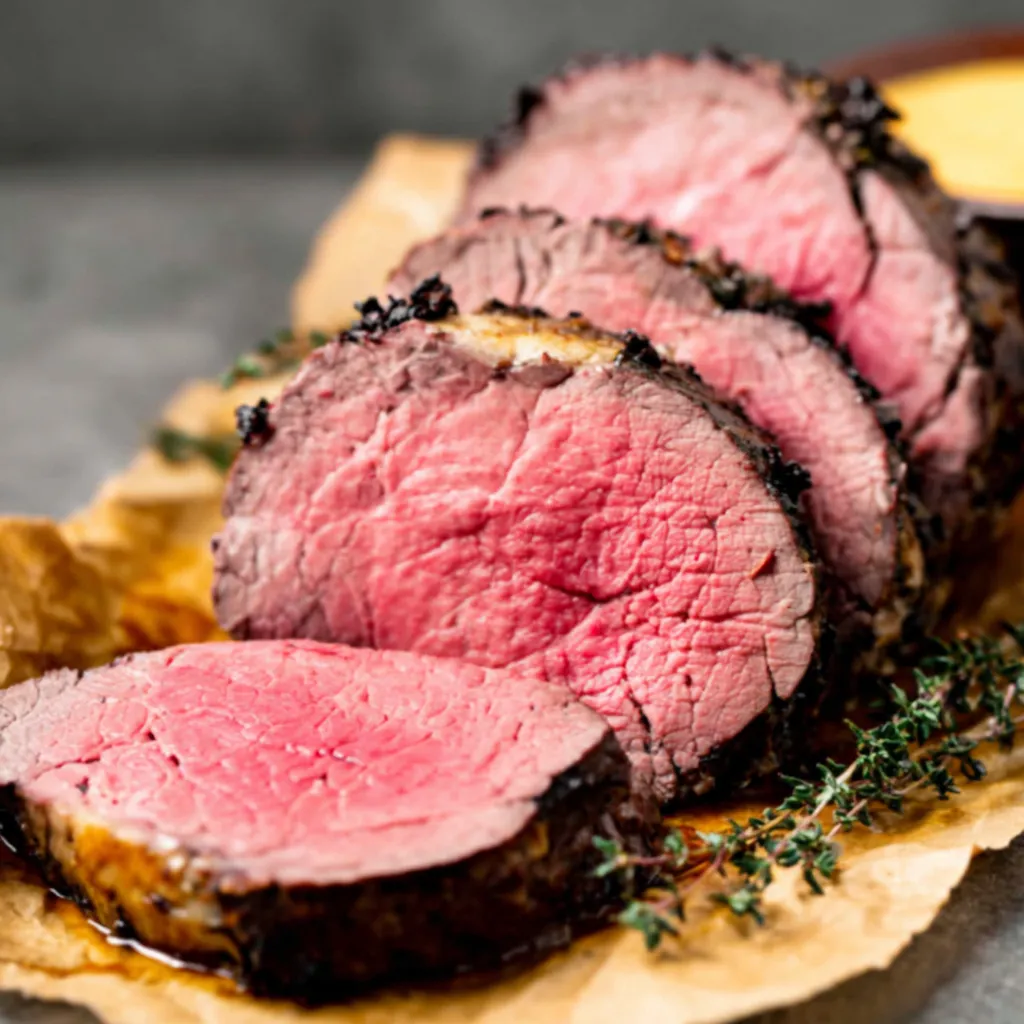
Picture this: a beautifully browned crust giving way to a melt-in-your-mouth interior, the rich aroma filling your kitchen, and the delighted faces of your guests as they savor each succulent bite. A perfectly cooked Beef Tenderloin Roast is the centerpiece of any memorable meal, and with this foolproof recipe, you’ll achieve that restaurant-quality result right in your own home, I promise you!
What You’ll Need: The Ingredients
For the Beef Tenderloin:
- 3-4 lb Beef Tenderloin Roast, trimmed
- 2 tablespoons Olive Oil
- 2 teaspoons Kosher Salt
- 1 teaspoon Black Pepper
- 1 teaspoon Garlic Powder
- 1 teaspoon Onion Powder
- 1/2 teaspoon Dried Thyme
- 1/2 teaspoon Dried Rosemary
For the Herb Butter (Optional, but Highly Recommended!):
- 4 tablespoons Unsalted Butter, softened
- 2 cloves Garlic, minced
- 2 tablespoons Fresh Parsley, chopped
- 1 tablespoon Fresh Rosemary, chopped
- 1 tablespoon Fresh Thyme, chopped
- 1/4 teaspoon Salt
- 1/4 teaspoon Black Pepper
Equipment:
- Roasting Pan with Rack
- Meat Thermometer
- Small Bowl (for herb butter)
Getting Ready: Prep Work is Key

Before we even touch the meat, let’s talk prep. A little preparation goes a long way in ensuring a beautifully cooked and flavorful Beef Tenderloin Roast. First, take the tenderloin out of the refrigerator about an hour before you plan to cook it. This allows the meat to come closer to room temperature, which helps it cook more evenly.
Next, trim any excess silver skin or fat from the tenderloin. While a little fat is good for flavor, too much can prevent proper browning. Don’t be afraid to ask your butcher to do this for you if you’re not comfortable doing it yourself.
Now, if you’re opting for the herb butter (and trust me, you should!), combine the softened butter, minced garlic, parsley, rosemary, thyme, salt, and pepper in a small bowl. Mix well until everything is evenly distributed. Set this aside. It’s going to add an incredible layer of flavor!
Step-by-Step Instructions: Roasting to Perfection
Step 1: Seasoning the Beef
- Pat the beef tenderloin dry with paper towels. This is crucial for getting a good sear.
- In a small bowl, combine the kosher salt, black pepper, garlic powder, onion powder, dried thyme, and dried rosemary.
- Rub the olive oil all over the beef tenderloin.
- Generously sprinkle the seasoning mixture over the entire surface of the tenderloin, pressing it gently into the meat. Make sure every inch is covered!
- If using the herb butter, spread it evenly over the seasoned tenderloin.
Step 2: Searing for Flavor
- Heat a large oven-safe skillet (cast iron is ideal) over medium-high heat.
- Once the skillet is hot, carefully place the seasoned tenderloin in the skillet.
- Sear the tenderloin for 2-3 minutes per side, until a rich, brown crust forms. This searing step is essential for developing flavor and locking in juices.
Step 3: Roasting in the Oven
- Transfer the skillet with the seared tenderloin to the preheated oven (425°F/220°C). If your skillet isn’t oven-safe, transfer the tenderloin to a roasting pan fitted with a rack. The rack allows hot air to circulate around the meat, ensuring even cooking.
- Roast for approximately 15-20 minutes for medium-rare, 20-25 minutes for medium, or 25-30 minutes for medium-well.
- The most accurate way to determine doneness is to use a meat thermometer. Insert the thermometer into the thickest part of the tenderloin, avoiding any fat.
- Medium-Rare: 130-135°F (54-57°C)
- Medium: 135-140°F (57-60°C)
- Medium-Well: 140-145°F (60-63°C)
Step 4: Resting is Essential
- Once the tenderloin reaches your desired temperature, remove it from the oven and transfer it to a cutting board.
- Tent it loosely with foil and let it rest for at least 10-15 minutes. This allows the juices to redistribute throughout the meat, resulting in a more tender and flavorful roast. Don’t skip this step!
Step 5: Slicing and Serving
- After resting, remove the foil and slice the beef tenderloin against the grain into 1/2-inch thick slices.
- Arrange the slices on a serving platter and garnish with fresh herbs, if desired.
- Serve immediately and enjoy!
Common Mistakes and How to Avoid Them
Even with the best recipe, things can sometimes go wrong. Here are a few common mistakes people make when roasting beef tenderloin and how to avoid them:
- Overcooking: This is the biggest fear! Always use a meat thermometer and err on the side of undercooking, as the temperature will continue to rise slightly during resting.
- Skipping the sear: Searing adds a crucial layer of flavor and helps to create a beautiful crust. Don’t skip this step!
- Not resting the meat: Resting allows the juices to redistribute, resulting in a more tender and flavorful roast. Be patient!
- Cutting with the grain: Always slice the beef tenderloin against the grain to maximize tenderness.
- Forgetting to preheat the oven: Make sure your oven is fully preheated before you put the tenderloin in. This ensures even cooking.
Flavor Variations: Spice Things Up
While this recipe is delicious as is, feel free to experiment with different flavor combinations. Here are a few ideas to get you started:
- Garlic Herb: Increase the amount of garlic in the herb butter and add other herbs like oregano or basil.
- Peppercorn Crusted: Coat the tenderloin with coarsely ground black peppercorns before searing.
- Mustard Glazed: Brush the tenderloin with Dijon mustard before roasting.
- Red Wine Reduction: Make a simple red wine reduction to serve alongside the roast.
Serving Suggestions: Complete the Meal
A perfectly cooked Beef Tenderloin Roast deserves equally delicious side dishes. Here are a few of my favorites:
- Roasted vegetables (asparagus, Brussels sprouts, carrots)
- Mashed potatoes (garlic mashed potatoes are always a hit!)
- Au gratin potatoes
- Green salad with a vinaigrette dressing
- Yorkshire pudding
For a delightful twist, consider serving it with a side of Cranberry Roast Beef for a burst of festive flavors. If you’re in the mood for something more casual, thinly sliced tenderloin is also fantastic in Cilantro Lime Steak Bowls. Alternatively, you can repurpose leftovers into incredible dishes like Queso Rice With Steak, Creamy Steak Pasta or even Steak & Cheddar Potato Casserole.
Storage Tips: Making the Most of Leftovers
If you happen to have any leftover Beef Tenderloin Roast (which is unlikely!), store it in an airtight container in the refrigerator for up to 3-4 days. You can reheat it gently in the oven or microwave, or enjoy it cold in sandwiches or salads.
Final Thoughts: You’ve Got This!
Making a Beef Tenderloin Roast might seem intimidating, but with this recipe and a little practice, you’ll be serving up restaurant-quality roasts in no time. Remember to follow the steps carefully, use a meat thermometer, and don’t be afraid to experiment with different flavors. Most importantly, have fun in the kitchen and enjoy the process! You’ve got this!
Why is it important to let the beef tenderloin sit at room temperature before cooking?
Taking the tenderloin out of the refrigerator about an hour before cooking allows the meat to come closer to room temperature, which helps it cook more evenly.
Why is searing the beef tenderloin important?
Searing the beef tenderloin is essential for developing flavor and locking in juices. It also helps to create a rich, brown crust.
What temperature should I roast the beef tenderloin to for a medium finish?
Roast the beef tenderloin to an internal temperature of 135-140°F (57-60°C) for a medium finish. Use a meat thermometer to ensure accuracy.
Why is resting the beef tenderloin after roasting so crucial?
Resting the beef tenderloin for at least 10-15 minutes after roasting allows the juices to redistribute throughout the meat, resulting in a more tender and flavorful roast. Don’t skip this step!
Perfect Beef Tenderloin Roast

Equipment
- roasting pan
- Roasting Rack
- Meat thermometer
- Small bowl
- whisk or fork
- Paper towels
- Oven-safe skillet (cast iron recommended)
- Cutting board
- Aluminum foil
- sharp knife
Ingredients
- 3-4 lb Beef Tenderloin Roast, trimmed
- 2 tablespoons Olive Oil
- 2 teaspoons Kosher Salt
- 1 teaspoon Black Pepper
- 1 teaspoon Garlic Powder
- 1 teaspoon Onion Powder
- ½ teaspoon Dried Thyme
- ½ teaspoon Dried Rosemary
- 4 tablespoons Unsalted Butter, softened
- 2 cloves Garlic, minced
- 2 tablespoons Fresh Parsley, chopped
- 1 tablespoon Fresh Rosemary, chopped
- 1 tablespoon Fresh Thyme, chopped
- ¼ teaspoon Salt
- ¼ teaspoon Black Pepper
Instructions
- Preheat oven to 425°F (220°C).
- Remove beef tenderloin from refrigerator about an hour before cooking.
- Trim any excess silver skin or fat from the tenderloin.
- In a small bowl, combine softened butter, minced garlic, parsley, rosemary, thyme, salt, and pepper. Mix well and set aside (herb butter).
- Pat the beef tenderloin dry with paper towels.
- In a separate small bowl, combine kosher salt, black pepper, garlic powder, onion powder, dried thyme, and dried rosemary.
- Rub the olive oil all over the beef tenderloin.
- Generously sprinkle the seasoning mixture over the entire surface of the tenderloin, pressing it gently into the meat.
- Spread the herb butter evenly over the seasoned tenderloin (if using).
- Heat a large oven-safe skillet (cast iron is ideal) over medium-high heat.
- Carefully place the seasoned tenderloin in the skillet.
- Sear the tenderloin for 2-3 minutes per side, until a rich, brown crust forms.
- Transfer the skillet with the seared tenderloin to the preheated oven. If your skillet isn’t oven-safe, transfer the tenderloin to a roasting pan fitted with a rack.
- Roast for approximately 15-20 minutes for medium-rare (130-135°F), 20-25 minutes for medium (135-140°F), or 25-30 minutes for medium-well (140-145°F).
- Insert a meat thermometer into the thickest part of the tenderloin to determine doneness.
- Once the tenderloin reaches your desired temperature, remove it from the oven and transfer it to a cutting board.
- Tent it loosely with foil and let it rest for at least 10-15 minutes.
- After resting, remove the foil and slice the beef tenderloin against the grain into 1/2-inch thick slices.
- Arrange the slices on a serving platter and garnish with fresh herbs, if desired.
- Serve immediately and enjoy.