You know that moment when you cut into a potato and the knife just glides through, meeting absolutely no resistance? That’s the promise of melting potatoes. It’s not a metaphor; it’s a literal description of the texture we’re chasing—a potato that is so tender on the inside, so saturated with flavor, that it practically dissolves on your tongue.
This isn’t your standard roasted potato. It’s not a crispy fry or a fluffy baked spud. Melting potatoes are the perfect hybrid: they start with a golden, buttery crust on the top and bottom, but the interior becomes incredibly creamy, almost like a savory custard. The secret lies in a specific cut and a clever cooking method that uses a small amount of seasoned broth to steam the potatoes from the inside out. This is the ultimate weeknight win because it delivers restaurant-quality results with minimal fuss.
The Melting Potatoes Difference
- Unbelievable Texture: The high-starch Yukon Gold potatoes break down slightly in the broth, creating a velvety, almost mashed-potato interior while the exterior stays intact.
- Flavor Infusion: Instead of just seasoning the outside, the broth (often with garlic, thyme, and butter) is absorbed directly into the potato, seasoning it from the inside out.
- Foolproof Method: This technique is incredibly forgiving. The broth does the heavy lifting, ensuring the potatoes stay moist and cook evenly without constant attention.
The Essential Components
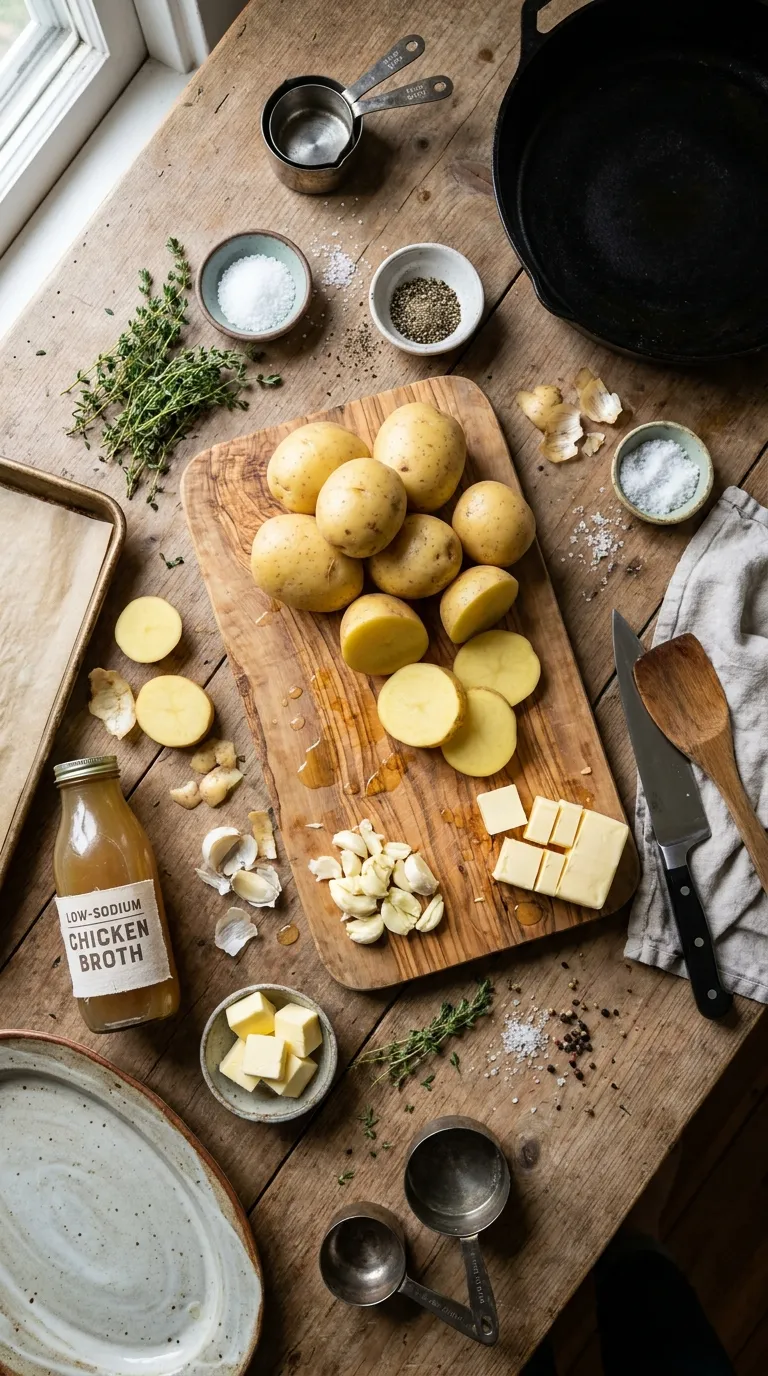
- 2 lbs Yukon Gold Potatoes: (Their high starch and low moisture content are crucial for the creamy texture. Russets can work, but Yukon Golds are the gold standard.)
- 4 tablespoons Unsalted Butter: (Cubed. Butter is the primary fat here; it creates the crust and carries the flavor. Do not substitute margarine.)
- 1 cup Low-Sodium Chicken or Vegetable Broth: (This provides the steam and moisture. Low-sodium is key so you can control the salt level.)
- 4 cloves Garlic: (Smashed, not minced. Smashed cloves release their oils slowly, infusing the broth without burning.)
- 4 sprigs Fresh Thyme: (Or 1 teaspoon dried. Thyme’s earthy, slightly floral notes are the classic pairing with buttery potatoes.)
- Kosher Salt and Freshly Ground Black Pepper: (To taste. Season generously; potatoes need a lot of salt to taste their best.)
Swaps & Alternatives
- Potatoes: You can use Russet potatoes, but they are starchier and may break apart more easily. Red potatoes are waxy and won’t achieve the same creamy interior.
- Butter: Ghee or a high-quality vegan butter stick can be used for a dairy-free version.
- Broth: Use a mushroom broth for a deeper umami flavor, or even plain water with an extra pinch of salt in a pinch.
- Herbs: Rosemary or sage are excellent substitutes for thyme. Use about 1 teaspoon of dried herbs if you don’t have fresh.
- Garlic: If you don’t have fresh cloves, you can add ½ teaspoon of garlic powder to the broth, but fresh is far superior.
Chef’s Twists
Once you’ve mastered the basic method, it’s incredibly fun to play with the flavor profile. These variations can turn a simple side dish into the star of the show.- Parmesan & Herb Crust: After the initial sear, sprinkle the tops of the potatoes with a mixture of grated Parmesan, panko breadcrumbs, and dried oregano before adding the broth. This creates a crispy, cheesy crown.
- Spicy Chipotle Version: Add 1-2 chipotle peppers in adobo sauce (minced) to the broth along with a pinch of smoked paprika. The smoky heat is incredible with the creamy potato.
- Lemon & Garlic Brightness: Add the zest of one lemon and a tablespoon of lemon juice to the broth. Finish the dish with a squeeze of fresh lemon juice and some fresh dill for a bright, spring-like flavor.
- Brown Butter Sage: Before adding the potatoes, brown the butter in the skillet until it smells nutty and has golden specks. Add fresh sage leaves until they crisp, then proceed with the recipe. This adds a deep, nutty complexity.
How to Make Melting Potatoes
1. Prep and Preheat
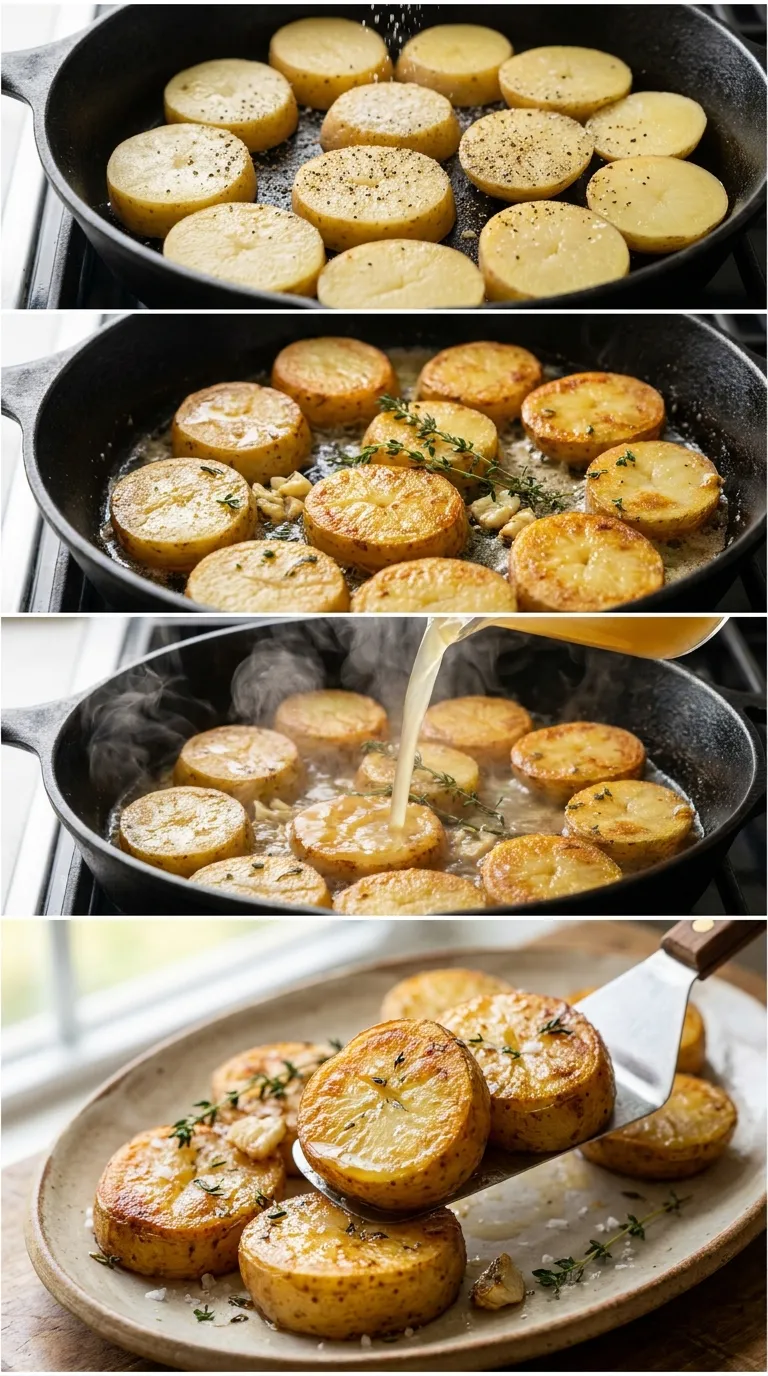
Preheat your oven to 425°F (220°C). Peel the Yukon Gold potatoes and slice them into 1-inch thick rounds. This is the most important step. If they are too thin, they will dry out. Too thick, and they won’t become “melting” tender. Aim for uniform, thick coins.2. Sear the Coins
Place a large, oven-safe skillet (cast iron is perfect) over medium-high heat. Add the butter and let it melt until it sizzles. Carefully place the potato rounds in a single layer in the skillet. Sear for 4-5 minutes without moving them, until the bottoms are a deep golden brown. Flip each coin and sear the other side for another 3-4 minutes.3. Build the Flavor Base
Turn the heat down to low. Add the smashed garlic cloves and fresh thyme sprigs to the pan, tucking them around the potatoes. Pour the 1 cup of low-sodium broth around the potatoes, being careful not to pour it directly on top of the crispy crusts. The broth should come about halfway up the sides of the potatoes.4. Roast to Perfection
Carefully transfer the skillet to the preheated oven. Roast for 20-25 minutes, or until the potatoes are fork-tender and most of the broth has been absorbed, leaving a glossy, buttery glaze. The potatoes should feel soft when pierced with a knife. If they are still firm, add a splash more broth and roast for another 5 minutes.5. Rest and Serve
Remove the skillet from the oven. Let the potatoes rest for 2-3 minutes in the pan. This allows them to soak up any remaining glaze. Discard the thyme sprigs and garlic cloves. Sprinkle with flaky sea salt and fresh black pepper. Serve immediately, spooning any remaining buttery juices from the pan over the top.Common Mistakes to Avoid
- Skipping the Sear: The golden crust is non-negotiable. It provides texture and prevents the potatoes from becoming mushy. Do not rush this step.
- Using the Wrong Pan: A non-stick skillet won’t create a good sear. Use stainless steel, cast iron, or enameled cast iron for the best browning.
- Overcrowding the Pan: The potatoes must be in a single layer with a little space between them. If they are crowded, they will steam instead of sear, ruining the crust.
- Adding Too Much Broth: The broth should only come halfway up the sides of the potatoes. Too much liquid will boil them, making them waterlogged and preventing that creamy interior.
Perfect Pairings
These potatoes are incredibly versatile. They are the ideal side for a juicy steak or a roasted chicken. For a complete meal, serve them alongside a simple green salad with a tangy vinaigrette to cut the richness.If you are looking for a heartier meal, these potatoes pair beautifully with a Bacon Potato Leek Soup Recipe for a double-potato feast. They also make a fantastic side for Sheet Pan Greek Chicken And Potatoes, though the melting version is far more decadent. For a lighter option, try them with Greek Lemon Chicken And Potatoes, where the bright lemon cuts through the butter.
You can even turn leftovers into a completely new meal. Chop up the leftover melting potatoes and crisp them in a potato skillet with some eggs and cheese for a spectacular breakfast. Or, slice them and use them as a base for a loaded potato bake with extra cheese and bacon. While they are not a potato fries recipe, the texture is so unique that you’ll find yourself craving them as a side for burgers and sandwiches.
For a classic cookout feel, serve them next to a Potato Salad With Bacon Extra Crispy for a textural contrast. They also hold their own against the tangy, vinegar-based German Potato Salad With Bacon Extra Crispy. And if you want a one-pan wonder, try making a potato wrap with these creamy coins, some roasted veggies, and a dollop of tzatziki. Finally, for a truly indulgent weeknight dinner, serve them alongside a Cheesy Ranch Potatoes & Smoked Sausage Skillet for a double-dose of comfort food.
First time making Melting Potatoes? I hope this guide made it easy. Let me know how it turned out!
What makes melting potatoes different from regular roasted potatoes?
Unlike standard roasted potatoes, melting potatoes achieve a unique hybrid texture: a golden, buttery crust on the outside and an incredibly creamy, almost custard-like interior. This is accomplished by searing thick potato coins, then roasting them in a small amount of seasoned broth, which steams them from the inside out and infuses them with flavor.
Why are Yukon Gold potatoes recommended for this recipe?
Yukon Gold potatoes are the gold standard because they are high-starch and low-moisture. This composition allows them to break down slightly in the broth, creating a velvety, mashed-potato-like interior while still holding their shape. Russets can be used but are starchier and may fall apart more easily, while waxy potatoes like reds won’t achieve the same creamy texture.
What is the most important step to ensure the potatoes don’t become mushy?
The most critical step is the initial sear. You must sear the potato coins in butter over medium-high heat until they develop a deep golden brown crust on both sides. This crust provides essential texture and prevents the potatoes from becoming waterlogged or mushy during the roasting process. Skipping or rushing this step will ruin the dish.
Can I make melting potatoes dairy-free or with different herbs?
Yes, you can make substitutions. For a dairy-free version, replace the butter with ghee or a high-quality vegan butter stick. For herbs, rosemary or sage are excellent substitutes for thyme, using about 1 teaspoon of dried herbs if fresh is unavailable. You can also swap the chicken or vegetable broth for mushroom broth to add deeper umami flavor.


Melting Potatoes

Equipment
- Large oven-safe skillet (cast iron preferred)
- Chef’s knife
- Cutting board
- Vegetable peeler
- Measuring cups and spoons
- Spatula
- Fork or small knife for testing doneness
Ingredients
- 2 lbs Yukon Gold potatoes
- 4 tablespoons unsalted butter, cubed
- 1 cup low-sodium chicken or vegetable broth
- 4 cloves garlic, smashed
- 4 sprigs fresh thyme
- Kosher salt, to taste
- Freshly ground black pepper, to taste
- Flaky sea salt, for finishing
Instructions
- Preheat your oven to 425°F (220°C). Peel the Yukon Gold potatoes and slice them into 1-inch thick rounds.
- Place a large, oven-safe skillet over medium-high heat. Add the butter and let it melt until it sizzles.
- Carefully place the potato rounds in a single layer in the skillet. Sear for 4-5 minutes without moving them, until the bottoms are a deep golden brown. Flip each coin and sear the other side for another 3-4 minutes.
- Turn the heat down to low. Add the smashed garlic cloves and fresh thyme sprigs to the pan, tucking them around the potatoes.
- Pour the 1 cup of low-sodium broth around the potatoes, being careful not to pour it directly on top of the crispy crusts. The broth should come about halfway up the sides of the potatoes.
- Carefully transfer the skillet to the preheated oven. Roast for 20-25 minutes, or until the potatoes are fork-tender and most of the broth has been absorbed, leaving a glossy, buttery glaze.
- Remove the skillet from the oven. Let the potatoes rest for 2-3 minutes in the pan. Discard the thyme sprigs and garlic cloves.
- Sprinkle with flaky sea salt and fresh black pepper. Serve immediately, spooning any remaining buttery juices from the pan over the top.