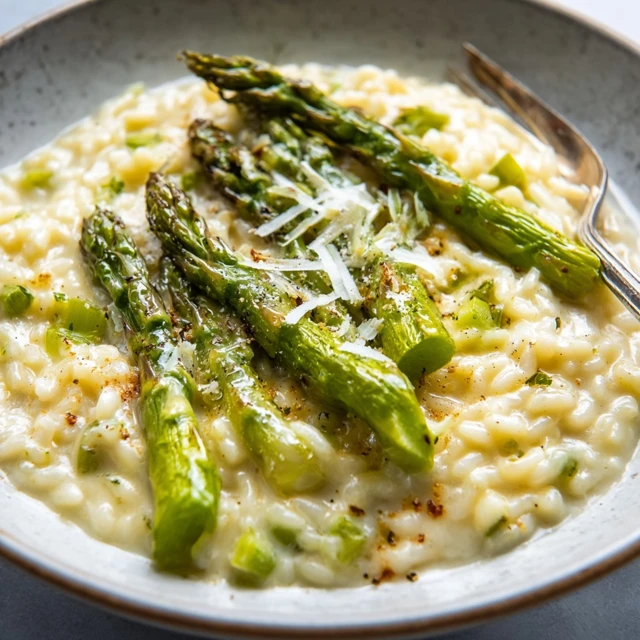
Stirring a pot of risotto is one of the kitchen’s most grounding, meditative rituals. It’s a gentle rhythm of pour, stir, and absorb that asks for nothing but your patience and rewards you with pure, unadulterated comfort. But this asparagus risotto is different; it takes that cozy, creamy foundation and infuses it with the bright, electric-green promise of spring, transforming a classic comfort food into something vibrant, elegant, and surprisingly fresh.
This isn’t just a risotto with some asparagus tossed in at the end. We’re using a clever two-part technique that weaves the soul of the asparagus into every single grain of rice, creating a dish that is profoundly flavorful and shockingly creamy. The result is a luxurious, velvety risotto bursting with sweet, earthy asparagus flavor, punctuated by tender-crisp tips and a final, bright whisper of lemon that makes it all sing.
The Asparagus Risotto Difference
- Dual-Technique Flavor: We use the asparagus in two ways. The tender stalks are blended into a vibrant, creamy purée that becomes the flavor base of the risotto, while the delicate tips are blanched and stirred in at the end for a perfect, tender-crisp texture. This ensures deep flavor without a single mushy piece of asparagus in sight.
- Starch-Activated Creaminess: This recipe relies on the traditional method of slowly adding warm broth and stirring constantly. This coaxes the natural starches from the Arborio rice, creating a luxuriously creamy texture without needing heavy cream. It’s a technique that turns simple ingredients into magic.
- Elegant Yet Easy: The final dish looks and tastes like it came from a high-end Italian restaurant, making it one of the best date night ideas you can make at home. But the process is straightforward and rhythmic, proving that impressive meals don’t have to be complicated.
The Building Blocks
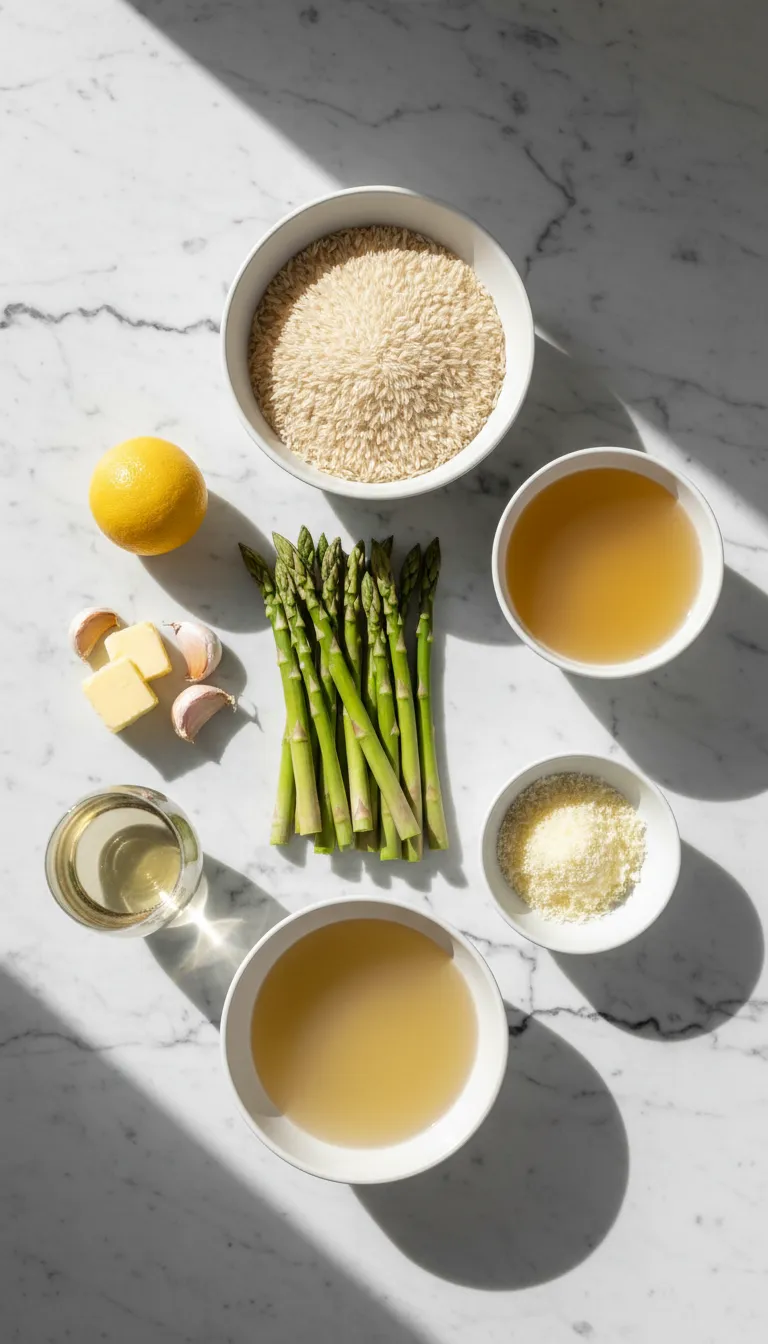
- Fresh Asparagus: (The star of the show. Look for firm stalks with tightly closed tips; this ensures the best, sweetest flavor for our spring recipe.)
- Arborio Rice: (This is non-negotiable. Its high starch content is the secret to the risotto’s natural creaminess. Do not rinse it!)
- Dry White Wine: (A crisp Sauvignon Blanc or Pinot Grigio is perfect. It adds a crucial layer of acidity that cuts through the richness and adds incredible depth.)
- High-Quality Vegetable Broth: (Since it makes up most of the liquid, a flavorful broth is key. Always keep it at a gentle simmer in a separate pot.)
- Shallot: (Provides a delicate, sweet onion flavor that won’t overpower the asparagus. A small yellow onion can be used in a pinch.)
- Garlic: (For that aromatic, savory backbone.)
- Unsalted Butter: (Used for sautéing and for the final ‘mantecatura’ step, adding richness and shine.)
- Parmigiano-Reggiano Cheese: (Please, use the real stuff! A freshly grated block of Parmesan melts beautifully and provides a nutty, salty flavor that pre-shredded cheese can’t match.)
- Olive Oil: (A touch of olive oil with the butter helps prevent the butter from browning too quickly.)
- Fresh Lemon: (The zest and a small squeeze of juice at the end are transformative, brightening all the flavors and making the dish feel light.)
- Salt and Black Pepper: (To season and enhance every layer.)
Swaps & Alternatives
Don’t have everything on hand? No problem. A great risotto is flexible. Here are a few simple swaps you can make.- For the Rice: If you can’t find Arborio, Carnaroli is considered the “king” of risotto rices and works beautifully. Vialone Nano is another excellent choice.
- For the Broth: If you’re not aiming for a strictly vegetarian recipe, a light chicken broth can be used in place of vegetable broth for a richer flavor.
- For the Cheese: Pecorino Romano can be substituted for Parmesan. It will lend a sharper, saltier, and tangier flavor to the final dish.
- No Wine?: You can omit the wine. Simply deglaze the pan with an extra half-cup of warm broth and add a teaspoon of white wine vinegar or lemon juice for acidity.
- Add-in Veggies: A cup of frozen sweet peas, stirred in during the last 5 minutes of cooking, adds a lovely pop of color and sweetness.
Gourmet Variations
Once you’ve mastered the basic technique, this risotto becomes a beautiful canvas for your culinary creativity. Here are a few of my favorite ways to elevate this dish from amazing to unforgettable.For a touch of salty, crispy texture, fry a few slices of prosciutto or pancetta until crisp. Crumble them over the finished risotto just before serving. The contrast is absolutely divine.
Another fantastic idea is to add sautéed mushrooms. Sauté 8 ounces of sliced cremini or shiitake mushrooms in a separate pan with a little butter and thyme until golden brown. Stir them into the risotto along with the Parmesan cheese.
For an incredibly rich and nutty finish, try making a brown butter ‘mantecatura’. In a small saucepan, melt 2 tablespoons of butter over medium heat, swirling until it foams and brown specks appear. Drizzle this over the risotto instead of the cold butter at the end.
Finally, don’t underestimate the power of fresh herbs. While parsley is classic, stirring in a tablespoon of finely chopped fresh mint or tarragon at the end adds a complex, aromatic layer that pairs beautifully with asparagus.
How to Make Asparagus Risotto
1. Prepare the Asparagus Two Ways
First, bring a pot of salted water to a boil. Snap the woody ends off your asparagus and discard them. Cut the top 1-2 inches (the delicate tips) off each stalk and set them aside. Chop the remaining stalks into 1-inch pieces. Blanch the tips in the boiling water for just 60-90 seconds until bright green and tender-crisp, then immediately transfer them to an ice bath to stop the cooking. Drain and set aside. Add the chopped stalks to the same boiling water and cook for 3-4 minutes until very tender. Drain the stalks and transfer them to a blender with about 1/4 cup of your vegetable broth. Blend until you have a smooth, vibrant green purée.2. Warm the Broth & Sauté Aromatics
In a medium saucepan, bring your vegetable broth to a gentle simmer over low heat. It’s crucial to keep the broth warm throughout the entire process. In a separate large, heavy-bottomed pot or Dutch oven, melt 2 tablespoons of butter with the olive oil over medium heat. Add the finely chopped shallot and a pinch of salt, and cook, stirring occasionally, until softened and translucent, about 4-5 minutes. Add the minced garlic and cook for another minute until fragrant.3. Toast the Rice (The ‘Tostatura’)
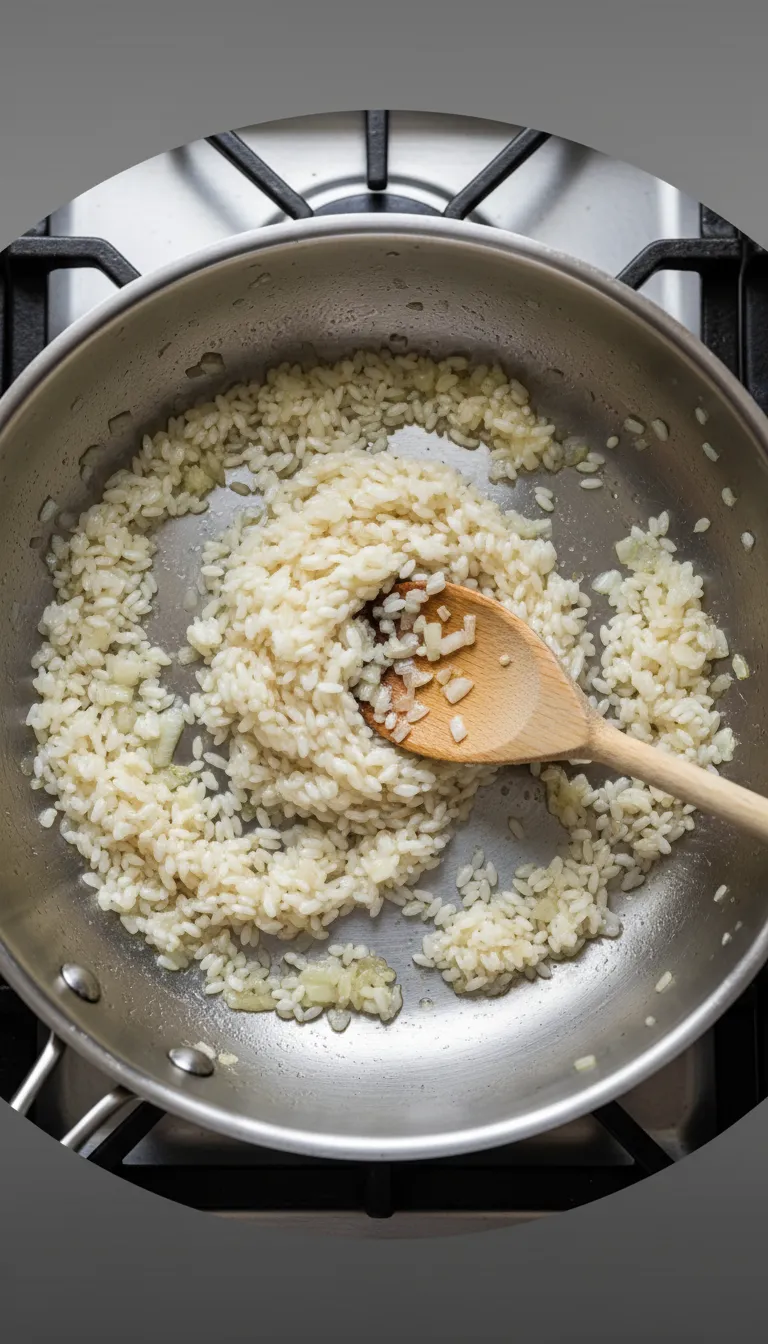
Add the Arborio rice to the pot with the aromatics. Stir constantly for about 2 minutes, ensuring every grain is coated in the butter and oil. You’re looking for the edges of the rice to become translucent while the center remains opaque. This toasting step is essential; it helps the grains absorb liquid evenly and maintain their shape.4. Deglaze and Begin the Stir
Pour in the dry white wine. The pan will sizzle and steam—this is a good thing! Stir continuously, scraping up any browned bits from the bottom of the pot, until the wine has almost completely evaporated. This step infuses the rice with a beautiful, acidic depth of flavor.5. The Patient Ladle & Stir Method
Now, the rhythm begins. Add one ladleful (about 3/4 cup) of the simmering broth to the rice. Stir gently but constantly until the liquid is almost fully absorbed. The motion should be slow and steady, not a frantic whip. Once absorbed, add another ladle of broth. Repeat this process, adding one ladle at a time and stirring until it’s absorbed before adding the next. This slow, patient process is what creates the creamy magic, and it’s a far cry from the set-it-and-forget-it nature of something like Fiesta Creamy Cajun Chicken & Rice Bowls. After about 15-18 minutes, the rice should be mostly cooked but still have a firm bite (al dente).6. Incorporate the Creamy Base
Stir the vibrant asparagus purée into the risotto along with one final ladle of broth. Continue to stir until the purée is fully incorporated and the risotto has a beautiful, creamy consistency and a pale green hue. The texture should be fluid, like a slow-moving lava—it should gently spread when you spoon it onto a plate, not hold its shape in a stiff mound. This is the perfect time to taste and adjust for salt and pepper.7. The Final Flourish (‘Mantecatura’)
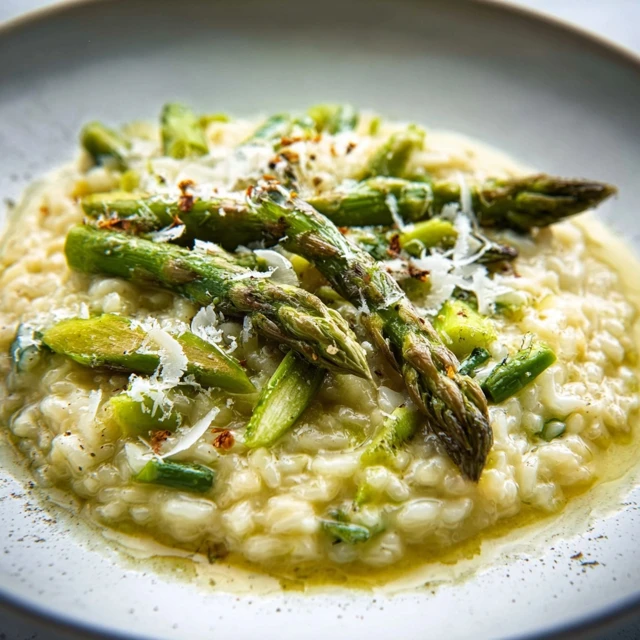
Remove the pot from the heat. This is the most important step for ultimate creaminess. Add the remaining 2 tablespoons of cold butter, the grated Parmigiano-Reggiano cheese, and the lemon zest. Stir vigorously until the butter and cheese have melted completely, creating a glossy, velvety sauce that coats every grain. Gently fold in the reserved blanched asparagus tips. Let the risotto rest for one minute off the heat before serving.Avoid These Pitfalls
- Using Cold Broth: Adding cold or room-temperature broth to the hot pan will shock the rice, drastically slowing the cooking process and preventing the starches from releasing properly. Always keep your broth at a gentle simmer in a separate pot.
- Drowning the Rice: It’s tempting to dump in a lot of liquid at once to speed things up, but this boils the rice instead of creating a creamy risotto. The slow, ladle-by-ladle addition is the non-negotiable secret to the perfect texture.
- Stirring Too Little (or Too Much): Not stirring enough will cause the rice to stick and cook unevenly. Stirring too vigorously can break the grains and make the risotto gluey. Aim for a constant, gentle stirring motion.
Complete the Menu
This asparagus risotto is a stunning main course all on its own, making it one of my favorite vegetarian recipes for a special occasion or a quiet weeknight meal. A simple green salad with a light vinaigrette is all you need to complete the picture for a perfect, healthy dinner. It stands proudly alongside other elegant one-pan meals like Creamy Chicken Sausage Orzo.If you’d like to serve it as a side dish, it pairs beautifully with protein. Think perfectly seared scallops, grilled shrimp, a simple pan-fried chicken breast, or a flaky piece of salmon. The creaminess of the risotto complements them perfectly. For another lemony, creamy side, you might also love this Creamy Lemon Orzo.
For toppings, a little extra freshly grated Parmesan is always a good idea, along with a few cracks of fresh black pepper and a final drizzle of high-quality extra virgin olive oil.
When it comes to wine, stick with what you used in the recipe. A crisp, dry white wine like Sauvignon Blanc, Pinot Grigio, or an unoaked Chardonnay will cut through the richness of the risotto and complement the fresh asparagus flavor beautifully. This dish is a fantastic alternative when you want a creamy vegetarian meal but are tired of pasta dishes like Stuffed Shells Creamy Meatless Veggie.
If you tried this recipe and loved it, please leave a 5-star rating below. It helps us so much
What makes this asparagus risotto recipe special?
This recipe uses a unique dual-technique for the asparagus. The stalks are blended into a vibrant purée to create a creamy, flavorful base for the risotto, while the tips are blanched separately and added at the end for a perfect tender-crisp texture. This ensures deep flavor without any mushy asparagus.
How does this risotto get so creamy without any heavy cream?
The creaminess comes from the traditional risotto method. Using high-starch Arborio rice and slowly adding warm broth one ladle at a time while stirring constantly releases the natural starches from the rice, creating a luxuriously creamy texture without needing any cream.
What can I use if I don’t have white wine?
Yes, you can omit the wine. Simply deglaze the pan with an extra half-cup of warm broth and add one teaspoon of white wine vinegar or lemon juice to provide a similar layer of acidity that cuts through the richness.
Why is it important to use warm broth for risotto?
You must use warm, simmering broth because adding cold liquid to the hot pan will shock the rice, slow down the cooking process, and prevent the starches from releasing properly. Keeping the broth warm is essential for achieving the signature creamy texture of risotto.
Foolproof Creamy Asparagus Risotto

Equipment
- Large, heavy-bottomed pot or Dutch oven
- Medium saucepan
- Blender
- Large bowl (for ice bath)
- Slotted spoon
- Ladle
- Chef’s knife
- Cutting board
- Cheese grater
- Measuring cups and spoons
Ingredients
- 1 lb fresh asparagus, woody ends trimmed
- 6 cups high-quality vegetable broth
- 4 tbsp unsalted butter, divided
- 1 tbsp olive oil
- 1 large shallot, finely chopped
- 2 cloves garlic, minced
- 1.5 cups Arborio rice
- ½ cup dry white wine like Sauvignon Blanc or Pinot Grigio
- 1 cup freshly grated Parmigiano-Reggiano cheese
- 1 fresh lemon, for zest and juice
- Kosher salt, to taste
- Freshly ground black pepper, to taste
Instructions
- Prepare the asparagus: Bring a pot of salted water to a boil. Cut the top 1-2 inches (tips) from the asparagus and set aside. Chop the remaining stalks into 1-inch pieces. Blanch the tips in boiling water for 60-90 seconds until bright green, then transfer to an ice bath. Cook the stalks in the same water for 3-4 minutes until very tender. Drain the stalks and blend with 1/4 cup of vegetable broth until a smooth purée forms.
- Warm the broth and sauté aromatics: In a medium saucepan, bring the remaining vegetable broth to a gentle simmer. In a separate large pot or Dutch oven, melt 2 tablespoons of butter with the olive oil over medium heat. Add the shallot and a pinch of salt, cooking until softened, about 5 minutes. Add the garlic and cook for 1 more minute until fragrant.
- Toast the rice: Add the Arborio rice to the pot. Stir constantly for 2 minutes until the edges of the grains are translucent. Do not rinse the rice beforehand.
- Deglaze the pan: Pour in the white wine and stir continuously, scraping the bottom of the pot, until the wine has almost completely evaporated.
- Begin adding broth: Add one ladleful (about 3/4 cup) of simmering broth to the rice. Stir gently and constantly until the liquid is nearly absorbed. Repeat this process, adding one ladle of broth at a time and waiting for it to be absorbed before adding the next. Continue for about 15-18 minutes until the rice is al dente.
- Incorporate the asparagus purée: Stir the asparagus purée into the risotto along with a final ladle of broth. Cook, stirring, until the risotto is creamy and has a pale green hue. The consistency should be fluid enough to slowly spread on a plate. Taste and season with salt and pepper.
- Finish with ‘Mantecatura’: Remove the pot from the heat. Vigorously stir in the remaining 2 tablespoons of cold butter, the grated Parmigiano-Reggiano, and the zest of one lemon until fully melted and emulsified. Gently fold in the reserved blanched asparagus tips. Let it rest for one minute before serving.