Guanciale sizzling in a hot pan, releasing its fragrant fat, is the only alarm clock I need for a perfect weeknight dinner. This isn’t just another Pasta Carbonara recipe; it’s the one that finally makes sense of the creamy, velvety sauce without a single drop of cream.
Forget everything you think you know about heavy sauces and complicated techniques. This version delivers a silky, emulsified coating that clings to every strand of pasta, creating a rich, savory experience that feels both luxurious and incredibly simple. We are building flavor from the ground up, using the pasta water as our secret weapon to achieve that perfect, restaurant-quality texture in under half an hour.
The Pasta Carbonara Difference
- Emulsified Sauce, Not Scrambled Eggs: The key is tempering the egg mixture with hot pasta water, creating a stable, creamy sauce that won’t curdle.
- Pork Fat is Flavor: Using guanciale or pancetta provides a deep, savory richness that bacon simply cannot replicate.
- Cheese Matters: A sharp Pecorino Romano and nutty Parmigiano-Reggiano blend gives the sauce its iconic, salty kick.
The Essential Components
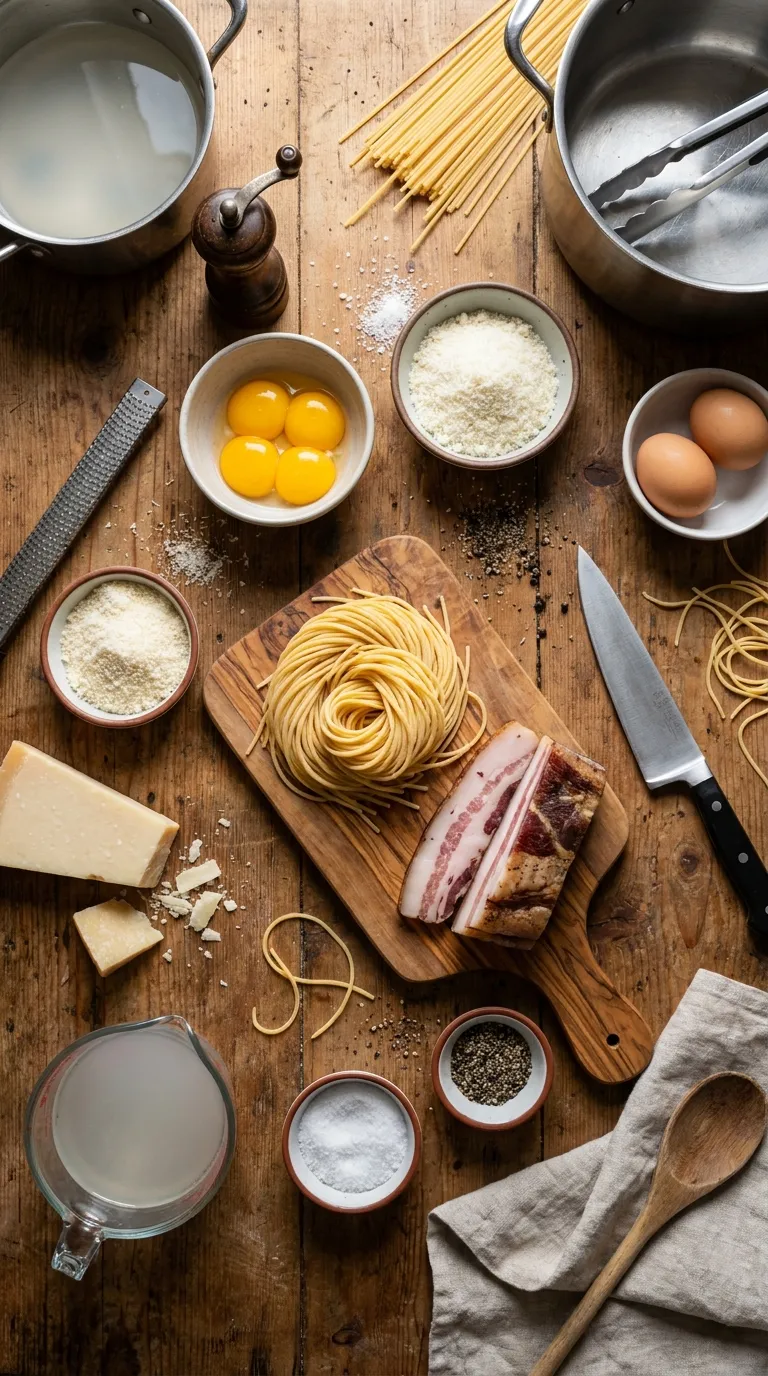
- 400g (14 oz) Spaghetti or Tonnarelli: (Traditional shape for sauce cling)
- 200g (7 oz) Guanciale or Pancetta: (Cured pork cheek or belly; provides the foundational fat and salty crunch)
- 4 Large Egg Yolks + 2 Whole Eggs: (The yolk is the emulsifier; the whole egg adds body)
- 100g (3.5 oz) Pecorino Romano, finely grated: (Sharp, salty, and essential for authentic flavor)
- 50g (1.7 oz) Parmigiano-Reggiano, finely grated: (Adds nutty depth and creaminess)
- 2 teaspoons freshly cracked black pepper: (More than you think; it cuts the richness)
- 1 teaspoon kosher salt: (For pasta water only)
Swaps & Alternatives
- No Guanciale? Use thick-cut pancetta or even good-quality bacon, but render it slowly to avoid burning.
- Gluten-Free? Use a high-quality brown rice or chickpea spaghetti. Cook it al dente.
- Extra Creamy? Add one additional egg yolk for an even richer sauce.
- Vegetarian? This is tough, but you can try smoked mushrooms or a vegan bacon substitute for a smoky element.
- Different Pasta Shape? This works beautifully with penne recipes or macaroni recipes for a fun twist.
Chef’s Twists
Once you master the classic, these small adjustments can elevate your pasta dinner to new heights.- Brown Butter Base: Before adding the pork, brown the butter in the pan for a nutty, caramelized flavor.
- Garlic Infusion: Smash a clove of garlic and let it sizzle in the pork fat for 30 seconds, then remove it before adding the pasta.
- Smoked Paprika Finish: A light dusting of smoked paprika over the finished dish adds a subtle, smoky warmth.
- Fresh Herbs: A sprinkle of fresh chives or flat-leaf parsley right before serving adds a pop of color and freshness.
How to Make Pasta Carbonara
1. Render the Pork
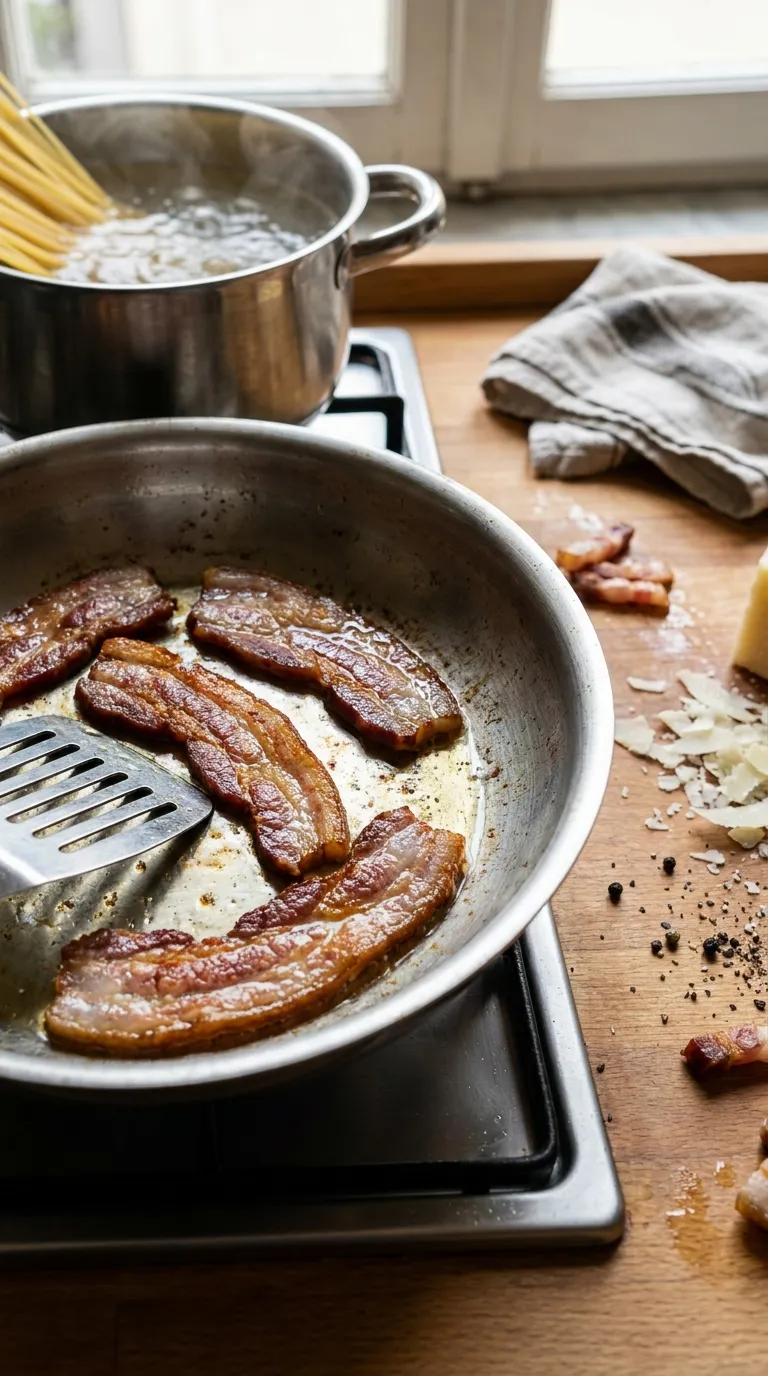
Cut your guanciale or pancetta into small, 1/2-inch strips or lardons. Place them in a cold, large skillet or Dutch oven. Turn the heat to medium-low. Let the fat render slowly for 8-10 minutes, stirring occasionally, until the meat is crispy and the fat is translucent. Do not rush this step.2. Whisk the Creamy Base
While the pork renders, combine the egg yolks, whole eggs, and both grated cheeses in a medium bowl. Add the freshly cracked black pepper. Whisk vigorously until you have a thick, pale-yellow paste. It will look almost like a thick custard.3. Cook the Pasta
Bring a large pot of generously salted water to a rolling boil. Add your spaghetti (or other shape like spaghetti recipes call for). Cook it for 1-2 minutes LESS than the package directions call for. You want it very al dente.4. Temper the Eggs
Just before you drain the pasta, scoop out 1 cup of the starchy, hot pasta water. While whisking the egg and cheese mixture constantly, slowly drizzle in about 1/2 cup of that hot water. This warms the eggs gently, preventing them from scrambling when they hit the pan.5. Assemble and Emulsify
Turn the heat OFF under the skillet with the crispy pork. Use a slotted spoon to transfer the hot pasta directly into the skillet with the pork fat. Toss to coat. Let it cool for 60 seconds. Then, pour the tempered egg mixture over the pasta. Toss and stir vigorously with tongs. Add splashes of the reserved pasta water, a tablespoon at a time, until the sauce becomes silky and coats the pasta perfectly. It should be loose and flowing, not clumpy.6. Serve Immediately
Divide the pasta among warm bowls. Top with an extra shower of Pecorino Romano and a final crack of black pepper. Serve right away, as the sauce will continue to thicken as it cools.Common Mistakes to Avoid
- Using Cold Eggs: Cold eggs will seize up when they hit the hot pasta. Always use room-temperature eggs for a smooth emulsion.
- Adding Cream: This is the cardinal sin. Real carbonara relies on the egg yolk and cheese for creaminess. Cream makes it heavy and dulls the flavor.
- Cooking the Eggs on High Heat: If the pan is too hot, you will get scrambled eggs and grease. The residual heat from the pasta and the pan is all you need.
- Overcooking the Pasta: Mushy pasta cannot support a carbonara sauce. Cook it very al dente so it holds its shape and texture.
Perfect Pairings
This rich pasta is a meal in itself, but a few simple sides can round it out beautifully. A crisp, green salad with a sharp lemon vinaigrette cuts through the richness perfectly. For a vegetable-forward option, try our Lemon Asparagus Pasta for a lighter, brighter companion. A glass of dry, chilled white wine, like a Pinot Grigio or a Vermentino, is the classic Italian pairing.If you are looking for a heartier spread, a simple side of roasted broccoli or a bowl of Creamy Tomato Garlic Pasta offers a lovely contrast. For a different take on the same theme, our Tortellini Carbonara is a fantastic, indulgent alternative. And if you want to go all out with a layered Italian feast, our Lasagna is always a showstopper.
Perfect Pairings
A simple side of Creamy Garlic Shrimp Pasta might seem like overkill, but a few grilled shrimp on top of this carbonara is a match made in heaven. For a vegetable-forward option, a crisp arugula salad with shaved Parmesan and a lemon dressing is ideal. A glass of dry, chilled white wine, like a Pinot Grigio, is the classic Italian pairing.First time making Pasta Carbonara? I hope this guide made it easy. Let me know how it turned out!
How do you make a creamy carbonara sauce without using cream?
The creaminess comes from an emulsion of egg yolks, whole eggs, and finely grated Pecorino Romano and Parmigiano-Reggiano. The key is to temper the egg mixture with hot, starchy pasta water before adding it to the pan, then toss vigorously with the hot pasta and pork fat off the heat to create a silky, stable sauce.
What is the best type of pork to use for authentic carbonara?
The recipe recommends guanciale (cured pork cheek) for its deep, savory richness and fragrant fat. If guanciale is unavailable, thick-cut pancetta or even good-quality bacon can be used, but it should be rendered slowly to avoid burning.
Why does the recipe say to cook the pasta for less time than the package directions?
The pasta should be cooked for 1-2 minutes less than the package directions call for, so it is very al dente. This ensures it holds its shape and texture when tossed with the sauce, preventing the final dish from becoming mushy.
What is the most common mistake to avoid when making carbonara?
The biggest mistake is adding cream, which is considered the ‘cardinal sin’ in authentic carbonara. Other common errors include using cold eggs (which can seize up), cooking the eggs on high heat (which scrambles them), and overcooking the pasta.
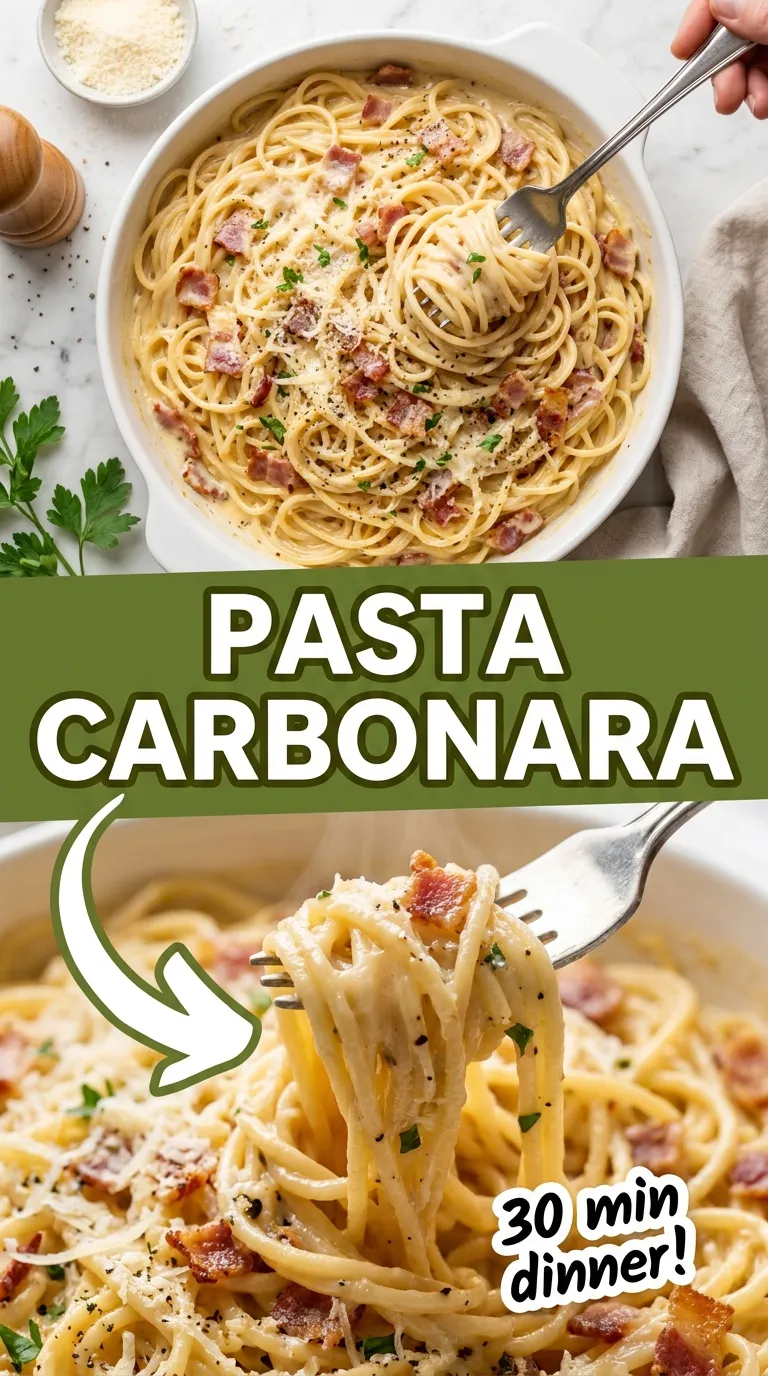

Effortless Pasta Carbonara in 30 Minutes

Equipment
- Large pot
- Large skillet or Dutch oven
- Medium bowl
- Whisk
- Slotted spoon
- Tongs
- Measuring cups and spoons
- Chef’s knife
- Cutting board
- Grater
Ingredients
- 4 large egg yolks
- 2 large whole eggs
- 2 teaspoons freshly cracked black pepper
- 1 teaspoon kosher salt for pasta water
Instructions
- Cut the guanciale or pancetta into small, 1/2-inch strips or lardons. Place them in a cold, large skillet or Dutch oven. Turn the heat to medium-low and let the fat render slowly for 8-10 minutes, stirring occasionally, until the meat is crispy and the fat is translucent. Do not rush this step.
- While the pork renders, combine the egg yolks, whole eggs, and both grated cheeses in a medium bowl. Add the freshly cracked black pepper. Whisk vigorously until you have a thick, pale-yellow paste, resembling a thick custard.
- Bring a large pot of generously salted water to a rolling boil. Add the spaghetti (or tonnarelli). Cook for 1-2 minutes less than the package directions call for, so it is very al dente.
- Just before draining the pasta, scoop out 1 cup of the starchy, hot pasta water. While whisking the egg and cheese mixture constantly, slowly drizzle in about 1/2 cup of that hot water. This tempers the eggs, preventing them from scrambling.
- Turn the heat off under the skillet with the crispy pork. Using a slotted spoon, transfer the hot pasta directly into the skillet with the pork fat. Toss to coat. Let it cool for 60 seconds.
- Pour the tempered egg mixture over the pasta. Toss and stir vigorously with tongs. Add splashes of the reserved pasta water, a tablespoon at a time, until the sauce becomes silky and coats the pasta perfectly. It should be loose and flowing, not clumpy.
- Divide the pasta among warm bowls. Top with an extra shower of Pecorino Romano and a final crack of black pepper. Serve immediately, as the sauce will continue to thicken as it cools.